
春秋戰國 vol.12 秦始皇帝陵博物院:秦代金駱駝 - Emperor Qinshihuang's Mausoleum Site Museum, Golden Camel, Qin Dynasty


秦始皇帝陵博物院1月26日公布秦陵1號陪葬墓最新考古成果。歷經多年發掘,該墓不僅出土金舞袖俑、吹奏俑、百戲俑、馬俑、騎馬俑等一批小型金屬俑,同時出土8輛形制各異、用途不同的車輛。
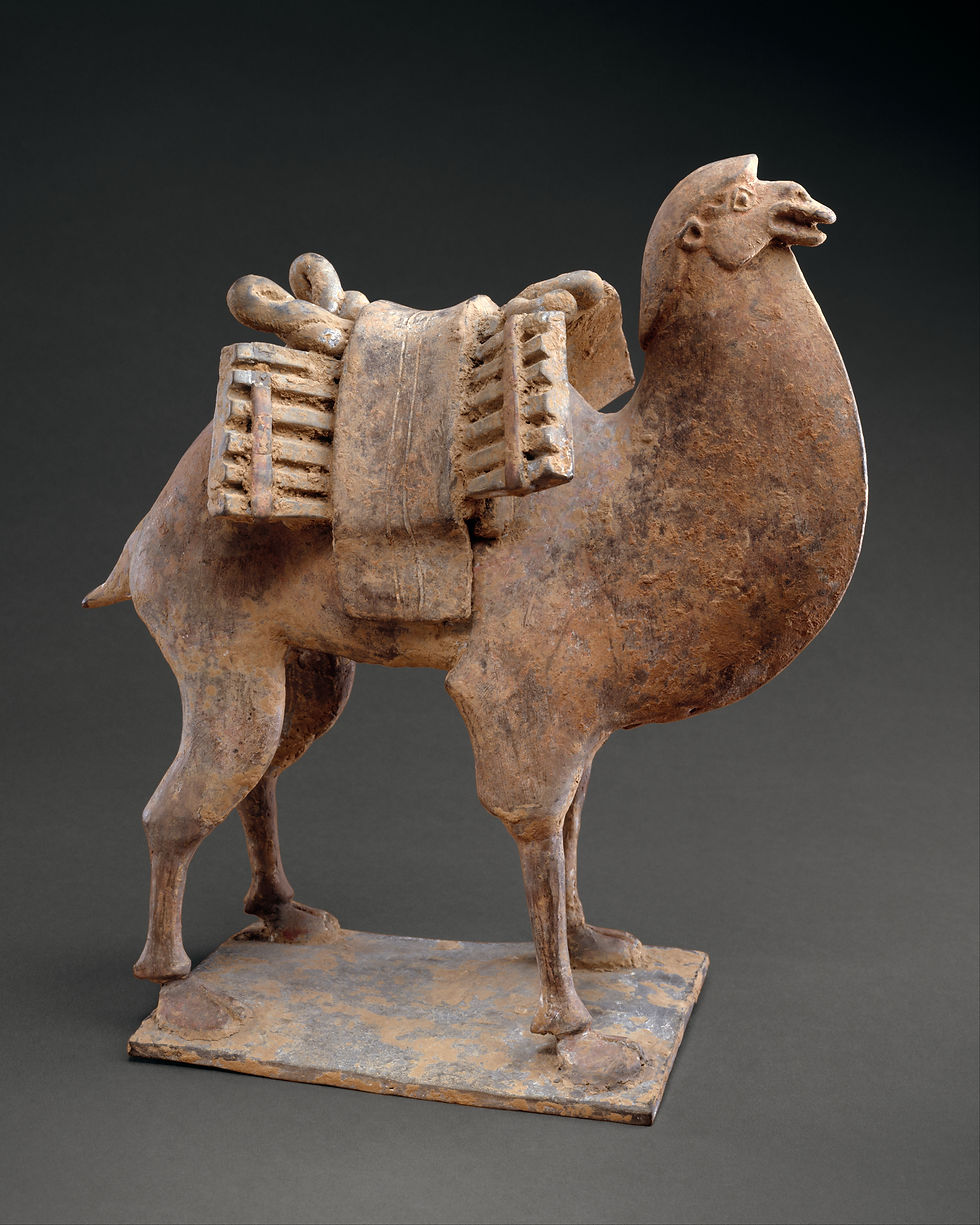
其中,考古人員確認:出土的金駱駝為目前國內所見最早的單體金駱駝。這批器物不僅為漢代絲綢之路開通以前的中西文化交流提供重要實證,亦為研究秦代政治、經濟、軍事、科技與文化提供了珍貴的物質資料。
尤為重要的是,墓北墓道清理出一輛保存完整的四輪獨輈木車,車蓋方形、彩繪完好,是迄今考古發現唯一埋藏於墓中的四輪車實物。初步判斷,其可能為下葬時運載棺柩的載柩車,屬極為罕見的喪葬現象。
秦陵西側這批墓葬的勘探與發掘,為深入探討秦代高等級貴族喪葬制度提供了關鍵材料,也為中國古代陵墓制度在秦漢時期的演變,以及古代國家從血緣政治走向地緣政治、從封國走向帝國的歷史進程,貢獻了重要考古證據。

目前規模最大等級最高秦代貴族墓葬
位於陝西西安臨潼的秦始皇帝陵,是中國古代規模最大、結構最複雜、埋藏最豐富的帝王陵墓。目前在陵區已出土陶俑、陶馬、銅車馬、石鎧甲,以及青銅水禽和兵器等在內的珍貴文物5萬餘件。其中三個兵馬俑陪葬坑成品字形排列,坑內排列着大約6000多件兵馬俑。從2011年開始,秦始皇帝陵博物院對秦陵外城西側展開詳細的考古勘探工作,發現東西一字排列的9座大中型墓葬。從2013年開始,考古工作者對其中呈「中」字形的1號陪葬墓進行了持續發掘。
「1號墓為一座大型中字形豎穴土壙木槨墓,是目前已發掘的規模最大、等級最高、保存最好的秦代高等級貴族墓葬。」據秦始皇帝陵博物院考古發掘項目負責人蔣文孝研究員介紹,1號陪葬墓位於陵園外城西側約440米處,全長約100米,坐南面北,由南、北墓道與墓室三部分組成,總面積約1900平方米,墓道兩側有三座車馬陪葬坑。其從屬於秦始皇帝陵的特徵顯著,與秦始皇帝陵整體規劃設計緊密相關,時代為戰國晚期到秦統一。墓主等級極高,是秦始皇帝陵規制下的「帝國第一陪葬墓」。

秦始皇帝陵1號陪葬墓出土的金銀駱駝

秦始皇帝陵1號陪葬墓出土的小型明器

秦始皇帝陵1號陪葬墓出土的金舞袖俑。

秦始皇帝陵1號陪葬墓出土的騎馬俑和馬俑等小型俑。

秦始皇帝陵1號陪葬墓出土的銅器

秦始皇帝陵1號陪葬墓出土的小型吹奏俑和百戲俑。

秦始皇帝陵1號陪葬墓出土的金帶鉤
Archaeologists have stated: “The gold camel unearthed here is the earliest known single-body gold camel discovered in China to date. The excavated artifacts not only provide important evidence for Sino-Western cultural exchanges prior to the opening of the Silk Road in the Han Dynasty, but also supply crucial physical materials for research into the politics, economy, military, science and technology, and culture of the Qin Dynasty.”
The archaeological survey and excavation of this group of tombs on the western side of the Qin Mausoleum contribute to an in-depth discussion of Qin Dynasty high-status noble burial systems. They furnish key evidence for the development and evolution of China’s ancient tomb systems during the Qin-Han transition and serve as archaeological proof of the transformation of the ancient Chinese state system from kinship-based politics to territorial politics, and from feudal states to empire.
On 26 January, the Emperor Qinshihuang's Mausoleum Site Museum announced the latest archaeological achievements from the No. 1 satellite tomb of the Qin Shi Huang Mausoleum. Over years of excavation, the team has unearthed not only a group of small gold and bronze figurines—including gold dancing-sleeve figurines, wind instrument players, acrobatic (hundred plays) figurines, horse figurines, and equestrian figurines—but also eight chariots of various forms, designs, and functions. Particularly noteworthy is the four-wheeled, single-shaft wooden chariot with a complete square painted canopy and well-preserved remains, uncovered in the northern tomb passage. This is currently the only four-wheeled chariot physically buried in a tomb discovered in Chinese archaeology. Preliminary assessment suggests it was likely a hearse used to transport the coffin during the burial, representing a very rare funerary phenomenon.
The Largest and Highest-Ranking Qin Dynasty Noble Tomb Discovered to Date
Located in Lintong, Xi’an, Shaanxi, the Mausoleum of the First Emperor of Qin is the largest, most complex in structure, and richest in buried artifacts among ancient Chinese imperial mausoleums. To date, more than 50,000 precious artifacts have been unearthed in the mausoleum precinct, including terracotta warriors and horses, bronze chariots and horses, stone armor, bronze waterfowl, weapons, and others. The three terracotta army pits are arranged in a triangular formation and contain approximately 6,000 terracotta warriors and horses.
Since 2011, the Emperor Qinshihuang's Mausoleum Site Museum has conducted detailed archaeological surveys on the western side of the outer city wall of the Qin Mausoleum, discovering nine large and medium-sized tombs arranged in an east-west line. From 2013 onward, archaeologists carried out continuous excavation on the No. 1 satellite tomb, which is shaped like the Chinese character “中” (zhong, “center”).
“The No. 1 tomb is a large-scale ‘zhong’-shaped vertical-pit wooden-chamber tomb with earthen walls. It is currently the largest, highest-ranking, and best-preserved high-status Qin Dynasty noble tomb ever excavated.” According to Jiang Wenxiao, researcher and head of the archaeological excavation project at the Emperor Qinshihuang's Mausoleum Site Museum, the No. 1 satellite tomb is located approximately 440 meters west of the outer city wall of the mausoleum precinct. It measures about 100 meters in total length, oriented north-south, and consists of southern and northern tomb passages plus the main burial chamber, with a total area of roughly 1,900 square meters. Three chariot-and-horse pits are located on both sides of the tomb passages. Its close affiliation with the Mausoleum of Qin Shi Huang is evident, and it is tightly integrated with the overall planning and design of the imperial mausoleum. The tomb dates from the late Warring States period to the unification under Qin. The tomb occupant held extremely high status and constitutes the “foremost satellite tomb of the empire” under the regulations of the Qin Shi Huang Mausoleum.


Comments