
北朝筆記 vol.36 舊金山亞洲藝術博物館:北齊駱駝陶俑 - Asian Art Museum, Pottery Camel, Northern Qi Dynasty


駱駝素有「沙漠之舟」之稱,是絲綢之路上的重要運載工具。唐代陶製駱駝俑已達藝術巔峰,而北齊時代的駱駝俑存世較少,尤顯珍罕。山口縣立萩美術館·浦上紀念館(浦上蒼穹堂浦上滿之父浦上敏朗舊藏)與大都會藝術博物館均藏有同類型北齊/北朝駱駝陶俑,可資比較。本件雙峰駱駝陶俑出自河南或河北地區。
雙峰駱駝俑
中國 河南或河北 北朝時期(約500–550年)
本件陶駱駝配有鞍具與轡頭,造型寫實生動,為北朝墓葬典型的明器。北朝時期(386–589),特別是北魏至北齊階段,駱駝俑常見於北方貴族墓葬,反映當時絲路交通與中外文化交流的活躍。駱駝不僅用於軍事運輸與商貿,更是墓主人希望在幽冥世界中繼續享有的重要象徵。
Camels, known as the “ships of the desert,” were essential to Silk Road transport and feature prominently among Northern Dynasties tomb mingqi. Northern Qi camel figurines are particularly rare. Comparable examples include one in the Uragami Memorial Hall, Yamaguchi Prefectural Hagi Museum (from the collection of Uragami, father of dealer Uragami Mitsuru) and another in the Metropolitan Museum of Art. This Bactrian camel figurine originates from Henan or Hebei province, China, and dates to approximately 500–550 CE, during the mid-Northern Dynasties period.
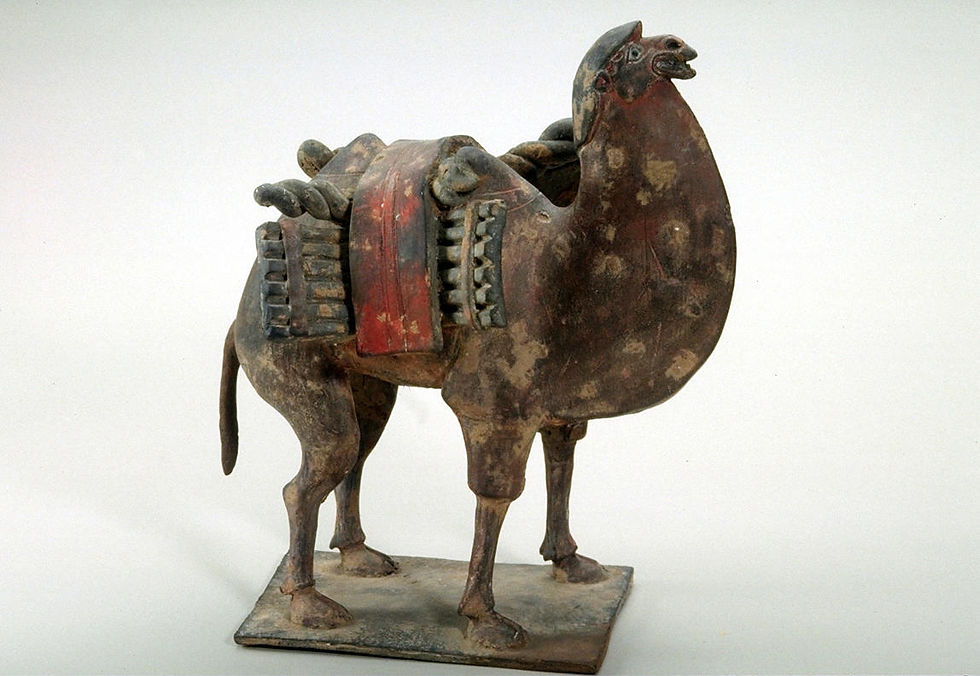
此駱駝體態健壯,雙峰清晰,背負鞍韉,細節刻畫包括轡頭與鞍架,展現出北朝陶俑寫實而富有動感的藝術風格。與浦上紀念館及大都會藝術博物館所藏同類駱駝俑相比,本件在尺寸與細部表現上同樣精巧,共同見證了6世紀北方陶塑藝術的高水準。
基本信息
器名:雙峰駱駝俑(Bactrian Camel)
產地:中國河南或河北
年代:約500–550年
時期:南北朝時期(386–589)
材質:陶質,施彩繪
尺寸:高 24.8 cm × 寬 21.6 cm × 深 13.3 cm(高 9 3/4 in × 寬 8 1/2 in × 深 5 1/4 in)
收藏:艾弗里·布倫戴奇(Avery Brundage)舊藏
館藏編號:B60P309
部門:中國藝術部
分類:陶瓷
展覽地點:15 號展廳(On View)
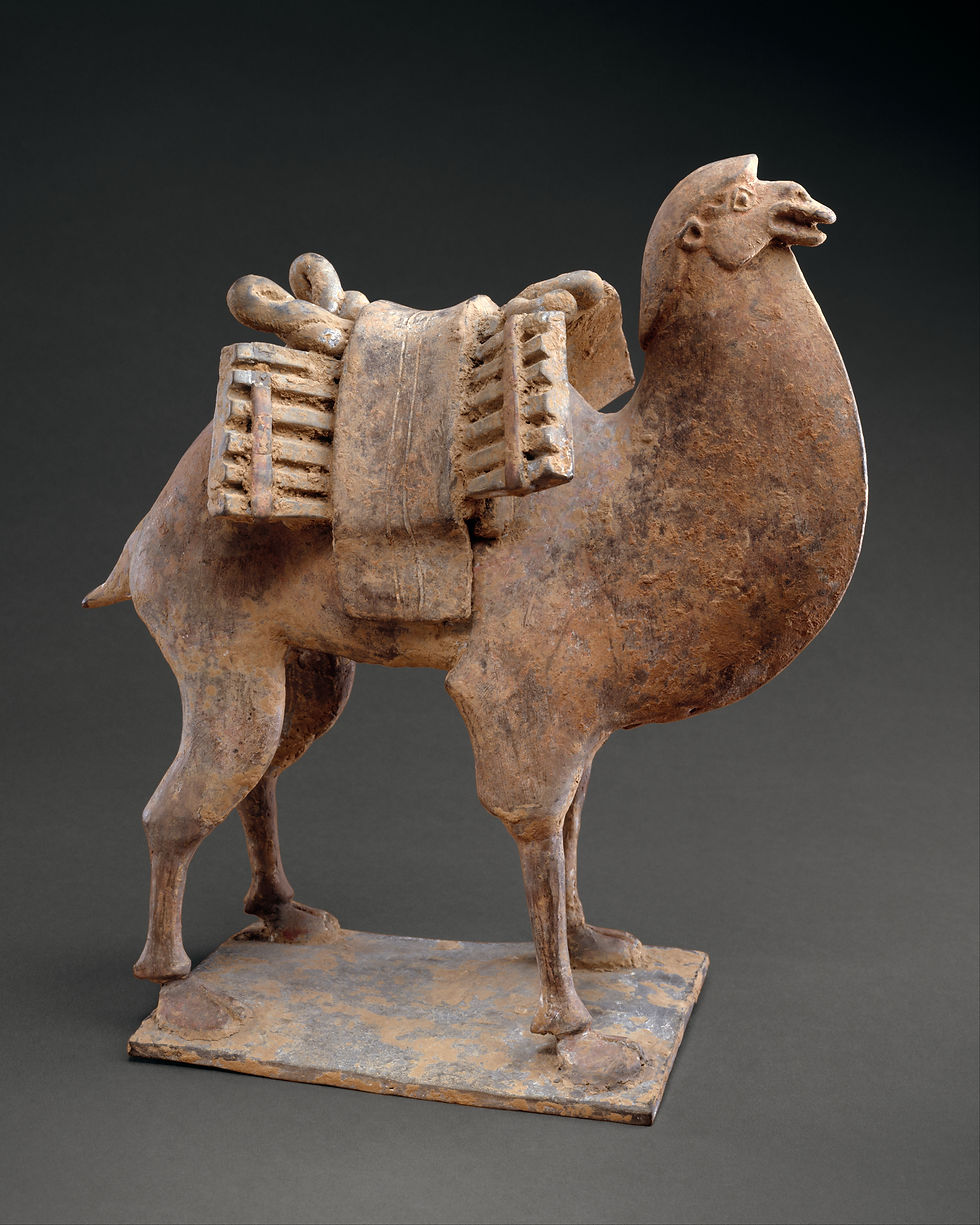
Pottery Camel, Northern Qi Dynasty, Metropolitan Museum of Art
Bactrian Camel
China, Henan or Hebei province
Northern and Southern Dynasties period, approx. 500–550
This earthenware camel is equipped with a saddle and bridle, rendered in a realistic and lively style typical of Northern Dynasties tomb figurines. During the Northern Dynasties (386–589), particularly from the Northern Wei to Northern Qi, camel figurines were commonly placed in elite tombs, reflecting the flourishing Silk Road traffic and vibrant cultural exchanges between China and the Western Regions. Camels served not only for military logistics and commerce but also symbolized the continuation of worldly prestige for the tomb occupant in the afterlife.
The figurine depicts a robust Bactrian camel with clearly defined double humps, bearing a full saddle and bridle. Its solid modeling and attention to detail exemplify the high level of realistic ceramic sculpture achieved in sixth-century northern China. Together with the related examples in the Uematsu Memorial Hall and the Metropolitan Museum of Art, this piece highlights the refined artistry of Northern Dynasties tomb pottery.
Object Details
Title: Bactrian Camel
Place of Origin: Henan or Hebei province, China
Date: approx. 500–550
Period: Northern and Southern Dynasties period (386–589)
Materials: Earthenware with painted decoration
Dimensions: H. 9 3/4 in × W. 8 1/2 in × D. 5 1/4 in (H. 24.8 cm × W. 21.6 cm × D. 13.3 cm)
Credit Line: The Avery Brundage Collection
Accession Number: B60P309
Department: Chinese Art
Classification: Ceramics
Location: Gallery 15 (On View)


Comments