
北朝筆記 vol.35 大都會博物館:北齊駱駝陶俑 - Met Museum, Pottery Camel, Northern Qi Dynasty

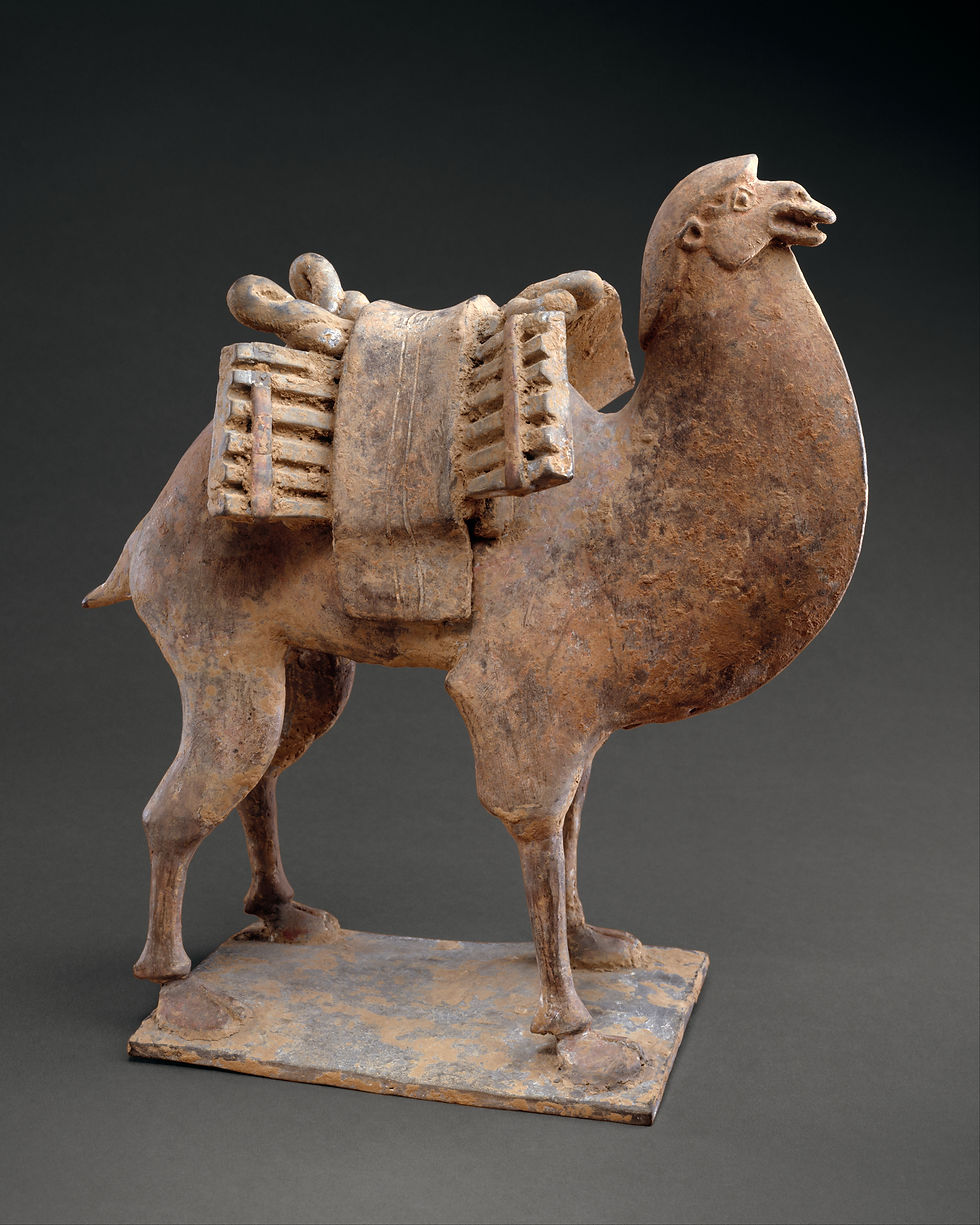
駱駝素有「沙漠之舟」之稱,是絲綢之路上的重要運載工具。唐代陶製駱駝俑已達藝術巔峰,而北齊時代的駱駝俑存世較少,尤顯珍罕。山口縣立萩美術館·浦上紀念館(浦上蒼穹堂浦上滿之父浦上敏朗舊藏)即藏有一例與本件風格相近的北齊駱駝陶俑;舊金山亞洲藝術博物館亦藏有一例,前奧委會主席艾弗里·布倫戴奇(Avery Brundage)舊藏。舊金山亞博的駱駝彩繪較為完整。
Camels, known as the “ships of the desert,” were vital to the Silk Road trade. While Tang dynasty pottery camels reached the pinnacle of artistic expression, Northern Qi examples are far rarer and highly prized. A closely related Northern Qi camel is housed in the Yamaguchi Prefectural Hagi Museum – Uragami Memorial Hall (from the collection of Uragami, father of dealer Uragami Mitsuru of the Uragami Sōkyūdō). Another example, formerly in the collection of Avery Brundage (former President of the International Olympic Committee), is in the Asian Art Museum of San Francisco.
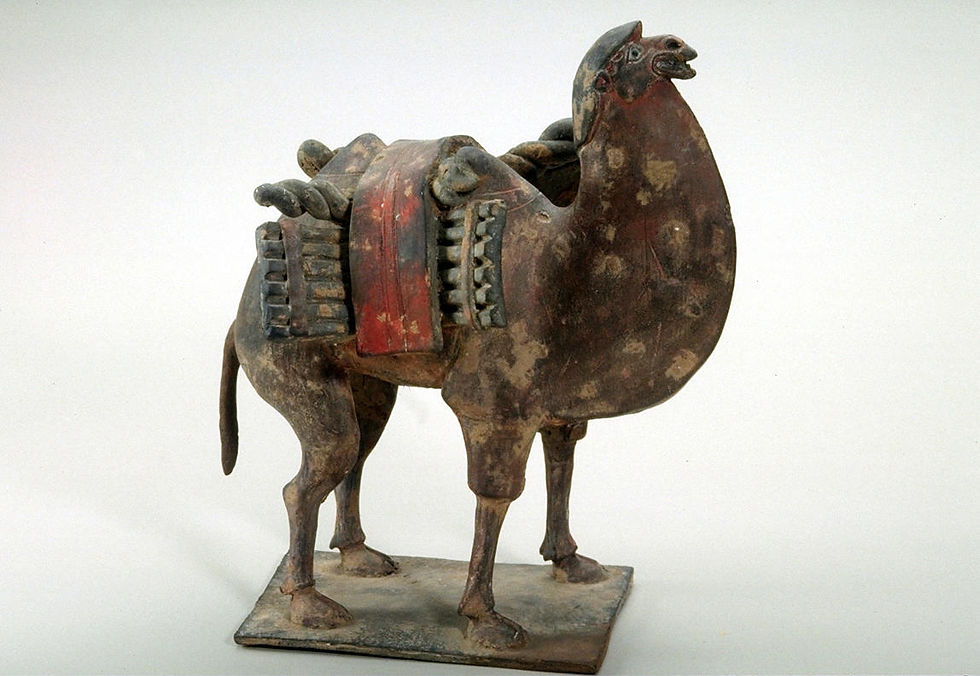
舊金山亞洲藝術博物館,北齊,陶加彩駱駝
駱駝俑
中國 北魏至北齊時期(6世紀中晚期)
本件陶駱駝現陳列於大都會藝術博物館第五大道館區 207 展廳。駱駝背負木質鞍架,雙峰之間置有鞍板,正待乘者,屬典型的北朝墓葬明器。自漢代普及以來,北魏(386–534)、東魏(534–550)及北齊(550–577)墓葬中的明器功能一脈相承,旨在侍奉逝者於幽冥。北方王朝墓葬常見大量陶俑,多由大型作坊以模製法批量生產,供家族購置入葬之用。
此駱駝雖忠實再現了張開的鼻孔、彎曲的嘴唇與扁平寬大的蹄子等典型特徵,但整體以側面線條為主,表面光潔、毛髮刻畫極簡,頸部優美彎曲,使其呈現出一種波動流暢而非靜穆莊嚴的動態美感。駱駝俑自三世紀開始出現於墓葬,至五至八世紀在北方地區日益普遍。駱駝適應中國北方草原與山地沙漠環境,曾用於邊疆軍需運輸,亦為商旅乃至上層人士的坐騎。
時期:北魏(386–534)至北齊(550–577)
年代:6世紀中晚期
文化:中國
材質:陶質,局部留有彩繪痕跡
尺寸:高 24.8 cm,長 24.1 cm
分類:墓葬陶器
入藏:1928 年羅傑斯基金
館藏編號:28.121
部門:亞洲藝術部
來源:山中商會(Yamanaka & Co.),1928 年售予大都會藝術博物館。
展覽:大都會藝術博物館「中國古代藝術」常設展(1988 年至今)。
參考文獻:
Valenstein, Suzanne G., Julia Meech, and Marilyn Jenkins. Oriental Ceramics: The World's Great Collections. vol. 12. Tokyo: Kōdansha International Ltd., 1977, pl. 14.
Meech, Julia et al. Oriental Ceramics: The Metropolitan Museum of Art. vol. 11. Tokyo: Kodansha International, 1982, pl. 14.
Watt, James C. Y. "The Arts of Ancient China." The Metropolitan Museum of Art Bulletin, n.s., 48, no. 1 (Summer 1990), p. 53, cat. no. 64.

Pottery Camel from the Asian Art Musuem, San Francisco
Pottery Camel
China, mid-to-late 6th century (Northern Wei–Northern Qi period)
On view at The Met Fifth Avenue, Gallery 207.
This camel figurine, fitted with wooden slats supporting a saddle between its two humps and awaiting its rider, was made as a mingqi (spirit object) for a tomb. The function of such tomb figurines in the Northern Wei (386–534), Eastern Wei (534–550), and Northern Qi (550–577) dynasties remained consistent with the practice popularized during the Han dynasty (206 B.C.–220 A.D.): to serve the deceased in the afterlife. Large quantities of tomb figurines were common in northern burials and were typically mass-produced in large workshops using molds, then acquired by families preparing funerals.
While the sculptor faithfully captured defining features such as the flared nostrils, curving lips, and large, flat hooves, the emphasis on a two-dimensional profile, the smooth surface with minimal textural detail for hair, and the graceful curvature of the neck lend the animal an undulating, almost lyrical quality rather than stately monumentality. Camels first appeared in Chinese tombs in the third century and became increasingly common in northern burials from the fifth to the eighth centuries. Adapted to the steppes and mountainous deserts north of China, they were essential for transporting military supplies to frontier regions and served as mounts for merchants and members of the elite.
Object Details
Title: Camel
Period: Northern Wei (386–534) to Northern Qi (550–577) dynasty
Date: mid-to-late 6th century
Culture: China
Medium: Earthenware with traces of pigment
Dimensions: H. 9 3/4 in. (24.8 cm); L. 9 1/2 in. (24.1 cm)
Classification: Tomb Pottery
Credit Line: Rogers Fund, 1928
Accession Number: 28.121
Department: Asian Art
Provenance: Yamanaka & Co., until 1928; sold to the Metropolitan Museum of Art.
Exhibition: "Arts of Ancient China," The Metropolitan Museum of Art, New York, May 1988–present.
References:
(As listed in the original museum records, with full citations preserved above in Chinese version.)


Comments