
拍賣筆記 vol.382 蘇富比香港2026:秦峰男,西周青銅面具 - Sotheby’s HK, Mineo Hata, A Bronze Mask, Western Zhou Dynasty


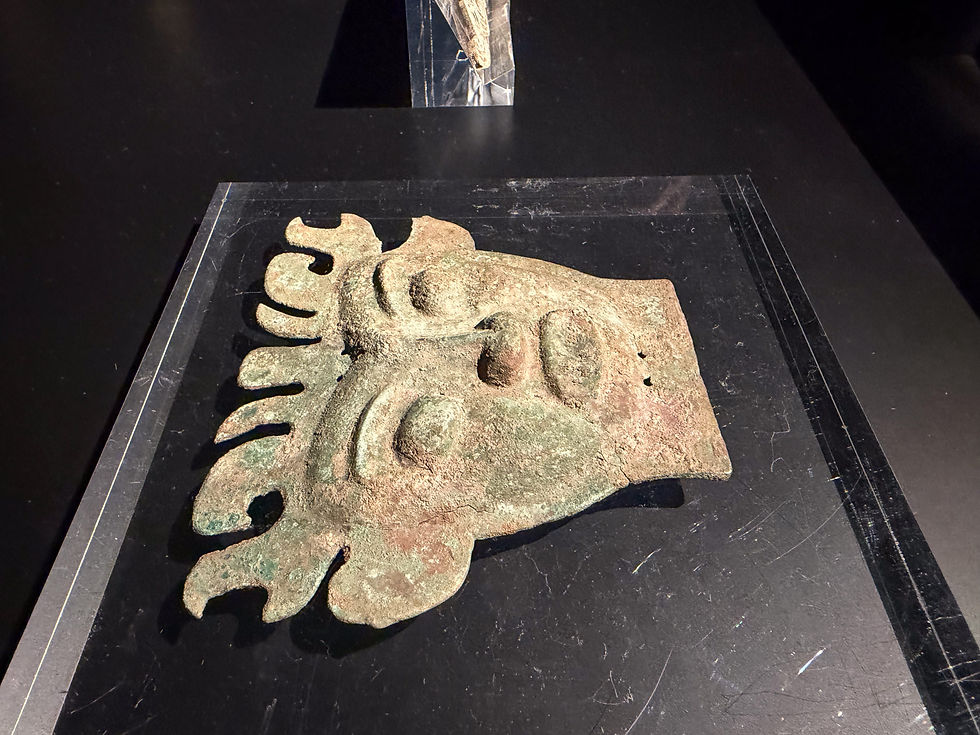
西周青銅面具
A bronze mask, Western Zhou dynasty
Live auction begins on:
2026 May 5, 02:00 PM HKT
Estimate
50,000 - 100,000 HKD
Description
14.8 cm
來源
山口謙四郎(1886-1957年)收藏,神戶
Provenance
Collection of Yamaguchi Kenshiro (1886-1957), Kobe.

山口謙四郎(1886-1957)出生於大阪船場這個傳統商業區,是山口銀行創業者三代目山口吉郎兵衛的第四子。他出身富裕的實業家家庭,自幼接觸商界氛圍,成年後投身金融與信託業,曾擔任舊關西信託(即後來的東洋信託銀行,前身為現今三菱UFJ信託銀行的一部分)的社長等要職,是活躍於關西財界的知名企業家。
在繁忙的商務生涯之餘,山口謙四郎對中國古代美術產生了濃厚興趣,尤其專注於佛教石雕的收藏。他生活在明治末期至昭和中期,正值日本經濟發展與東洋美術收藏熱潮的時代,許多關西企業家如阿部房次郎等人都在此時積極蒐集中國文物。山口謙四郎憑藉其財力與獨到的眼光,逐步建立起以中國南北朝至隋唐石造佛像為主體的龐大收藏體系。
他的收藏最顯著的特點是對北魏時期作品的偏好,數量最多且品質優異。其中包含多件帶有紀年銘的基準性作品,例如北魏天安元年(466年)的佛坐像,能讓人清晰概觀中國佛教雕刻的發展脈絡。與當時許多藏家不同,他不僅收集帝都或大城市製作的正統精美佛像,還特別青睞帶有地方色彩、風格素樸或鄉土氣息的造像,展現出對多樣性美的欣賞。此外,收藏中還包括道教造像,這在同類收藏中較為少見,豐富了整體的宗教藝術面向。
除了石雕核心之外,山口謙四郎的收藏範圍相當廣泛,涵蓋中國青銅器、銅鏡、各種金工飾品、玉器以及陶磁器等工藝品。這些工芸作品同樣反映出他的審美傾向:偏好素樸中帶有滋味、不刻意追求華麗或當時主流熱門品類(如唐三彩或官窯)的作品,展現出一種自然、氣定神閒的收藏態度。整體而言,他的藏品年代與地域跨度大,但並非系統性或百科全書式的蒐集,而是隨興趣與機緣所累積的個人風格強烈的集合。
1957年山口謙四郎逝世後,其家族秉持遺志,於1977至1978年間將大批珍藏轉讓給大阪市立美術館,包括125件中國石雕、5件鎏金銅佛以及94件工藝品,總計約224件。這批「山口コレクション」成為該館中國佛教美術與早期雕刻的重要支柱,與阿部房次郎的中國書畫收藏共同奠定了大阪市立美術館在東洋美術領域的聲譽。多年來,這些作品頻繁參與特展,也常在國際拍賣市場上以「山口謙四郎舊藏」的身分亮相,持續受到全球藏家與學者的重視。
Kenshirō Yamaguchi (1886–1957) was born in Osaka’s Senba district, a traditional commercial area. He was the fourth son of Yoshirōbei Yamaguchi III, the founder of Yamaguchi Bank. Coming from a wealthy business family, he was immersed in commercial circles from an early age. In adulthood, he entered the finance and trust banking sector, serving as president of the former Kansai Trust Bank (a predecessor of Toyo Trust Bank, which later became part of Mitsubishi UFJ Trust and Banking Corporation). He was a prominent businessman active in the Kansai financial world.
Amid his busy business career, Kenshirō Yamaguchi developed a deep interest in ancient Chinese art, with a particular focus on Buddhist stone sculpture. He lived from the late Meiji period through the mid-Showa era, a time of Japanese economic growth and a flourishing enthusiasm for collecting East Asian art. Many Kansai entrepreneurs, such as Fusajirō Abe, were actively acquiring Chinese artifacts during this period. Leveraging his financial resources and discerning eye, Yamaguchi gradually built a substantial collection centered on Chinese stone Buddhist sculptures from the Northern and Southern Dynasties through the Sui and Tang periods.
The most distinctive feature of his collection is its strong emphasis on works from the Northern Wei period, both in quantity and quality. It includes several dated benchmark pieces, such as the seated Buddha inscribed with the Tian’an first year (466 CE) of the Northern Wei. These allow viewers to trace the developmental trajectory of Chinese Buddhist sculpture. Unlike many contemporary collectors, Yamaguchi did not limit himself to orthodox, refined images produced in imperial capitals or major cities. He showed a particular fondness for sculptures with strong regional characteristics, simpler styles, or rustic flavors, demonstrating an appreciation for diverse expressions of beauty. Additionally, his collection includes Daoist figures, which are relatively rare in similar assemblages and enrich the overall religious and artistic scope.
Beyond the core of stone sculpture, Kenshirō Yamaguchi’s collecting interests were broad. They encompassed Chinese bronzes, bronze mirrors, various metalwork ornaments, jade objects, and ceramics. These craft works similarly reflect his aesthetic preferences: he favored pieces with a plain yet flavorful quality, rather than deliberately pursuing ostentatious or mainstream popular categories of the time (such as Tang sancai or official kiln wares). This reveals a natural, unforced, and serene approach to collecting. Overall, while his holdings span a wide range of periods and regions, they do not form a systematic or encyclopedic assembly. Instead, they represent a highly personal accumulation driven by interest and opportunity.
After Kenshirō Yamaguchi’s death in 1957, his family honored his wishes by transferring a large portion of the collection to the Osaka City Museum of Fine Arts between 1977 and 1978. This included 125 Chinese stone sculptures, 5 gilt-bronze Buddhas, and 94 craft objects, totaling approximately 224 pieces. Known as the “Yamaguchi Collection,” it has become a cornerstone of the museum’s holdings in Chinese Buddhist art and early sculpture. Together with Fusajirō Abe’s donation of Chinese paintings and calligraphy, it has established the Osaka City Museum of Fine Arts’ reputation in the field of East Asian art. Over the decades, these works have frequently appeared in special exhibitions and regularly surface in international auctions identified as “formerly in the Kenshirō Yamaguchi collection,” continuing to attract attention from global collectors and scholars.


Comments