
拍賣筆記 vol.363 蘇富比香港2026:332.8萬港元售出,東周春秋青銅螭虎 - Sotheby’s HK 2026, A Bronze Figure Of A Chi Tiger, Eastern Zhou Dynasty, Spring And Autumn Period, Sold for 3.328m HKD

Updated: May 5

這件東周春秋青銅螭虎出自奉文堂舊藏,2015年於嘉德香港以253.7萬港元成交,十年後在蘇富比香港2026春拍「Zoomorphia:中國古代動物形象」專場重新上拍,估價150-300萬港元,與先前成交價基本持平(略有調整)。低估價有利於吸引競投,提升成交機會。整體看來,這是市場理性流通的正常現象,作品重新進入流通,有助於更多藏家欣賞這件充滿生命力的春秋青銅傑作。
This Eastern Zhou Spring and Autumn period bronze chi tiger, formerly from the Feng Wen Tang Collection, was sold for HK$2.537 million at China Guardian Hong Kong in 2015. Ten years later, it reappears at Sotheby’s Hong Kong Spring 2026 sale in the themed auction “Zoomorphia: Animal Forms in Ancient China,” with an estimate of HK$1,500,000 – 3,000,000. The estimate is largely in line with its previous sale price, with only a slight adjustment. The conservative estimate is strategically set to attract broader bidding interest and increase the likelihood of a successful sale. Overall, this represents a normal and healthy phenomenon of rational circulation in the art market. By re-entering the market, the work allows more collectors to appreciate this dynamic and lifelike bronze masterpiece from the Spring and Autumn period.

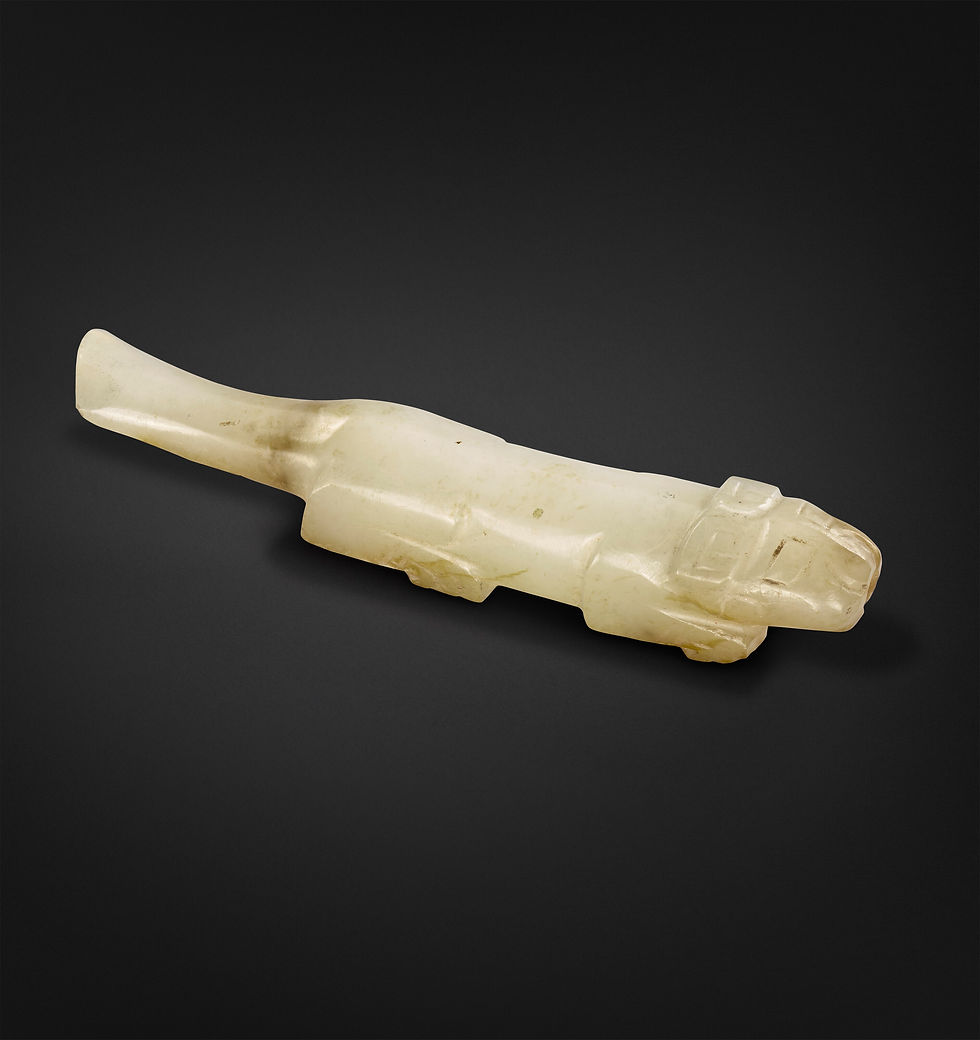
東周春秋 青銅螭虎
A bronze figure of a chi tiger, Eastern Zhou dynasty, Spring and Autumn period
PROPERTY OF A LADY | 女史收藏
Estimate
1,500,000 - 3,000,000 HKD
Description
display stand
43.5 cm
來源
奉文堂收藏

此青銅螭虎姿態優雅,體態雄健、栩栩如生,表面紋飾華麗精美,充滿力量感,展現了東周工匠在青銅製作鼎盛時期的高超技藝與非凡創意。
在中國青銅時代的大部分時間裡,工匠們主要依賴範鑄法,即用大型陶範製作禮器。此法雖能造就恢弘之作,但其造型往往莊重肅穆而姿態靜止。相比之下,自西元前六世紀左右失蠟法從西方傳入,東周的鑄工得以用青銅實現幾乎任何形態,為其設計注入了中國青銅鑄造史上空前的立體感、動感與生命力。就此而言,眼前的這件虎形器亦不例外。它煥發著盤旋湧動的生命力,雙肩緊繃,利爪蓄勢,面容與尾端流露出兇悍威嚴的氣息;此器物完美體現了東周工匠對形制與設計那份精湛的感知力。

與現存幾乎所有該時期的立體動物造型構件類似,本品幾乎可以確定原為某件大型器物的部件,充當提梁或裝飾附件。可參照東周遺址出土的鑒(大型水器)與方壺上類似的虎形鉤形提梁,包括收錄於《中國文物精華大全·青銅卷》,香港,1994年,圖版697與698的兩件方壺。後者為一對之一,現藏河南博物院,其龍紋渦卷、底座及鶴形鈕的鑄造工藝與本品相似。
儘管本青銅螭虎的具體主器來源已湮沒於歷史長河,但其鉤狀造型幾乎如同一枚放大的帶鉤,與王室祭祀儀式中用以懸掛禮鐘的鐘鉤驚人相似。可參照從曾侯乙(卒於西元前433年後) 墓出土的最著名且最完整的編鐘系列中發現的極為近似的鐘鉤;該墓位於湖北省隨州市擂鼓墩東團坡上,裝飾極為奢華。相關器物圖像載於《中國青銅器全集》,第10卷:東周(四),圖版151-155,尤見圖版154之細部。
就題材與精製的雕塑品質而言,本品與一組早期青銅配件極為相近。這些配件于二十世紀初通過盧芹齋等古董商流入歐美,並進入諸如工程師阿道夫·斯托克萊(1871–1949年)與銀行家大衛·威爾(1871–1952年)等橫跨多領域的知名收藏。可參照斯托克萊舊藏中一件著名的躍龍形柄(現藏阿布達比盧浮宮,館藏編號 2017.001)的雕塑形態與豐富的表面細節,其圖像刊于梅原末治,《歐米蒐儲支那古銅精華》,卷六,大阪,1933年,圖版38;以及柏林亞洲藝術博物館所藏兩件龍形柄殘件,圖版39與40;另有一件造型極為相關的器足,亦出自斯托克萊收藏,作立虎形但風格略晚於本品,見圖版16。最後,亦可參照一組造型相近的東周時期小型盤虎形器座,包括一件藏於勳力克(Schoenlicht )收藏,刊於H.F.E. Visser,《Asiatic Art in Private Collections of Holland and Belgium》,阿姆斯特丹,1948年,圖版68;及一件出自大衛·威爾收藏,曾於巴黎蘇富比2015年12月16日,編號40。

Provenance
Feng Wen Tang Collection
Catalogue Note
Graceful in its stance, substantial in its presence and size, magnificent in its surface design, the present tiger exemplifies the skill and creativity of Eastern Zhou artisans at the zenith of bronze production.
For most of China’s Bronze Age, craftsmen had relied on the piece-mould technique – producing ritual vessels from large clay segments which, while magnificent, are frequently austere and static in their composition. In contrast, with the advent of lost-wax casting from the West around the 6th century BCE, casters of the Eastern Zhou were able to achieve almost any form in bronze, filling their designs with a sense of three-dimensionality, movement and life unprecedented in the history of Chinese bronze-casting. In this regard, the present tiger is no exception. Swirling with vitality, its shoulders tensed, its claws poised, its face and tail snarling with ferocious majesty; the present figure embodies the sensitivity for form and design perfected by these Eastern Zhou craftsmen.
Like almost all figural work attested from the period, the present piece was almost certainly derived from a broader vessel for which it served as a handle or fitting. Compare related hook-shaped handles in the form of tigers on monumental water basins (jian) and square vases (fanghu) excavated from Eastern Zhou sites, including two fanghua included in Zhongguo wenwu jinghua daquan [The quintessence of Chinese cultural relics]. Qingtong juan [Bronzes], Hong Kong, 1994, pls 697 and 698, the latter one of a pair now preserved in the Henan Museum with similar casting techniques in their dragon scroll-work, bases and crane finials.
While the origins of the present fitting have been lost to history, its hooked form – almost akin to an oversized belt hook – bears a striking resemblance to hooks used to support ritual bells in royal funerary contexts. Compare closely related hooks excavated from the most famous and complete examples of these bells, uncovered from the sumptuously decorated tomb of Marquis Yi of Zeng (d. after 433 BCE) in Leigudun Community, Suizhou, Hubei province, illustrated in Zhongguo qingtongqi quanji [Complete collection of Chinese bronzes], vol. 10: Dong Zhou [Eastern Zhou], pt. 4, pls 151-155, particularly detail pl. 154.
In its subject matter and exceptional sculptural quality, the present tiger bears a close resemblance to a small group of archaic bronze fittings that reached Europe and America in the early twentieth century through dealers including C.T. Loo (1880–1957), entering esteemed cross-category collections including those of engineer Adolphe Stoclet (1871–1949) and banker David David-Weill (1871–1952). Compare the sculptural form and rich surface detailing of the famous leaping dragon handle from the Stoclet Collection, now preserved in the Louvre Abu Dhabi (accession no. 2017.001), illustrated in Umehara Sueji, Shina Kodo Seika / Selected Relics of Ancient Chinese Bronzes from Collections in Europe and America, vol. 6, Osaka, 1933, pl. 38; two dragon-formed handle fragments preserved in the Museum für Asiatische Kunst, Berlin, pls 39 and 40; and a closely related vessel foot, also from the Stoclet Collection, shaped like an upright tiger but slightly later in style than the present, pl. 16. Finally, also compare a closely related group of smaller Eastern Zhou vessel stands in the form of sinuous tigers, including one in the Schoenlicht Collection, illustrated in H. F. E. Visser, Asiatic Art in Private Collections of Holland and Belgium, Amsterdam, 1948, pl. 68; and one from the David-Weill Collection, sold in our Paris rooms, 16th December 2015, lot 40.


Comments