
茶碗筆記 vol.31 三井美術館:宋代珠光青瓷茶碗,銘「波瀾」,本阿弥家、表千家第九代了了齋 - Mitsui Museum, Jūkōseiji Celadon Tea Bowl, Song Dynasty


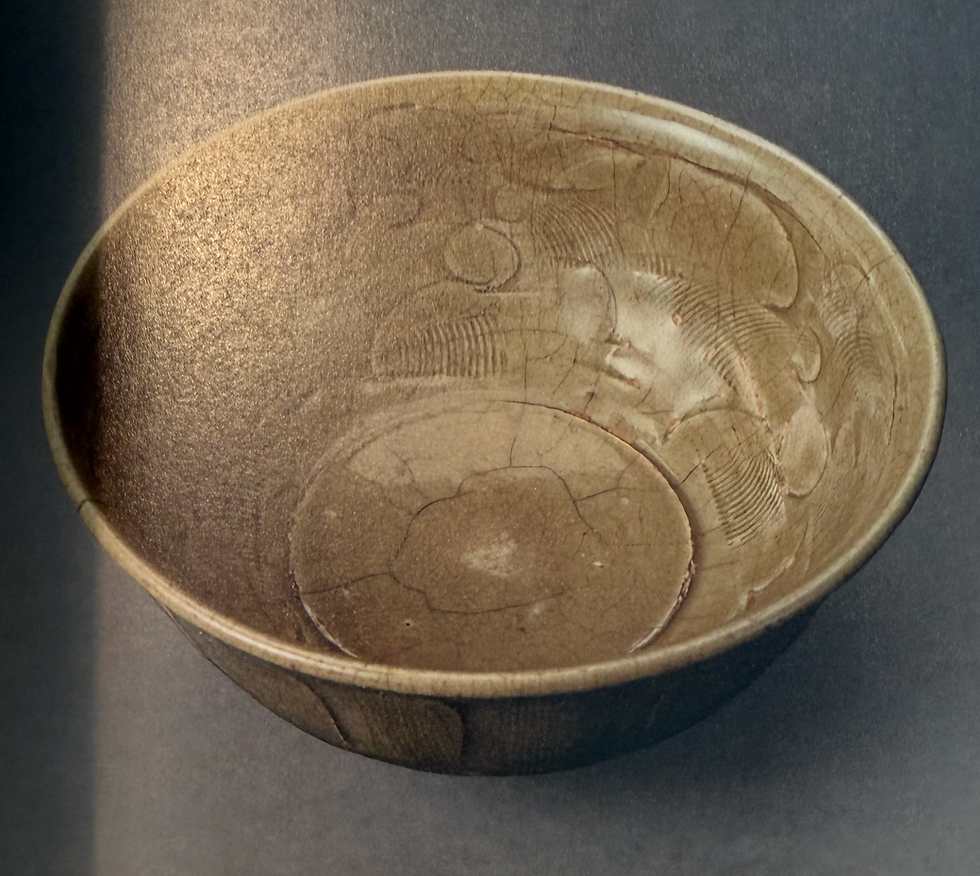
珠光青磁茶碗 銘 波瀾
中国 南宋~元時代(12~14世紀)
三井記念美術館
高7.0cm、口径16.0cm、高台径5.0cm、重量360.5g
新町三井家旧蔵(本阿弥家伝来)
此碗為日本著名的本阿彌家代代相傳,由表千家九代宗匠——了々斎(りょうりょうさい)为其命名為「波瀾(はらん)」,靈感來自該碗外壁獨特的櫛描與弓狀弧線紋飾所展現出的動感與意境。
內面:口緣下施圈線,其下片切彫簡略草花文或雲氣紋,再以櫛狀點搔施之字點列文(約六處),內底設茶溜。
外面:自高台呈放射狀櫛描文(貓搔紋)。
此類福建同安窯系或閩江下游窯口青磁,為南宋製品,鎌倉以來傳入日本,博多地方多有出土。後世以「珠光茶碗」和「珠光青磁」稱之(時間上有先後)。
然而,茶會記中所見之「珠光茶碗」(《松屋會記》天文11年/1542年初見,利休自天文13年/1544年起使用,弘治至永祿年間使用尤頻),或許更接近「人形手」系統,或帶有「福」字印者,屬於另一支珠光青瓷系統,與今日所稱櫛描文珠光青磁並非完全同一。
就櫛描文系統(不帶福字,本碗所屬)而言,目前傳世中傳承最明確且最早的兩件,為松平不昧舊藏:
銘「遲櫻」(根津美術館)
銘「早苗」(逸翁美術館)
本碗銘「波瀾」由表千家九代了々斎(1775–1825)所命,內箱蓋裏有其墨書「珠光青磁茶碗 銘波瀾ト号 了々(花押)」。傳自本阿弥家,後入新町三井家,元文年間道具帳已見記載。


Jūkō Celadon Tea Bowl, Named “Haran”
China, Southern Song–Yuan dynasty, 12th–14th century
Mitsui Memorial Museum
Height 7.0 cm, mouth diameter 16.0 cm, foot diameter 5.0 cm, weight 360.5 g
Former collection of the Shinmachi Mitsui family (transmitted from the Hon’ami family)
This bowl belongs to the classic comb-incised (kushime) type of jūkōseiji. It is a broad hira-chawan with a slightly inward-turning rim and a sturdy, somewhat rustic form. The glaze has oxidized to a warm yellowish loquat tone; the foot and exterior base are unglazed.
Interior: A circular line below the rim, simplified floral or cloud motifs in katakiri-bori, overlaid with zigzag comb-impressed patterns in roughly six places, and a tea pool at the center.
Exterior: Radiating comb-incised lines (commonly called neko-gaki) from the foot.
These Fujian Tong’an-type celadons were everyday Southern Song vessels that reached Japan from the Kamakura period. Their oxidized yellow glaze, thick body, and austere decoration came to be associated with the wabi aesthetic, and the type is now called jūkō-chawan or jūkōseiji.
However, the “Jūkō tea bowls” recorded in early tea diaries (Matsuya Kaiki, first appearance in 1542; used by Rikyū from 1544; frequently in 1555–1570) may have referred more closely to the ningyō-de (figurine-hand) type or to bowls bearing the impressed character “福” (fuku). These constitute a different branch within the broader category of so-called Jūkō celadon and are not identical with the comb-incised type represented here.
For the comb-incised system to which this bowl belongs, the earliest and most securely documented surviving examples are the two pieces formerly owned by Matsudaira Fumai:
“Osozakura” (Nezu Museum)
“Sanae” (Itsuō Museum)
The name “Haran” on the present bowl was given by the 9th generation of Omotesenke, Ryōryōsai (1775–1825); the reverse of the inner-box lid bears his ink inscription “Jūkō celadon tea bowl, named Haran, Ryōryō [cipher].” It passed from the Hon’ami family to the Shinmachi Mitsui family and appears in their Genbun-period (1736–1741) utensil inventory.

珠光青磁茶碗 銘 波瀾
中国 南宋~元時代 12~14世紀
三井記念美術館
高7.0cm、口径16.0cm、高台径5.0cm、重量360.5g
新町三井家旧蔵(本阿弥家伝来)
本碗は櫛描文系統の典型的な珠光青磁である。平茶碗の器形で口縁はわずかに内湾し、敦厚でやや粗放な姿を示す。釉は酸化により微黄の枇杷色を呈し、高台・外底は露胎。
内面:口縁下に圏線を巡らし、片切彫りの簡略草花文または雲気文の上に、櫛状点掻きの之字点列文をおよそ六箇所に配し、内底に茶溜まりを設ける。
外面:高台から放射状に櫛描文(猫掻手)が一周する。
福建同安窯系の南宋日常器で、鎌倉時代以降に伝来。砧青磁に比して黄釉・厚手・粗放な文様がわびに適うとされ、後世「珠光茶碗」「珠光青磁」と称される。
ただし、茶会記に見える「珠光茶碗」(『松屋会記』天文11年/1542年初出、利休は天文13年/1544年より使用、弘治~永禄年間に頻用)は、人形手系統、あるいは見込に「福」字を有する別系統のものを指していた可能性が高く、今日いう櫛描文の珠光青磁とは必ずしも同一ではない。
櫛描文系統(本碗の属する系統)において、伝世で伝承が最も明確かつ古いのは、松平不昧旧蔵の二碗である:
銘「遅桜」(根津美術館)
銘「早苗」(逸翁美術館)
本碗の銘「波瀾」は表千家九代了々斎(1775–1825)による。内箱蓋裏に「珠光青磁茶碗 銘波瀾ト号 了々(花押)」の墨書がある。本阿弥家伝来ののち新町三井家に入り、元文年間の道具帳に記載されていた。


Comments