
茶碗筆記 vol.26 出光美術館:宋代珠光青瓷茶碗,本願寺傳來 - Idemitsu Museum, Jūkōseiji Celadon Tea Bowl, Song Dynasty


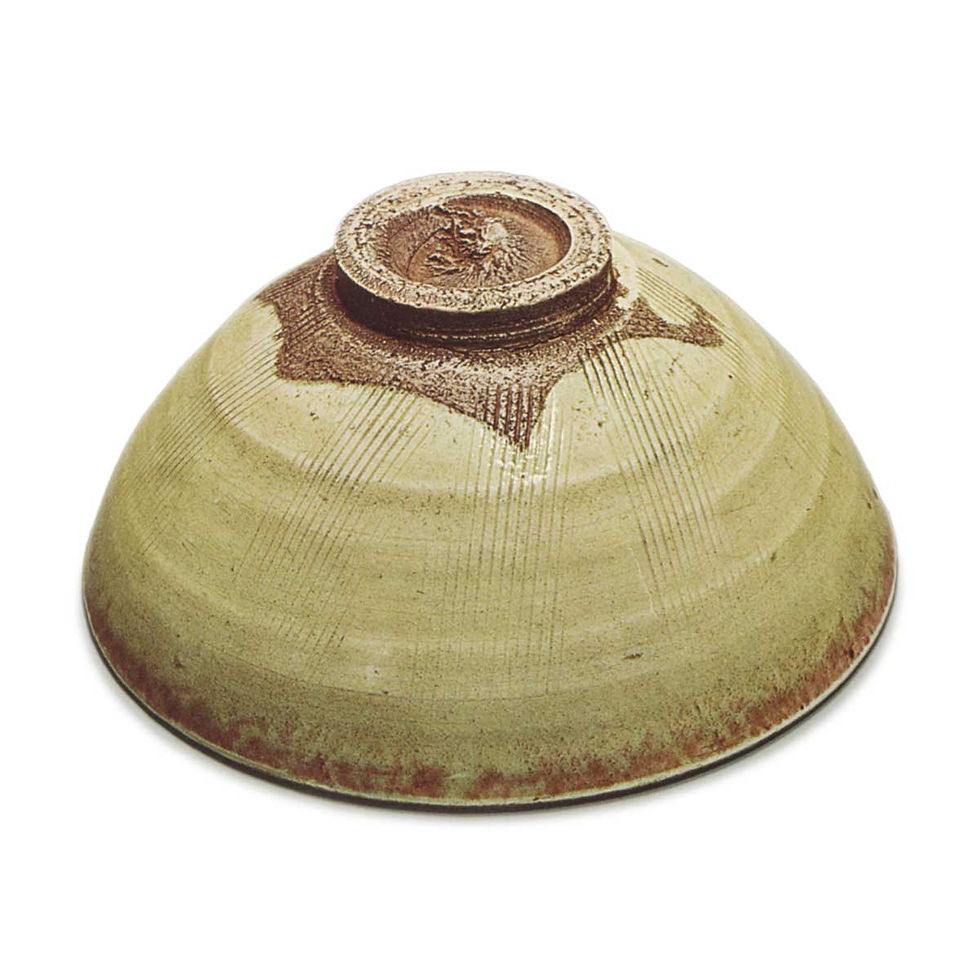
此珠光青磁茶碗傳自京都本願寺,素地灰白堅硬磁質。施透明微枇杷色釉,腰以下露胎。
口闊,胴部豐滿,高台小而緊收,為扁平茶碗。製作厚實,外側有櫛劃俗稱貓搔紋,內面三方以自由舒展線刻雲形,中以櫛呈之字形押紋。
口沿與高台微有磨損,近完好。形制端正,紋樣整齊,燒成上佳,為珠光青磁中之優品。(小山富士夫)
參考:
宋代珠光青瓷茶碗,本願寺傳來
出光美術館
高:6.8~7.0cm
口徑:15.0~15.2cm
高台外徑:5.0cm
高台高:0.9cm


小山富士夫文章:
珠光青磁遺物數量稀少,《大正名器鑑》中僅錄加藤正義氏所藏一碗。
珠光青磁之名,傳源自茶祖村田珠光。相較於精美端正之砧青磁,珠光更愛此類較為粗樸、枯淡之青磁,認為更適於茶事,因而愛用此類茶碗。桃山時代稱「珠光茶碗」,何時改稱「珠光青磁」則不明,或始於江戶時代,然具體時期不詳。
珠光青磁被認為係南宋時期福建省同安所製。其為南宋之物,可由鎌倉時代遺址出土頗多同類物而證明。雖未聞茶碗出土例,然同類青磁小皿於佐賀縣、福岡縣皆有出土。小皿殘片於福岡縣各地鎌倉時代遺址、廣島縣福山市蘆田川草戶千軒遺址頗多發現,鎌倉海岸亦多採集。
關於產地,長期存疑。戰前米內山庸夫氏於昭和初年在浙江省德清縣採集珠光青磁片,曾疑為德清窯所出,然此說有誤。同安窯於1952年6月由福建省文物管理委員會調查,1956年故宮博物院陳萬里氏等再行調查,並發表於《文物參考資料》1957年第9期〈調查閩南古代窯址小記〉。
由此始知珠光青磁產於福建同安。泉州碗窯鄉亦產近似者,傳入日本者或屬其中,何者所製尚待今後考證。
珠光青磁雖稱青磁,素地為灰白磁胎,上施較厚透明釉,多氧化呈枇杷色。珠光選此而非砧青磁,或因其氧化後溫暖柔軟之枇杷色。如京都銀閣寺珠光青磁茶碗銘「四海兄弟」者,雖偶有青者,然珠光青磁與人形手青磁同,多帶青而氧化呈枇杷色,為其特徵。
又俗稱「貓搔」紋,即釉下以櫛押或搔劃之刻紋,為其特徵之一。此紋不見於龍泉系浙江青磁,似僅流行於泉州附近福建地區。
Idemitsu Museum, Jūkōseiji Celadon Tea Bowl, Song Dynasty
Idemitsu Museum of Arts
Height: 6.8–7.0 cm
Mouth diameter: 15.0–15.2 cm
Foot exterior diameter: 5.0 cm
Foot height: 0.9 cm
Jūkō celadon (jūkōseiji) is rare among surviving pieces. In the Taishō Meiki Kan, only one bowl, formerly in the collection of Katō Masayoshi, is recorded.
The name jūkōseiji is said to derive from the tea master Murata Jūkō, who preferred this type of simpler, more austere celadon to the refined kinuta celadon, regarding it as better suited to tea practice, and thus favored such bowls. In the Momoyama period these were called jūkō chawan; when the term jūkōseiji came into use is unclear, though it was probably during the Edo period—the precise timing remains unknown.
Jūkō celadon is considered to have been produced in the Southern Song dynasty at Tong’an in Fujian Province. That it dates to the Southern Song is confirmed by the considerable quantities recovered from Kamakura-period sites. While no examples of the tea bowls themselves are known from excavations, similar celadon small dishes have been unearthed in Saga and Fukuoka prefectures. Fragments of such small dishes have been found in substantial numbers at various Kamakura-period sites in Fukuoka Prefecture, at the Kusado Sengen site on the Ashida River in Fukuyama, Hiroshima Prefecture, and have also been collected in fair quantities along the Kamakura coast.
The production site of Jūkō celadon was long uncertain. Before the war, Yonaiyama Tsuneo collected shards of Jūkō celadon in Deqing County, Zhejiang, in the early Shōwa period, leading to the suggestion that it was Deqing ware, but this proved incorrect. The Tong’an kiln was surveyed in June 1952 by the Fujian Provincial Cultural Relics Management Committee, and again in 1956 by Chen Wanli and others of the Palace Museum; the results were published in Wenwu Cankao Ziliao (1957, no. 9) under the title “A Brief Note on the Survey of Ancient Kiln Sites in Southern Fujian.”
Through this we first learned that Jūkō celadon was produced at Tong’an in Fujian. Similar wares were also made at Wan Yao Xiang in Quanzhou, and those that reached Japan may include pieces from either site; which was the actual source remains a question for future research.
Although called celadon, the body of Jūkō celadon is a grayish-white porcelain paste covered with a relatively thick transparent glaze that has often oxidized to a loquat (biwa) color. Perhaps Jūkō chose these bowls over kinuta celadon precisely because of the warm, soft loquat tone produced by oxidation. For example, the Jūkō celadon tea bowl named “Shikai Kyōdai” at Ginkakuji in Kyoto is occasionally bluish, yet the characteristic of Jūkō celadon—like that of ningyōte celadon—is a bluish tone oxidized to loquat color.
Another feature is the so-called neko-kaki (“cat-scratch”) decoration—comb-impressed or scratched patterns under the glaze. This motif is not seen in Longquan-system Zhejiang celadons and appears to have been popular only in the Fujian region around Quanzhou.
This Jūkō celadon tea bowl was transmitted from Honganji in Kyoto. The body is a hard, grayish-white porcelain. It is covered with a transparent glaze of faint loquat color, with the area below the waist left unglazed.
It is a low, flat bowl with a wide mouth, a plump swelling body, and a small, tightly formed foot. The construction is thick; the exterior bears comb-scratched marks commonly called neko-kaki, while the interior has freely and expansively drawn cloud-shaped engravings on three sides, with zigzag comb-impressed patterns within them.
There is slight wear on the rim and foot, but the bowl is nearly intact. Among Jūkō celadon pieces, the form is elegant, the decoration well ordered, and the firing of the highest quality—an excellent tea bowl.
(Fujio Koyama)
珠光青瓷茶碗,本願寺傳來
出光美術館
高さ:6.8~7.0cm
口径:15.0~15.2cm
高台外径:5.0cm
同高さ:0.9cm
珠光青磁は、遺品の数の少ないもので、『大正名器鑑』にも、加藤正義氏所蔵のものが、一碗録されているだけです。珠光青磁という名称は、茶祖の村田珠光が、上手で、きれいな砧青磁よりは、下手で、枯淡なこの類の青磁のほうが、茶には適すると思い、この類の茶碗を愛したところから、起こったと伝えられています。桃山時代には、珠光茶碗と呼んでいましたが、これを、いつ珠光青磁と呼ぷようになったかということは、はっきりとしません。江戸時代になってからでしょうが、江戸時代のいつごろからでしょうか。
珠光青磁は、南宋時代、福建省の同安で作られたものどされています。珠光青磁が、南宋時代のものであることは、それが鎌倉時代の遺跡から、かなり発見されることによっても明らかです。茶碗が発見された例は知りませんが、同じ手の青磁の小皿は、佐賀県からも、福岡県からも出土しています。また小皿の破片は、福岡県下、各地の鎌倉時代の遺跡や、広島県福山市芦田川の草戸千軒の遺跡から、相当発見されていますし、また鎌倉海岸でも、かなり採集されています。
珠光青磁が、どこで作られたかというととは、久しく疑問とされていました。戦前は、米内山庸夫氏が昭和の初め、浙江省徳清県で、珠光青磁片を採集されていますので、徳清窯ではないかと想像したこともありますが、これは誤りでした。同安窯は、1952年6月、福建省文物管理委員会が調査し、ついで1956年には、故宮博物院の陳万里氏たちが調査し、『文物参考資料』(1957年第9期)に、「調査閥南古代窯址小記」と題して発表しています。
これによって、われわれは珠光青磁が、福建省の同安で作られたものであることを、はじめて知りました。また泉州の碗窯郷でも、ほぼ同じようなものが作られており、わが国に渡っているものがヽこのうちヽ。どちらで作られた七のであるかは、今後の問題です。
珠光青磁は、。青磁といっても、素地は灰白の磁胎ですが、これに透明性の釉薬が、比較的に厚くかかり、酸化して、枇杷色になっているものが多いです。珠光が、砧青磁よりこの茶碗を選んだのも、酸化して、暖かい、柔らかな枇杷色をしているからではないでしょうか。たとえば、京都の銀閣寺にある、珠光青磁茶碗、銘「四海兄弟」のよう青磁をまれにはありますが、珠光青磁は人形手青磁と同じように、青みを帯びた、珠光に、酸化して、枇杷色を呈しているのが、その特徴とされています。
珠光青磁はまた、俗に猫掻きと呼んでいる、櫛で押したり、ひっかいた刻紋が釉下にあるのが、その一つの特徴とされています。これは竜泉系の浙江省青磁には見ない文様で泉州付近の、福建省だけに流行した紋様のようです。この珠光青磁茶碗は、京都の本願寺に伝来したもので、素地は、灰白色をした堅い磁質です。これに、透明性の、うっすらと枇杷色をした釉薬がかかり、腰以下は露胎です。口が広く、胴がふっくらと張り、小さい、締まった高台の付いた、平たい茶碗です。作りは厚く、外側には、櫛でひっかいた、俗にいう猫掻き紋があり、内面三方に、自由で、のびのびとした線で雲形を刻し、その中に櫛めを、じぐざぐに押した紋様を刻してあります。
口辺と高台に、わずかのすれがありますが、完好に近く、珠光青磁としては形も端正ですし、紋様も整い、焼成も上々の、すぐれた茶碗です。(小山冨士夫)


Comments