
宋代筆記 vol.167 德川美術館:宋代龍泉窯青瓷香爐,銘「醒井」 - Tokugawa Museum, Longquan Celadon Incense Burner Censer ‘Samegai’, Southern Song Dynasty


泉湧居醒:德川美術館藏「青磁三足香炉 銘 醒井」與東亞名水意象的物化
德川美術館近期展出了一件此前未披露的香爐,館藏除了有大名物青瓷「千鳥」香爐、「白菊」香爐之外,最新披露的一件是「醒井」。

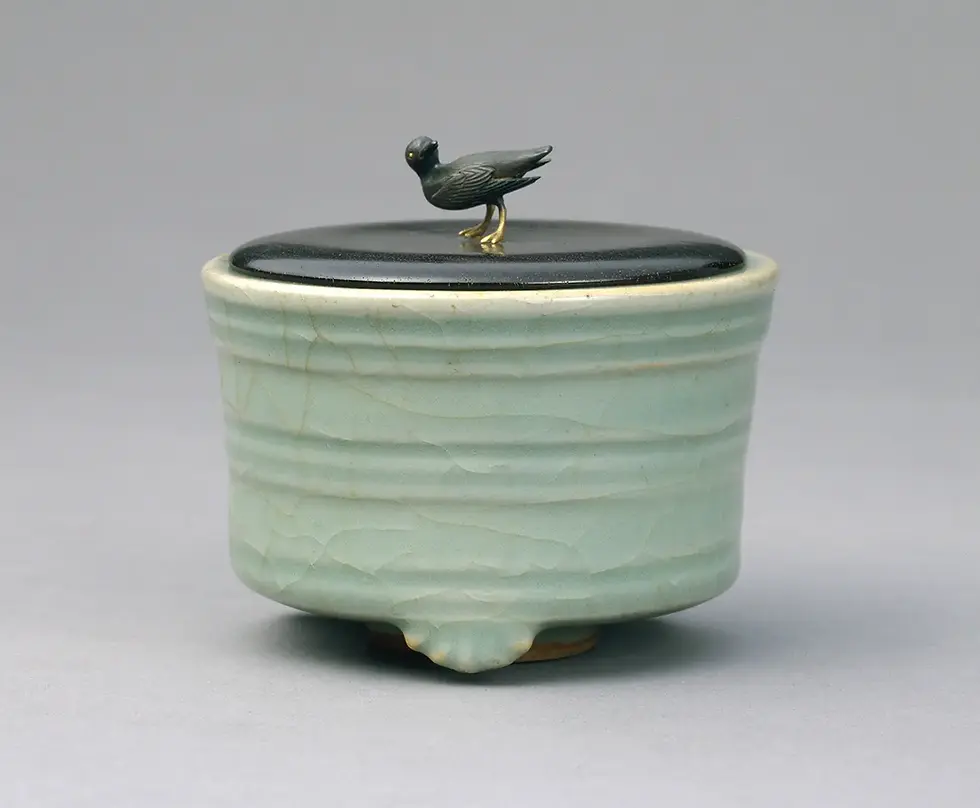
青磁香炉 銘 醒井 南宋-元 13-14世紀,德川美術館藏


在傳統日本地理與神話語境中,「醒井」(さめがい)指涉的是中山道第六十一便宿場——滋賀縣米原市的醒井宿。此地以靈仙山流淌而下的「居醒之清水」聞名遐邇,傳說日本武尊曾在此泉水中洗去巨蛇之毒,其水質終年冰清、澄澈無瑕。醒井青瓷香爐釉色通透、發色梅子青,宛如一汪凝固的清冽泉水,或借用「醒井」這一名水意象為其命銘。這種以「名水」喻「名器」的命名哲學,體現了唐物(Karamono)進入日本後,在茶道審美下本土化的精神重塑。
與德川美術館另一尊家喻戶曉、銘為「千鳥」的國寶級青瓷香爐相比,「醒井」香爐三足更低,更貼近台面。在尾張德川家的傳世記錄中,它常與明代雕漆搭配,作為點綴茶室空間的最高等級道具。本次的展陳用了堆朱的香幾,底下放置花瓶,插有一隻茶花。作為香席中龕的陳列,掛物是二大字「弄月」 ,徳川綱義(綱誠・尾張家3代)筆,17世紀江戶時代。(SACA觀察,2026.10.4)
青磁香炉 銘 醒井 南宋-元 13-14世紀


Springing from the Living Waters of Isame: The Materialization of East Asian Famous Water Imagery in the Tokugawa Art Museum’s Longquan Celadon Tripod Censer, Inscribed "Samegai"
The Tokugawa Art Museum has recently unveiled a previously unpublicized incense burner from its collection. Alongside the museum's renowned historic O-meibutsu (Great Masterpieces) such as the "Chidori" (Plover) and "Shirakiku" (White Chrysanthemum) celadon censers, the latest piece brought to light is the "Samegai."
In the context of traditional Japanese geography and mythology, "Samegai" (醒井) refers to the 61st post town along the Nakasendō highway—Samegai-juku, located in Maibara City, Shiga Prefecture. This locale is celebrated for the "Isame no Shimizu" (居醒の清水), a crystalline spring flowing from Mount Ryōzen. According to legend, the mythological prince Yamato Takeru washed away the venom of a giant serpent in these waters, which remain ice-cold and extraordinarily pure throughout the year. The "Samegai" celadon censer features a translucent glaze with a vibrant, plum-green (Umejiao) hue, evoking the image of a pool of frozen, pristine spring water; it is from this celebrated water source that the vessel derives its poetic moniker (Mei). This philosophical nomenclature—using "famous water" to allegorize a "celebrated vessel"—exemplifies how Karamono (Chinese imports) underwent a spiritual reshaping and localization once integrated into the aesthetic framework of the Japanese Tea Ceremony.
Compared to the "Chidori" censer—the museum's world-famous, National Treasure-class counterpart—the "Samegai" censer leans toward a more tranquil and introspective visual and spiritual presence. According to the heirloom records of the Owari-Tokugawa family, it was frequently paired with Ming dynasty carved lacquerware (such as Tsuishu red lacquer trays) to serve as a top-tier display item for enriching the tea room environment. In this particular exhibition, the presentation features a carved lacquer incense stand (Tsuishu Kōki), beneath which sits a flower vase holding a single blossom. For this incense alcove (Tokonoma) arrangement, the hanging scroll featuring the two large characters "Rongetsu" (弄月 / "Sporting with the Moon") was brushed by Tokugawa Tsunayoshi (Tsunamasa, the 3rd Lord of the Owari-Tokugawa family), dating to approximately the 17th century of the Edo period.
Celadon Incense Burner, Inscribed "Samegai", Southern Song to Yuan Dynasty, 13th–14th Century.


Comments