
宋代筆記 vol.163 德川美術館:傳世宋代千鳥香爐,豐臣秀吉、德川家康所持 - Tokugawa Museum, Longquan Kinuta Celadon ‘Chidori’ Censer (Koro), Heirloom by Hideyoshi, Ieyasu

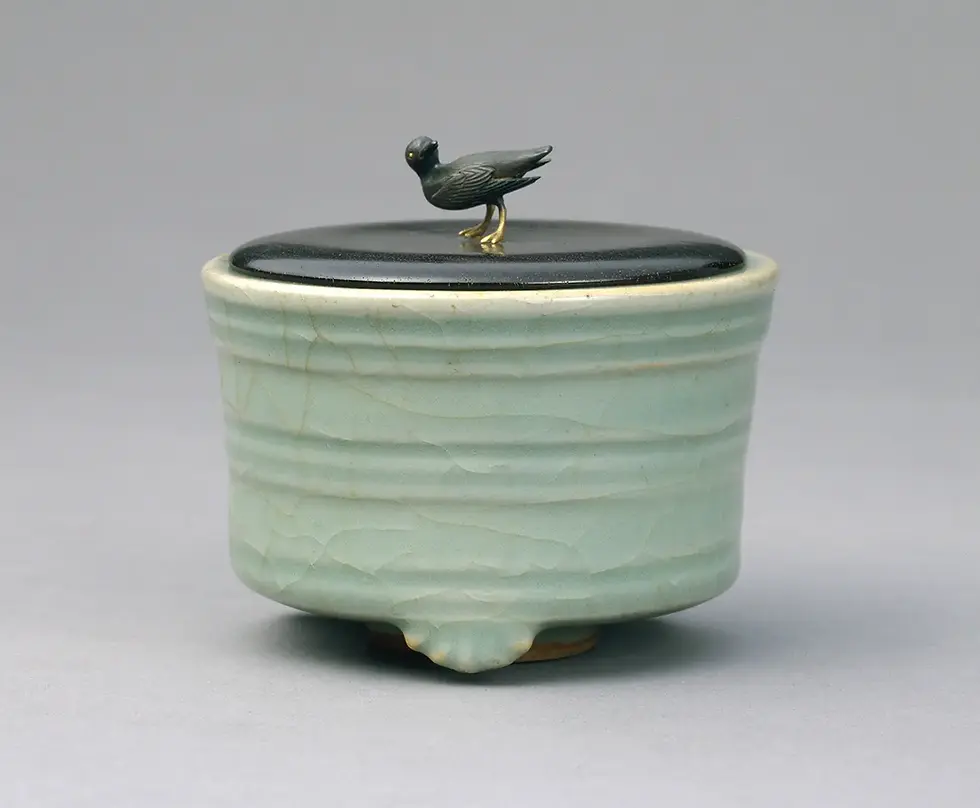
陶瓷審美隨著時代而演變。在日本室町時代,帶有明顯開片(貫入)的龍泉青瓷——尤其是香爐——深受茶人與收藏家珍視。千百年來,龍泉窯頂級青瓷是否應有開片,一直是陶瓷鑑賞界爭論不休的話題。
八代將軍足利義政(慈照院)舊藏、其後由志野宗信拜領並代代相傳的龍泉青瓷香爐「青柳」,即為通體無開片的典範之作。同樣地,汝窯以天青色與細密開片為美已成共識,然而台北故宮博物院所藏那件孤例般的無紋水仙盆,卻常被學界視為汝窯登峰造極的頂點。
最終而言,是否帶開片應歸入個人審美喜好的範疇。宋瓷中的開片與否,實與時代趣味密切相關,並無絕對高下之分。
The appreciation of ceramic aesthetics has evolved across different eras. During the Muromachi period in Japan, Longquan celadons — particularly incense burners — with prominent crackle (guan or kanyu) were highly prized and collected by connoisseurs. The question of whether the finest Longquan celadons should exhibit crackle has remained a subject of debate for centuries. A notable example is the famous Longquan celadon censer known as “Aoyagi” (Green Willow), once owned by the Ashikaga shoguns and later received by the tea master Shino Sōshin, which was passed down through generations as a heirloom despite being entirely free of crackle. Similarly, in the case of Ru kiln ware, although the characteristic sky-blue glaze with fine crackle is traditionally celebrated as the pinnacle of beauty, the unique crackle-free Narcissus basin in the collection of the National Palace Museum in Taipei is often regarded by scholars as the absolute zenith of Ru ware. Ultimately, the presence or absence of crackle should be viewed as a matter of personal aesthetic preference. In Song ceramics, whether a piece exhibits crackle is closely tied to the taste of its time and should not be judged as inherently superior or inferior.


德川美術館:傳世宋代千鳥香爐
豐臣秀吉、德川家康舊藏
龍泉窯砧青磁千鳥香爐
此為高臺且三足懸浮的千鳥形香爐中,最為著名的傳世名品。器表遍布貫入裂紋,予人略顯粗糙之感;然而在室町時代後期,帶有適度貫入的香爐頗受珍視,本器即為其代表例之一。石川五右衛門潛入伏見城豐臣秀吉寢室時,因本香爐蓋上的千鳥啼鳴而被捕獲的逸事廣為流傳。但包括豐臣秀吉在內,德川家康之前的持有者仍不詳。此器屬大名物。
此器為中國龍泉窯燒製的砧青磁香爐,器身環繞三道橫筋(弦紋),三足呈浮起之姿。此類足部浮起的香爐,因形似千鳥(鷸鳥)單足抬起之態,故稱「千鳥形」,而本器被視為此類香爐的「本歌」(原型典範)。傳說石川五右衛門潛入秀吉寢所時,香爐蓋上所附千鳥鈕啼鳴,因而被捕。該千鳥鈕據傳為後藤祐乘所製,並附有明代堆朱輪花形臺座。在《古今名物類聚》等名物記中,記載此器原為武野紹鷗所藏,其後傳至豐臣秀吉、德川家康。家康歿後,作為駿府御分物,分與初代義直(尾張德川家)。
Tokugawa Art Museum: Heirloom Song Dynasty Thousand-Bird (Chidori) Censer
Longquan Kinuta Celadon ‘Chidori’ Incense Burner (Kōro), Formerly Held by Toyotomi Hideyoshi and Tokugawa Ieyasu
This is the most renowned example among “Chidori-shaped” censers featuring a tall base and three raised feet. The piece exhibits extensive crackle (guan) across its surface, giving a somewhat coarse impression. However, in the late Muromachi period, censers with moderate crackle were highly prized, and this example is considered representative of that taste. A well-known anecdote recounts that Ishikawa Goemon was captured after the chidori (plover) on the lid of this censer cried out when he sneaked into Toyotomi Hideyoshi’s bedroom at Fushimi Castle. The ownership history prior to Hideyoshi (and including him) remains unclear before it passed to Tokugawa Ieyasu. It is classified as a daimyōmono (great famous object).
This is a kintō (Kinuta) celadon incense burner produced at the Longquan kilns in China. The body features three horizontal ridges encircling it, with three feet that appear to float or lift upward. Such censers with raised feet are termed “Chidori-shaped” (chidori-gata), likening the posture to a plover lifting one leg. This piece is regarded as the honka (archetypal or original model) of this type. According to legend, when Ishikawa Goemon intruded into Hideyoshi’s sleeping quarters, the chidori finial on the lid cried out, leading to his capture. The chidori knob (finial) is traditionally attributed to the work of Gotō Yūjō. It is accompanied by a Ming-dynasty carved red lacquer (tsuishu) wheel-flower-shaped stand. In Kokin Meibutsu Ruiju and other classic records of famous objects, it is listed as formerly owned by Takeno Jōō. It later passed to Toyotomi Hideyoshi and then Tokugawa Ieyasu. After Ieyasu’s death, as part of the Suruga Go-bunbutsu (divided treasures from Suruga), it was allocated to the first-generation Owari Tokugawa lord, Yoshinao.
高台が高く3つの脚が浮いた、千鳥形香炉の中で世に名高い香炉です。全体に貫入があり、いくぶん粗雑な印象を与えますが、室町時代後期には貫入がほどほどにある香炉が珍重されたようで、その1例と考えられます。石川五右衛門が伏見城の豊臣秀吉の寝室に忍び込んだ時、本香炉の蓋の千鳥がないたため捕えられたというエピソードがよく語られますが、豊臣秀吉含め、徳川家康以前の所有者については未詳となっています。大名物。
中国龍泉窯産の砧青磁の香炉で、胴に三段の横筋が廻り、三つの足が浮き上がっている。この足が浮き上がった姿の香炉を、千鳥が片足をあげるしぐさに例えて「千鳥形」と呼んでおり、本品はこの手の本歌(ほんか)と目されている。石川五右衛門が秀吉の寝所に忍び込んだ時、この香炉の蓋につけられた千鳥が啼いたため捕えられたという伝説がある。その千鳥の鈕は後藤祐乗の作と伝えられ、明時代の堆朱輪花形の台が添えられている。『古今名物類聚』をはじめとする名物記には武野紹鴎所持として、のちに秀吉、家康と伝来し、家康の歿後、駿府御分物として初代義直に分与された。
作品名 | 青磁香炉 銘 千鳥 |
作品名ふりがな | せいじこうろ めい ちどり |
作者名 | |
文化財指定 | |
作品分類 | 陶磁 |
国 | 中国 |
時代 | 南宋-元 |
世紀 | 13世紀-14世紀 |
数量 | 1口 |
材質·技法 | |
サイズ | 高6.4cm 口径9.1cm 底径3.6cm |


Comments