
茶碗筆記 vol.22 藤田美術館:古井戸茶碗,銘「老僧」 - Fujita Museum, Ido Tea Bowl, Named Roso Old Monk


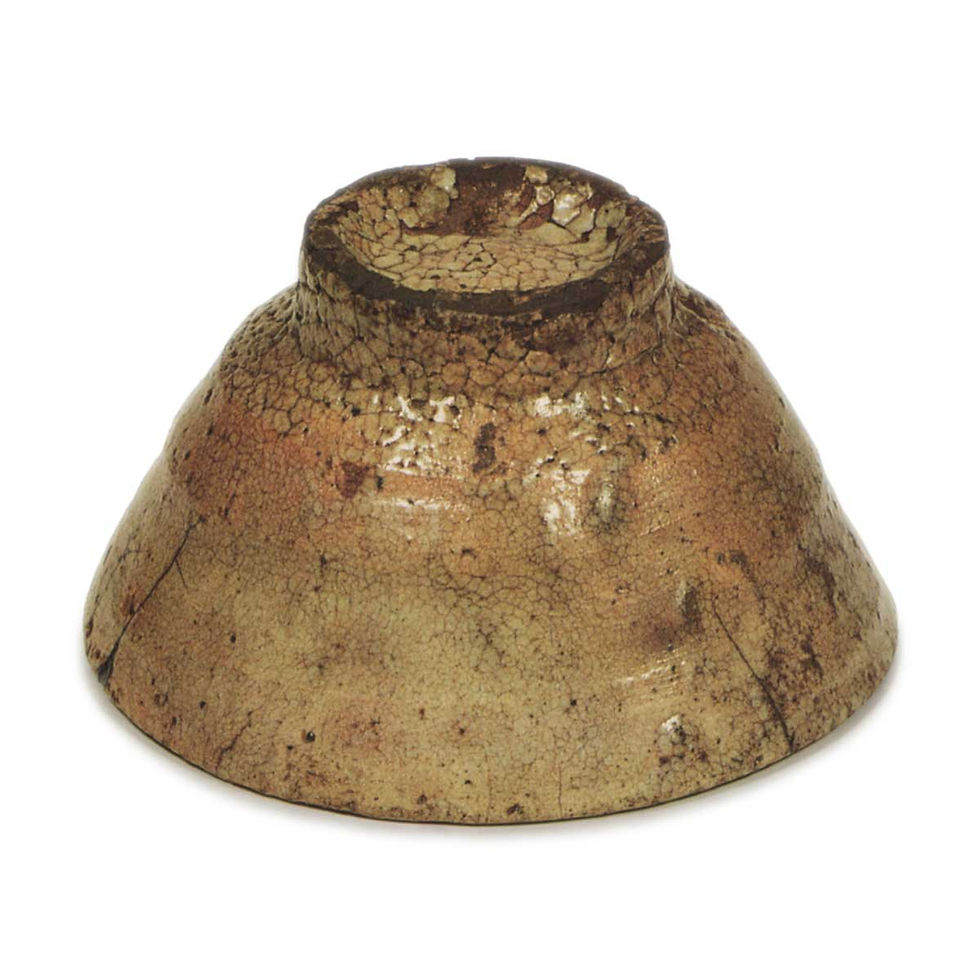
在朝鮮半島日用雜器被日本茶人見立て為茶碗的「高麗茶碗」之中,井戸茶碗被視為格式最高者。巨大高台周緣可見釉藥收縮所成的「梅花皮(かいらぎ)」。從碗身整體的斑痕與高台周圍的侘寂樣貌,豐臣秀吉(1537–1598)所賜、由古田織部(1543–1615)拜領後,命名為「老僧」。
大正七年(1918)十月,水戶德川家(德川侯爵家)於東京美術俱樂部舉行的賣立,以茶道具優品為中心,備受矚目。其中「古井戸茶碗銘老僧」,由藤田傳三郎長男平太郎(1869–1940)以九萬一千一百圓購入,為當次高額落札品之一。
In October of Taishō 7 (1918), the Mito Tokugawa family (Tokugawa marquessate) held a sale at the Tokyo Art Club that centred on outstanding tea utensils and attracted considerable attention. Among the lots, the Ko-Ido tea bowl named “Rōsō” was purchased by Heitarō Fujita (1869–1940), eldest son of Denzaburō Fujita, for 91,100 yen, ranking among the highest prices realised at the auction.

古井戸茶碗 銘「老僧」
こいどちゃわん めい ろうそう
Ido Tea Bowl, Named “Rōsō (Old Monk)”
朝鮮時代 16世紀
大名物
藤田美術館
高度:7.9–8.4 cm,口徑:14.3–14.9 cm,高台外徑:6.5 cm,高台高度:1.2–1.5 cm


高台特別碩大堅實,彷彿老樹深深扎根於大地的氣象,與通途井戸相較,姿態極具異色。釉肌枯蒼,梅花皮高台如苔蘚覆蓋的巖石,口緣數道縱貫入更添寂趣,宛若面對悟道老僧之感。古田織部之命銘,最為妥切。
高度與口徑雖達大井戸水準,然因高台之故,整體顯得小巧,故被視為小井戸。然其作風與所謂小井戸迥異,四邊壓制而堂堂的氣象,連伏見屋《名物茶碗集》亦將其列入大井戸之中。
胴部轆轤目四段環繞,釉調潤澤,略帶青味;裾圍梅花皮地上有一處掛釉不均,更添景色。見込み有五處目跡,點在的斑痕亦深具茶趣。
盤石般堅固的高台,實為此碗最大看點。覆蓋其上一面的梅花皮,尤其底內別具一格的大梅花皮,宛如龜裂的冰河,正與此高台相稱,可稱無上添景。畳付諸處梅花皮剝落,更增淒烈之感。此碗看點,幾乎盡在高台。與朴直的作意相輔,豪宕之氣壓倒觀者。
傳承
原為太閤秀吉所持,古田織部拜領後命銘「老僧」,內箱蓋表書付據傳為織部親筆。其後傳至礒田助左衛門,再讓予外孫海保元太郎。海保家為江戶屈指可數的豪商,以持有諸多名物茶器聞名。文政九年,因水戶德川家中納言齊修(哀公)所望,由海保家獻上。大正七年水戶德川家藏品拍賣之際,由大阪藤田家競得,此後傳於藤田家;戰後隨藤田美術館設立而入藏。近年除本館展觀外,昭和三十九年亦出陳於光悅會。
箱書
內箱蓋表書付:古田織部「老僧御茶碗」
外箱蓋表書付:「井戸茶碗銘老僧古田織部殿書付」
外箱蓋裏書付:水戶德川家齊昭(烈公)「哀公遺愛 齊昭記(花押)」
齊昭烈公(景山)為幕末諸侯中有數的數寄者與好陶家,親自研究陶法,並製作光悅風的手造茶碗。
另附屬文書中,下列一則與傳承相關,特為注目,故錄之:
老僧井戸茶碗
太閤所持、古田織部拜領、其後礒田助左衛門老僧満月二之茶碗所持也。老僧茶碗、外孫海保元太郎讓之。満月茶碗海保何某讓之者也、其後満月堀田相模守殿傳之、又其後竹田長春院江被遣ト云云。
(満岡忠成)
Ko-Ido Tea Bowl, Named “Rōsō” (Old Monk)
こいどちゃわん めい ろうそう
Ido Tea Bowl, Named “Rōsō (Old Monk)”
Joseon period, 16th century
Among the “Koryo chawan”—everyday Korean ceramics elevated by Japanese tea masters to the status of tea bowls—the Ido tea bowls were regarded as the most prestigious. Around the large foot, the glaze exhibits the characteristic shrinkage known as kairagi (“plum-blossom skin”). From the stains distributed across the bowl and the wabi appearance around the foot, it was named “Rōsō” (Old Monk) by Furuta Oribe (1543–1615), who received it as a gift from Toyotomi Hideyoshi (1537–1598).
O-meibutsu (Great Famous Object)
Fujita Museum
Height: 7.9–8.4 cm
Mouth diameter: 14.3–14.9 cm
Foot outer diameter: 6.5 cm
Foot height: 1.2–1.5 cm
The foot is exceptionally large and robust, conveying the presence of an ancient tree firmly rooted in the earth—markedly different in character from ordinary Ido bowls. The glaze surface is dry and austere; the kairagi on the foot resembles moss-covered rock. Several vertical cracks (kan’nyū) at the rim further heighten the sense of solitude, evoking the feeling of standing before an enlightened old monk. Furuta Oribe’s naming could not be more apt.
Although the height and mouth diameter reach the scale of a ō-ido (large Ido), the massive foot makes the overall form appear more compact, which is why it was classified as a ko-ido (small Ido). Yet its style differs distinctly from typical ko-ido examples. The commanding, four-square presence is so imposing that even the Fushimiya Meibutsu Chawan-shū places it among the large Ido bowls.
The body shows four turns of wheel-throwing marks. The glaze is moist and slightly bluish; on the kairagi around the lower body there is one area of uneven application that adds scenic interest. Five kiln spur marks appear in the interior, and the scattered stains are rich in tea flavor.
The rock-solid foot is the greatest point of interest in this bowl. The continuous kairagi covering it—and especially the magnificent large kairagi on the underside of the foot—resembles a cracked glacier and forms an unsurpassed scenic complement perfectly suited to this foot. In places the kairagi has flaked away at the tatami-tsuki, intensifying the austere intensity. One may say that the entire interest of the bowl resides in the foot. Combined with its unpretentious making, the bold, expansive character overwhelms the viewer.
Provenance
Originally in the possession of Taikō Hideyoshi, it was bestowed upon Furuta Oribe, who named it “Rōsō.” The inscription on the inner lid of the inner box is said to be in Oribe’s own hand. It later passed to Isoda Sukezaemon and was then given to his grandson Kaibo Gentarō. The Kaibo family were among the foremost merchant houses of Edo and were known for owning numerous famous tea utensils. In Bunsei 9 (1826), at the request of the Chūnagon Narihiro (Aikō) of the Mito Tokugawa house, it was presented by the Kaibo family. At the 1918 sale of the Mito Tokugawa collection it was acquired by the Fujita family of Osaka and has remained with them since; after the war it entered the Fujita Museum upon the museum’s establishment. In addition to exhibitions at the museum itself, it was shown at the Kōetsu-kai in 1964.
Box Inscriptions
Inner box, lid exterior: Furuta Oribe, “Rōsō go-chawan”
Outer box, lid exterior: “Ido chawan mei Rōsō, Furuta Oribe-dono kakitsuke”
Outer box, lid interior: Mito Tokugawa Nariaki (Rekkō), “Aikō iai, Nariaki ki (kaō)”
Rekkō Nariaki (Keizan) was one of the foremost aesthetes and ceramic enthusiasts among the late-Edo daimyo. He studied ceramic techniques himself and produced hand-built tea bowls in the style of Kōetsu.
Among the accompanying documents, the following is noteworthy for its bearing on the provenance and is therefore recorded here:
Rōsō Ido chawan
In the possession of the Taikō; received by Furuta Oribe; thereafter Isoda Sukezaemon held both the Rōsō and the Mangetsu tea bowls. The Rōsō bowl was given to his grandson Kaibo Gentarō. The Mangetsu bowl was given by a certain Kaibo; thereafter the Mangetsu passed to Hotta Sagami-no-kami, and later was sent to Takeda Chōshun’in, etc.
(Mitsuoka Tadanari)
古井戸茶碗 銘 老僧
こいどちゃわん めい ろうそう
Ido Tea Bowl, Named "Rōsō(Old Monk)"
朝鮮時代 16世紀
朝鮮半島の日用雑器を日本の茶人たちが茶碗に見立てた「高麗茶碗」のなかで、 最も格式高いとされた井戸茶碗です。大きな高台の周辺には釉薬の縮れ「梅花皮(かいらぎ)」がみられます。茶碗全体にみられるシミや、高台周辺のわびた様子から、豊臣秀吉(1537~1598)より拝領した古田織部(ふるたおりべ、1543~1615)によって「老僧」と名付けられました。
水戸徳川家(徳川侯爵家)売立目録 大正7年(1918)10月
東京美術俱楽部で開かれた水戸徳川家の入札は、茶道具の優品が中心に出品され、大いに注目を集めました。特に「古井戸茶碗銘 老僧」は、藤田傳三郎の長男・平太郎(1869~1940)が9万1,100円で購入し、高額落札品の一つとして知られます。
大名物
藤田美術館
高さ:7.9~8.4cm口径:14.3~14.9cm高台外径:6.5cm同高さ:1.2~1.5cm
高台がとくに大きくがっしりとして、あたかも大地に太敷く老樹の概があり、通途の井戸と比べて、姿にすこぶる異色があります。釉肌また枯蒼、梅花皮(かいらぎ)の高台は苔むす巌のごとく、口辺数本の縦貫入も寂びをそえて、さながら悟道の老僧に対するの感があります。古田織部の命銘も、もっともとうなずかれます。
高さや口径は大井戸なみながら、高台のせいで総体小振りに見えるため、小井戸とされたものでしょう。しかし作風は、いわゆる小井戸とも選を異にするもので、四辺を圧して堂堂たるその印象は、伏見屋も『名物茶碗集』で、これを大井戸のなかに入れているほどです。 胴には轆轤(ろくろ)目四段回り、釉調はしっとりと、やや青味をおびて、裾回り梅花皮(かいらぎ)地には、一ヵ所掛けはずしがあり、景を加えています。見込みには目跡が五つあり、点在するしみも茶趣深いです。 盤石のごときがんじょうな高台は、この茶碗の最大の見どころでもありますが、これを被覆する一面の梅花皮(かいらぎ)、ことに底内の別してみごとな大梅花皮(かいらぎ)は、いわば亀裂せる氷河のごとく、いかにもこの高台にふさわしい、無上の添景とも称すべきものです。ときに畳つきの諸所に梅花皮(かいらぎ)の剥落しだのは、いっそうの凄烈さを加えます。この茶碗の見どころは、高台に尽きるといってもよいです。朴直の作ゆきと相まって、豪宕の感は、観る者を圧します。
伝来は、もと太閤秀吉所持であったのを、古田織部が拝領して、老僧と命銘、内箱蓋表書き付けは織部筆といわれます。のち礒田助左衛門に伝わり、ついで、外孫海保元太郎に譲られました。ちなみに海保家は江戸屈指の豪商で、数々の名物茶器の所持で知られます。その後文政九年になって、水戸徳川家の中納言斉修(哀公)の所望によって海保家から献上ぎれたが、大正七年の水戸徳川家蔵品売り立ての際に大阪藤田家に落札、爾来同家に伝わり、戦後、藤田美術館の設立ととかに同館蔵品となりました。最近では同館展観のほかに、昭和三十九年光悦会にも出陳されました。内箱 蓋表書き付け 古田織部「老僧御茶碗」外箱 蓋表書き付け 「井戸茶碗銘老僧古田織部殿書付」同 蓋裏書き付け 水戸徳川家斉附(烈公)「哀公遺愛斉昭記(花押)」 斉昭烈公(景山)は、幕末諸侯中有数の数寄者かつ好陶家で、みずから陶法も研究し、光悦ふうの手造り茶碗を作っています。
なお付属の文書中、左記は伝来に関するものとして注目されますので、挙げておきます。老僧井戸茶碗太閤所持、古田織部拝領、其後礒田助左衛門老僧満月二之茶碗所持也。老僧茶碗、外孫海保元太郎譲之。満月茶碗海保何某譲之者也、其後満月堀田相模守殿伝之、又其後竹田長春院江被遣ト云云。(満岡忠成)


Comments