
拍賣筆記 vol.409 蘇富比香港2026:南宋至元龍泉青釉貼纏枝牡丹紋奩式爐,小山富士夫、塚田秀鏡、岡田博物館 - Sotheby’s 2026, Okada Sales Part 2, An Heirloom Longquan Celadon 'Peony' Tripod Incense Burner, Southern Song – Yuan Dynasty
- SACA

- 2 days ago
- 4 min read
Updated: 1 day ago

傳世龍泉青瓷,乃龍泉窯器中之翹楚,亦為藏家最應聚焦之門類。「傳世」二字,不僅承載歷史信息,更往往伴隨釉光寶潤、釉色極致——梅子青、粉青在傳世寶光映照下,愈顯晶瑩剔透、溫潤如玉。
龍泉窯產量龐大,出土與出水之作不僅涉及合法性問題,更關鍵的是,其美學信息與歷史語境已被嚴重割裂。真正的收藏重點,在於尋找傳世精品,藉此建立正統、清晰的美學標準。釉光、釉色未達高標的龍泉器物,其價值應停留在精品的十分之一,甚至百分之一。
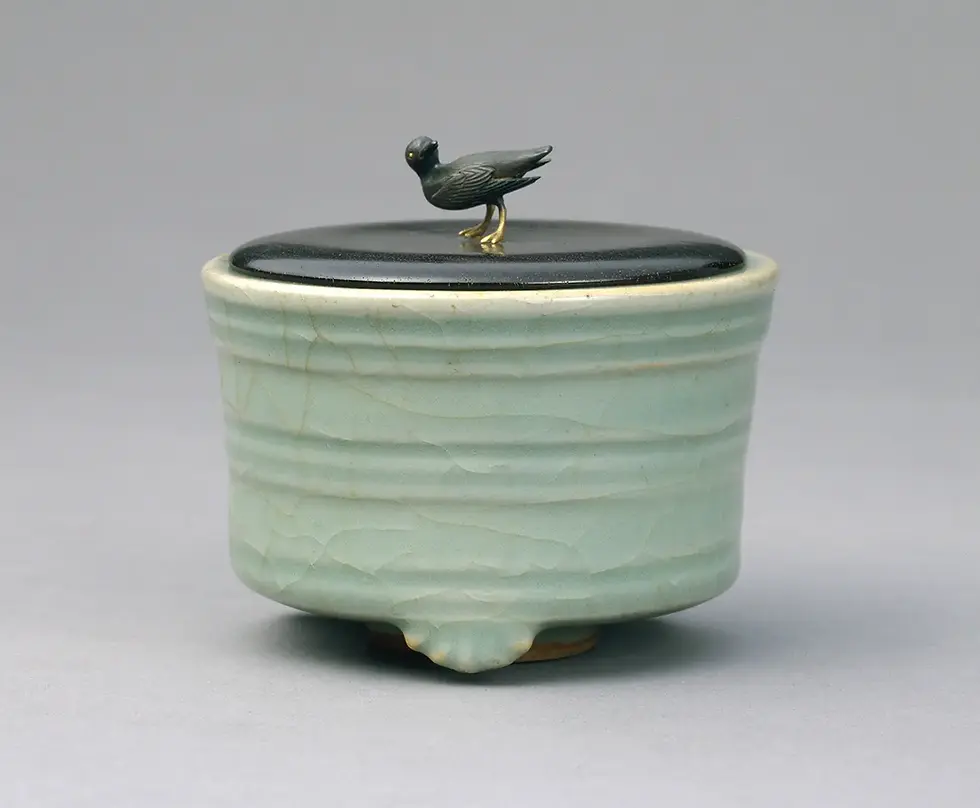
本件所配銀蓋帶有明確銘文,可確指大正年間,尤為珍貴。它不僅提升了藏品的完整度與歷史厚度,更進一步印證:今日日本銀蓋配飾的規範與審美傳統,實淵源於中國。


南宋至元龍泉青釉貼纏枝牡丹紋奩式爐
An heirloom Longquan celadon 'peony' tripod incense burner, Southern Song – Yuan dynasty
Estimate: 300,000 - 600,000 HKD
拍賣時間:2026年9月4日
Description
附塚田秀鏡(1848–1918)製日本金屬蓋,及小山富士夫(1900–1975)題識雙重木盒
寬 13.8 cm
Japanese metal cover made by Tsukada Shukyo (塚田秀鏡, 1848–1918), and double wood box with inscription by Koyama Fujio (小山富士夫, 1900–1975)
w. 13.8 cm
Condition Report
Good overall condition, with just minor typical firing imperfections, mostly firing lines on the base, and a couple of insignificant kiln flakes on the footring. Light surface wear.
整體品相良好。見正常窰燒微瑕,主要爲爐底窰線,及圈足少許窰剝。輕微器面磨痕。


Heirloom Longquan celadon represents the true elite of Longquan production and the category that serious collectors should prioritise.
The designation “heirloom” (傳世) carries more than historical information; it usually signals superior glaze quality—unctuous lustre and refined colour. Under the soft, accumulated sheen of long-term careful preservation, the celebrated meiziqing (plum-green) and fenqing (powder-blue) tones appear even more crystalline and translucent.
Longquan kilns operated on a vast scale. Excavated and shipwreck pieces not only raise legal concerns; more importantly, their aesthetic integrity and historical context have been disrupted. The essential task in collecting Longquan is to seek out genuine heirloom masterpieces and, through them, establish an orthodox standard of beauty. Pieces whose glaze lustre and colour fall short of this standard should command only one-tenth—or even one-hundredth—the value of true masterworks.
The silver cover fitted to the present vessel bears clear inscriptions dating it to the Taishō period, rendering the piece especially precious. It not only enhances the completeness and historical depth of the object, but also further demonstrates that the conventions and aesthetic norms governing silver covers in Japan today ultimately derive from Chinese practice.
現器通體施以肥潤如脂的海藍色青釉,釉面瑩澈透亮,實為龍泉窯此類器形中之佳例。製作於十三世紀青瓷生產之鼎盛時期,具備此類器物最受珍視之特徵:胎體堅實而造型優雅,三足圓潤穩立,釉下模印裝飾清晰有力,施釉豐厚均勻。器身飾以凸起弦紋及纏枝牡丹紋,四朵貼塑牡丹花由細長的卷枝相連。
此類奩式爐於宋代及元代均有燒造。類似器物曾於福建泉州——當時主要海外貿易港口——的宋代地層出土,見《泉州外銷瓷陳列館》,泉州海外交通史博物館,頁8左下;另有一例出土於泉州元代墓葬,刊於《龍泉青瓷》,北京,1966年,圖版23下。東京國立博物館藏有一件傳世品,原為廣田松繁舊藏(館藏編號TG-2481)。
龍泉青瓷在日本尤受推崇。其釉色如玉,青中帶藍,日本鑒賞家以「砧」(kinuta)等詞形容最為理想的宋代青綠色調。此類器物經由貿易傳入日本,融入上層茶道文化,成為茶會中珍貴的陳設與用具,並為收藏家所寶愛。


Robed in an unctuous sea-blue celadon glaze with a luminous surface, the present incense burner is a fine example of a much-loved Longquan design. Made at the height of celadon production in the 13th century, it possesses all the features most desirable for a piece of this type: sturdily potted yet gracefully poised atop three small bulbous feet, enlivened by crisp moulded ornament under a generously applied glaze. The body is decorated with raised ribs and a peony scroll design, with four sprig-moulded blossoms joined by stems of trailed slip.
Incense burners of this type were made in both the Song and Yuan dynasties. Similar examples have been excavated from Song layers at Quanzhou, Fujian, the main overseas trade port of the time; see Quanzhou Waixiao Ci Chenlieguan, Museum of Overseas Communication History, Quanzhou, p. 8, bottom left; and from a Yuan tomb at Quanzhou, illustrated in Longquan Qingci, Beijing, 1966, pl. 23, bottom. An heirloom example from the collection of Mr Hirota Matsushige is preserved at the Tokyo National Museum (acc. no. TG‑2481).
Longquan wares were especially prized in Japan. Their glazes were admired for a jade-like, blue-green colour that Japanese connoisseurs described with terms such as kinuta (“mallet”) for the most admired Song blue-green tones. These wares arrived through trade and were incorporated into elite tea culture, where they were treasured as prestigious tea-ceremony vessels and displayed in collections.



Comments