
拍賣筆記 vol.357 蘇富比香港2026:唐至宋黑石灰岩臥犬,埃斯肯納齊 - Sotheby’s HK 2026, An Inscribed Black Limestone Sculpture Of A Hound, Eskenazi, Tang - Song Dynasty
- SACA

- 2 days ago
- 7 min read


此尊碩大的黑石灰岩臥犬實屬罕見。在埃斯肯納齊(Eskenazi)嚴苛的質控標準下,300至600萬港元的估價,無疑是對尚未深諳雕刻之美的中國藏家的一次考驗。這類極其考驗三維空間鑑賞力的雕塑,向來是歐洲、尤其是法國藏家的強項,卻也長期是中國收藏界的審美盲區。習慣了『器皿思維』的藏家能否打破傳統束縛,跨越至動物雕塑的藝術領域,本次拍賣將是一次關鍵的觀察指標。
A black hound sculpture of such monumental scale is exceedingly rare. Given the rigorous selection standards of Eskenazi, the estimate of HKD 3–6 million presents a significant challenge to Chinese collectors, many of whom remain unacquainted with the nuances of sculpture. Mastery of three-dimensional aesthetics has long been the forte of European—particularly French—connoisseurs, yet it remains a persistent weakness for their Chinese counterparts. Whether the long-standing 'utilitarian vessel' mindset can be transcended remains to be seen in this upcoming Zoomorphic auction.






唐至宋
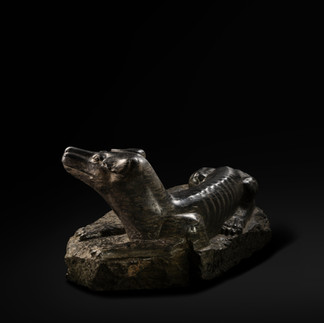
黑石灰岩臥犬
PROPERTY OF A GENTLEMAN | 仕紳收藏
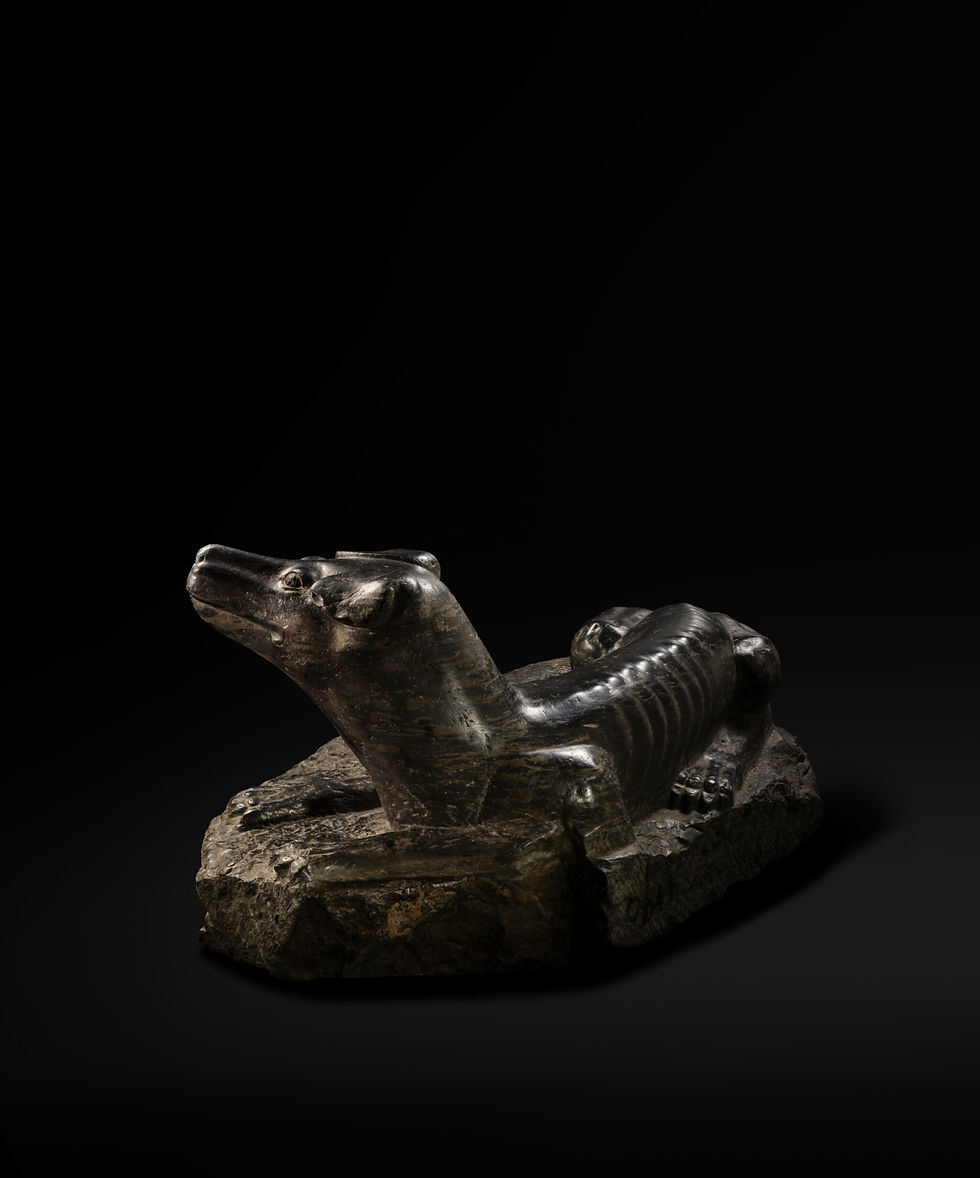
A unique and large inscribed black limestone sculpture of a hound, Tang - Song dynasty, 8th - 12th century
Estimate
3,000,000 - 6,000,000 HKD
Description
68 cm
來源
Josette Day-Solvay(1914-1978年)收藏,法國
Tajan,巴黎,2002年12月17日,編號D
埃斯卡納齊,倫敦,2007年

從龐貝古城的門廊至中美洲的金字塔,鮮有形象能如守衛犬般普及且深植人心。此臥犬以細膩的灰石灰岩雕刻而成,歷經數世紀的珍藏及摩挲,表面包漿瑩潤光潔,實為此類題材之典範,更極可能是中國古代石雕造像藝術鼎盛時期的一件孤品傑作。
此犬神態安詳,作伏臥狀,宛如伴於主人足側,然其雙目炯炯,昂首前視,又似蓄勢待發。展現了匠人對石材的精湛駕馭,其寫實手法與對細節的入微刻畫,在同類作品中幾乎前所未見。儘管動物肖生雕塑在唐宋時期已高度發展,如宏偉的陵墓神道石刻,亦或是貴族墓葬中的隨葬明器與生肖俑,但本品之藝術造詣顯然卓爾不群。從尾部的自然捲曲到脊骨的起伏線條,從肋骨的柔和輪廓到其溫馴而機警的神態,此犬所代表的雕刻品秩,似乎僅為最頂層的權貴所專屬,且在宗教或宗廟供奉語境之外極為罕見。
儘管雕像側面的供養銘文已隨歲月流逝而略顯漫漶,但仍為本品的歷史與斷代提供了重要線索。銘文殘存「(某)和五年二月廿二日……武明楊德」字樣,暗示此像或具官方背景,乃為特定儀式所呈獻或供奉。根據對年號首字的考證,本品的年代可推斷為:唐睿宗延和五年(史實上「延和」僅存續一年,即公元712年),或更有可能是北宋徽宗政和五年(即公元1115年)。古代墓葬明器極少帶有銘文,此類紀年銘文的出現,加之雕像表面因長年撫摸而形成的溫潤包漿,有力地證明了它在製作之初便備受珍視,且為世代傳世之物,而非出土明器。拍賣市場上另一件罕見的帶銘文動物石雕,可參考一件尺寸較小的石雕兔,其雕工遠不及本品精細,但同樣立於長方形底座上,見倫敦蘇富比1984年12月11日,編號56,銘文紀年為唐文宗太和元年(公元827年)。
迄今為止,似乎僅存另一件形制相近的石雕臥犬傳世,其尺寸與姿態與本品相若,然雕工較為粗獷,現藏於北京首都博物館,並曾展出於該館2018年的戊戌狗年生肖特展,見《瑞犬望春風:戊戌狗年生肖文化展》,2018年(圖1)。除此兩例之外,這一早期幾乎所有其他大型犬類造像多為陶製,造型較為粗糙且程式化,主要作為隨葬明器之用。可比較一件定為隋代的陶犬,現藏鄭州河南博物院,姿態與本品相似,但特徵刻畫較弱且缺乏神態表現,載於《中國雕塑史圖錄》下卷,上海,1990年,圖版42。北京故宮博物院藏兩組北魏母犬與幼犬陶俑,載於《故宮博物院藏品大系:雕塑編》,卷1,北京,2011年,圖版208及209;以及一件唐代陶犬,其工藝同樣遠不及本件石雕精細,見同書圖版204。
若尋找同時代雕工同樣精湛、但尺寸較小且非紀念碑式的犬類雕塑,則需參考唐代至明初作為護身符、把件及墜飾的微型圓雕玉器。可比較一件低頭犬紋玉墜,定為宋代,載於《天津博物館藏玉》,北京,2012年,圖版140;另一件回首犬,載於羅森,《Chinese Jade from the Neolithic to the Qing》(從新石器時代到清代的中國玉器),倫敦,1995年,圖版26:10,作者指出此類獵犬雕件多為貴族祈求狩獵豐收之用;另有一件唐代仰首玉犬,載於《Chinese Jade Throughout the Ages》(歷代中國玉器),英國藝術委員會與東方陶瓷學會,維多利亞與艾伯特博物館,倫敦,1975年,編號204。
喬塞特·黛(Josette Day)童星出身,演藝生涯多產,1950年以36歲之齡息影後,全身心投入到充滿熱情的藝術收藏中。她的收藏以高古藝術品為主,例如本件臥犬以及著名的古典/埃及時期「被縛的俘虜」(Bound Captive)石雕軀幹。這些高古文物構成了她告別好萊塢後在巴黎生活的重要部分,她一直與這些珍貴的藝術品相伴,直至1978年逝世。

Provenance
Collection of Josette Day-Solvay (1914-1978), France.
Tajan Paris, 17th December 2002, lot D.
Eskenazi Limited, London, 2007.
Catalogue Note
From the doorways of Pompeii to the pyramids of Mesoamerica, few images are as pervasive and beloved as the watchful hound. Hewn from a fine grey limestone, smoothed and polished through centuries of treasured touching, the present figure represents an exemplary contribution to this genre — a likely unique masterpiece from the height of Chinese statuary arts.
Lying serenely, as if at its master’s feet, but peering out ready to pounce, the present figure displays a masterful command of its material, almost unprecedented in its naturalism and attention to detail. Although zoomorphic sculpture was an established art form by the Tang and Song dynasties – from the stone carvings of the ‘Spirit Road’ to companions and zodiacal figures in elite tombs – the present figure appears in a league of its own. From the curl of its tail to the ridge of its spine, the soft bend of its ribcage and its warm yet careful smile, the dog represents a quality of carving apparently reserved only for the most elite and almost never seen outside of a devotional context.
While now worn away by the sands of time, the dedicatory inscription on the side of the sculpture may provide clues as to the history and dating of the figure. Reading “The twenty-second day of the second month of the fifth year of the [...] he reign […] Wuming Yangde,” the inscription implies that the figure was presented or dedicated in an official capacity. Depending on the parsing of the first character in the reign name, the dating of the figure is similarly established: either the fifth year of the Yanhe reign of Tang Emperor Ruizong (which in fact lasted just one year, 712 CE) or, more likely, that of the Zhenghe reign of Northern Song Emperor Huizong (1111–1117), whose fifth year would have been 1115 CE. Figurines in a funerary context are seldom inscribed, and the presence of such inscription – along with the figure’s soft touch-worn patina – provides compelling evidence of its treasured status even in the time of production or its sustained preservation above-ground. For another rare example of inscribed animal sculpture offered in the market, compare a smaller stone hare – far cruder than the present but similarly poised on a rectangular plinth – sold in our London rooms, 11th December 1984, lot 56 and dated by inscription to the first year of the Taihe reign (827 CE).
Today only one other stone hound of comparable form appears to survive, more crudely rendered than the present but of similar size and posture, preserved in the Capital Museum, Beijing and included in the Museum’s exhibition celebrating the year of the dog, Rui quan wang chun feng. Wuxu gounian shengxiao wenhua zhan, Capital Museum, Beijing, 2018 (fig. 1). Aside from these two examples, almost all other large canine images of this early period appear to have been produced in earthenware clay in cruder, more stylised forms for a funerary context. Compare a pottery dog attributed to the Sui dynasty, now preserved in the Henan Museum, Zhengzhou, of similar stance to the present but with less defined features and a total lack of personal expression in Zhongguo diaosu shi tulu [Illustrated history of Chinese sculpture] vol. 2, Shanghai, 1990, pl. 42; two Northern Wei pottery groups of bitches with their young in the Palace Museum, Beijing, in Compendium of Collections in the Palace Museum. Sculpture, pt. 1, Beijing, 2011, pls 208 and 209; and a Tang pottery example, yet again far more rudimentary than the current stone figure, pl. 204.
For similarly fine examples of dog figures of the period but much smaller and less monumental, one must turn to miniature jade carvings, produced as talismans, playthings and pendants from the Tang to Early Ming dynasty. Compare one such pendant depicting a dog with lowered head, attributed to the Song dynasty in Jade Wares Collected by Tianjin Museum, Beijing, 2012, pl. 140; another facing to the rear in Jessica Rawson, Chinese Jade from the Neolithic to the Qing, London, 1995, pl. 26:10, where the author attributes hound figurines to noblemen wishing for success in hunting; and another with head raised, attributed to the Tang dynasty in Chinese Jade Throughout the Ages, Arts Council of Great Britain and Oriental Ceramic Society, Victoria and Albert Museum, London, 1975, cat. no. 204.
Josette Day, who retired from acting in 1950 at age 36 after a prolific career beginning as a child star, embraced her role as a passionate collector under her married name, Josette Day-Solvay. Her collection focused on antiquities, such as the present hound and the notable 'Bound Captive' stone torso from the classical/Egyptian periods. Antiquities formed a key part of her post-Hollywood lifestyle in Paris, where she lived surrounded by these treasured artefacts until her death in 1978.


Comments