
唐代筆記 vol.44 救世熱海博物館:唐代加彩馬俑 - MOA Museum, Atami: Pottery Prancing Horse, Tang Dynasty


唐代加彩馬俑
中國・唐代(7世紀)
高 51.5 公分,全長 55.0 公分,寬 28.0 公分
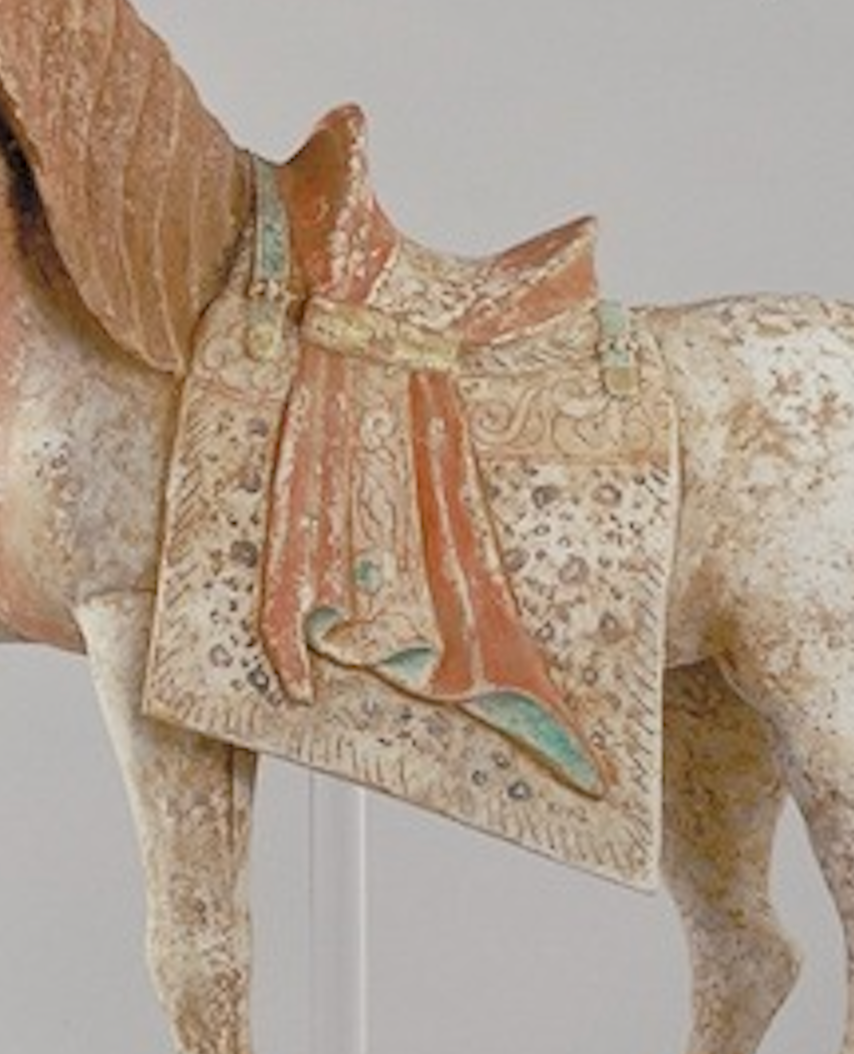
唐代經由絲綢之路輸入的西域良馬,為貴族與高官所趨之若鶩。本件馬俑四肢修長細致,顯然模仿西域馬的體貌特徵。其前肢高舉,頭部微微側轉,姿態宛若舞動。深邃凝思的雙眼、張張的鼻孔、緊繃的鼻樑與鼻端,皆展現名駒的風采。鬃毛的寫實刻畫、華麗的飾鞍與泥障(あおり)之紋飾,體現工匠的精緻手藝。
技法上,先以分段模製,再拼合成完整造形,入窯燒成後,通體施以白色化妝土,再用朱、綠及部分金彩等多種顏料細緻加彩。唐代風俗中,曾流行隨樂起舞的「舞馬」,此俑正令人聯想到當時的場景。作品當屬唐代加彩俑工藝最為成熟的7世紀後半期之代表作。
Polychrome Pottery Figure of a Prancing Horse
China, Tang dynasty (7th century)
Height: 51.5 cm; Length: 55.0 cm; Width: 28.0 cm
During the Tang dynasty, prized horses imported from the western regions via the Silk Road were objects of great desire among the aristocracy and high officials. This pottery figure, with its slender and elongated limbs, clearly evokes the form of such western steeds. The horse raises one foreleg high while turning its head slightly, adopting a prancing, almost dance-like posture. The contemplative eyes, flared nostrils, taut skin along the nasal bridge, and refined muzzle all attest to the physiognomy of a noble steed. Its naturalistically rendered mane, together with the ornate saddle and the finely decorated mudguards (aori), reflect the meticulous craftsmanship of Tang artisans.
Technically, the figure was made in several mold-formed sections, assembled into a complete form, then fired. The surface was covered with a white slip and subsequently painted in multiple pigments—predominantly red and green, with occasional use of gilding. It is said that in the Tang court, horses were trained to dance to music, and this figure vividly recalls such cultural practices. This work belongs to the late 7th century, the period regarded as the zenith of Tang polychrome pottery figure production.
唐代加彩馬俑
中國・唐代(7世紀)
高 51.5 公分,全長 55.0 公分,寬 28.0 公分
時代 | 中国‧唐時代(7世紀) |
素材‧技法 | |
サイズ | 高51.5㎝ 全長55.0㎝ 幅28.0㎝ |
唐時代、シルクロードを通って運ばれてくる西方の名馬は貴族高官にとって垂涎の的であった。本図の馬俑は、四肢が細くて長く、西方の産を思わせる。前肢の一方を高く上げ、頭を少しねじって踊るような姿である。考え深げな眼、ふくらんだ鼻孔、鼻筋のあたりの皮膚の張りや鼻先など、名馬の容姿を示している。たてがみの写実的な描写、飾り鞍や泥障(あおり)の模様など華麗精細な作行きである。技法的には、いくつかの部分に分けて型で作り、それらを合わせて全体の形を整え、窯に入れて焼き上げたもので、全体に白化粧をしてから、朱、緑、さらには一部に金彩など数種の顔料を使って細かく彩色を加えている。唐時代には、音楽にあわせて馬を踊らせる舞馬が流行したといわれ、この馬はそうした風俗をしのばせるものでもある。唐の加彩俑が最も優れた作品を制作した七世紀後半のものである。


Comments