
宋代筆記 vol.162 藤田美術館:傳世宋代禾目(兔毫)天目平茶碗(斗笠碗) - Fujita Museum, Heirloom Nogime Tenmoku, Conical Hare-Fur Bowl, Song Dynasty


這是一件尺寸極小的斗笠形天目茶碗,碗身低矮而口沿外撇,造型輕盈,極可能用於宋代分茶之用。中國浙江省金華市博物館藏有一組類似配套茶具,由一隻較大型天目碗搭配數隻小型天目碗組成,學界普遍推測為分茶時的專用器組。

此器所配的天目台並非宋代原配(推測為明代或稍晚製品),但其大台配小碗的組合形式極具參考價值。這種搭配方式在宋代繪畫中已可見到,現場展覽說明亦引用相關圖像作為佐證,提供了珍貴的歷史搭配實例。


兎毫盞天目茶碗
中國・南宋時代 12~13世紀
此碗產自中國福建省建窯。建窯以富含鐵質的胎土為原料,燒成後呈現深黑發色,再厚施黑釉。釉面在燒製過程中自然形成茶褐色或銀色的細密縱向條紋,中國人因其形似兔毛而稱之為「兔毫」,日本則因紋理如稻穗芒尖,又稱「禾目」(nogime)。
在日本,此類茶碗常搭配黑漆天目台使用,用以點茶或獻茶,展現出宋代建盞獨特的鐵釉結晶之美與茶道審美。


圖中的羅漢獻茶圖中的大天目台和小天目茶碗的搭配十分珍貴重要,值得注意的是,使用的天目應該是柿天目的一種,有高溫狀態下的褐色澀口流淌的感覺。德川美術館藏有一隻來自德川家康所持的灰被天目茶碗(也稱柿天目茶碗),應該是宋畫中描繪的天目茶碗。
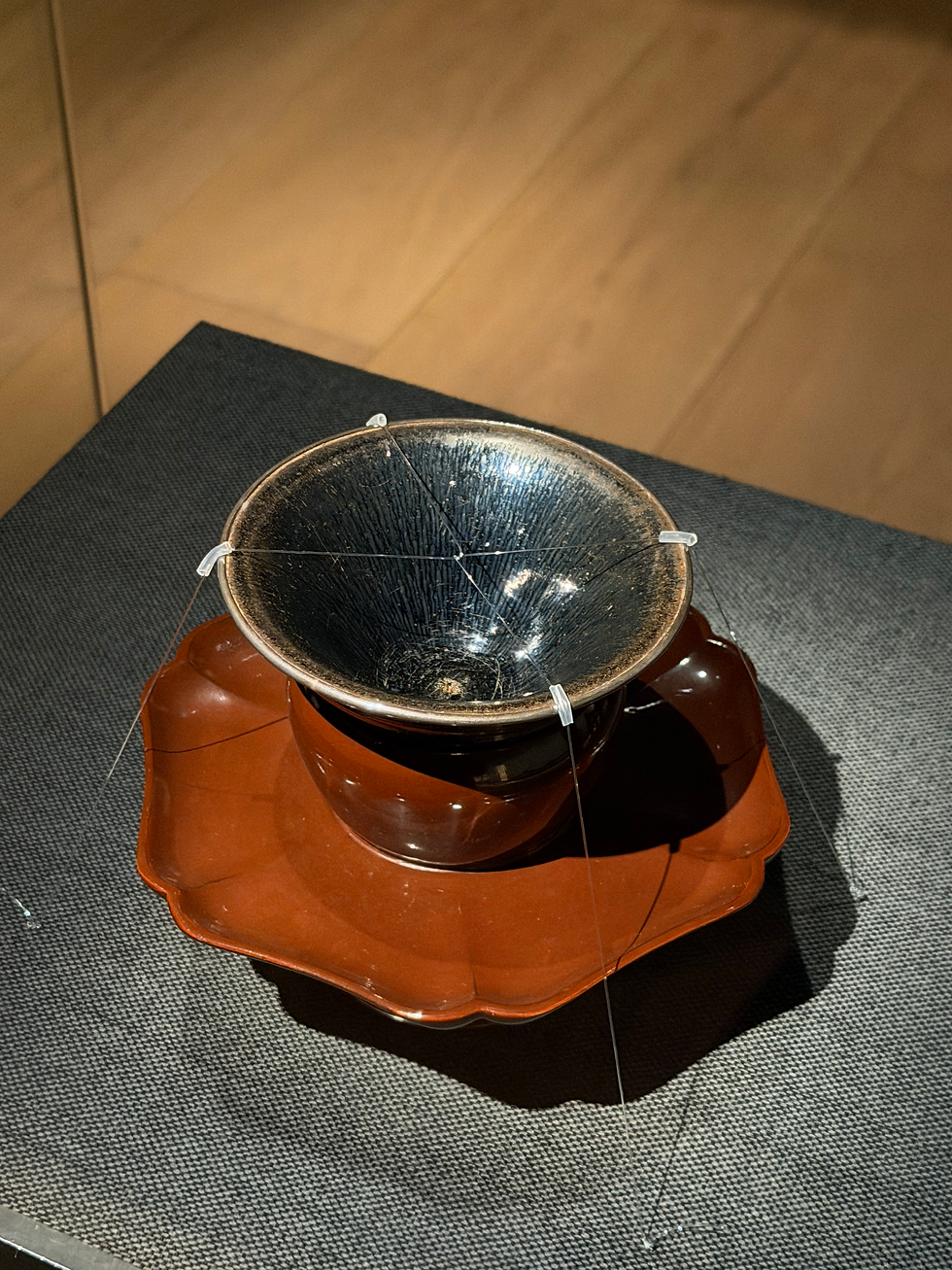
This is an exceptionally small conical douli-style tenmoku tea bowl with a low, flared rim and delicate proportions. It was likely intended for fencha (tea dividing or whisking distribution) during the Song dynasty. A comparable set is preserved in the Jinhua Museum, Zhejiang Province, consisting of one larger tenmoku bowl accompanied by several smaller ones. Scholars generally believe such ensembles were used for dividing and serving tea.
The accompanying tenmoku stand (tenmoku-dai) is not original to the Song period (likely a Ming or later piece), yet the pairing of a large stand with a small bowl is highly significant. This combination appears in Song dynasty paintings, and the exhibition label references relevant pictorial evidence, offering valuable documentation of historical display and usage practices.

Hare’s-Fur Tenmoku Tea Bowl
Nogime Tenmoku
China, Southern Song dynasty, 12th–13th century
This tea bowl was produced at the Jian kilns in Fujian Province. The kilns used iron-rich clay that fires to a deep black color, coated with a thick layer of black glaze. During firing, the glaze developed fine vertical streaks in tea-brown or silvery tones. In China, these are poetically likened to hare’s fur and called “rabbit-hair” (tuhao); in Japan, the delicate streaks resembling rice awns led to the name “nogime” (禾目).
In Japan, such bowls are traditionally mounted on a black-lacquered tenmoku stand for preparing or offering tea, embodying the refined beauty of Song Jian ware iron-glaze crystallization and the aesthetics of the tea ceremony.
The Luohan Offering Tea painting clearly depicts the pairing of a large tenmoku stand with a small tenmoku tea bowl. This combination is exceptionally rare and significant in the study of Song dynasty tea culture. Notably, the tenmoku bowls illustrated in the painting appear to belong to the persimmon-glaze (kaki tenmoku) or ash-covered (haikatsugi tenmoku) type. They exhibit the characteristic brownish glaze that, under high-temperature firing, flows naturally toward the rim, creating a dry, unglazed “seba” (涩口) edge with a dynamic and tactile visual effect.
A fine example is the Haikatsugi Tenmoku Tea Bowl (also known as Kaki Tenmoku) in the Tokugawa Art Museum collection, formerly owned by Tokugawa Ieyasu. Its glaze tone and texture closely resemble the tenmoku bowls depicted in Song paintings, providing valuable material evidence for comparison.
Reference: Song Dynasty Notes vol.74 – Tokugawa Ieyasu’s Heirloom Song Dynasty Haikatsugi Tenmoku Tea Bowl.

極めて小さな斗笠形の天目茶碗で、碗身が低く口縁が外反する軽やかな造形です。おそらく宋代の分茶に用いられたものと考えられます。中国浙江省金華市博物館には、同様の茶碗セットが所蔵されており、大型の天目碗と数個の小型天目碗で構成されています。学者たちはこれを分茶用の器組と推測しています。
本器に付属する天目台は宋代のオリジナルではなく(おそらく明代頃の作)、しかし大台に小碗を組み合わせる形式は非常に貴重な資料です。このような組み合わせは宋画にも登場しており、展示解説でも関連図像を引用して紹介されています。
兎毫盞天目茶碗
とごうさんてんもくちゃわん
Hare's-Fur Tenmoku Tea Bowl
中国・南宋時代 12~13世紀
中国福建省の建窯(けんよう)で作られた茶碗です。鉄分を多く含む土を用い、焼成すると黒く発色する胎に、厚く黒釉を施しています。釉面に現れた茶褐色や銀色の細い縦筋を、中国では兎の毛に喩えて「兎毫」と呼びます。日本では稲穂の芒に似ることから「禾目(のぎめ)」とも称されます。
日本では黒漆塗りの天目台に載せて茶を点てたり献じたりします。宋代建盞特有の鉄釉の結晶美と茶道の美意識を体現した逸品です。
図中に描かれた『羅漢献茶図』では、大型の天目台と小型の天目茶碗の組み合わせがはっきりと表現されており、この搭配は極めて貴重で重要な資料です。特に注目すべきは、絵に描かれた天目茶碗が柿天目(灰被天目)の一種である点です。高火度焼成により褐色の釉薬が自然に口縁まで流れ、渋口(せば)となった様子が生き生きと描かれています。
徳川美術館所蔵の灰被天目茶碗(別称:柿天目茶碗)は、徳川家康の旧蔵品であり、その釉色と質感は宋画に描かれた天目茶碗に極めて近いと考えられます。実物との対照資料として極めて貴重です。
参考:宋代筆記 vol.74 徳川家康の宋代伝世灰被天目茶碗 - Song Notes, Tokugawa Ieyasu’s Heirloom Haikatsugi Tenmoku Tea Bowl.


Comments