
三彩筆記 vol.75 維多利亞與阿爾伯特博物館:唐三彩三足大盤,喬治·尤摩弗帕勒斯收藏,1935倫敦藝展 - V&A Museum, Sancai Tripod Dish, Eumorfopoulos Collection, Tang Dynasty


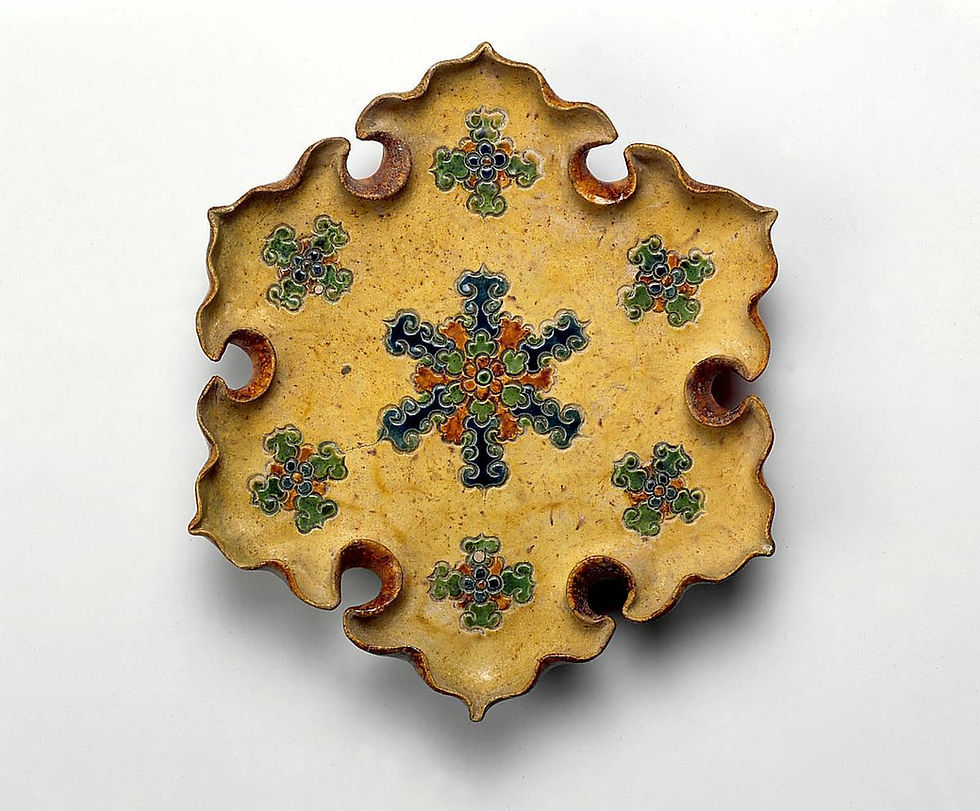
此件器物為英國倫敦維多利亞與阿爾伯特博物館(Victoria and Albert Museum, V&A)藏唐代三彩(sancai)陶器大盤,館藏編號C.11-1935,直徑38.1厘米,年代定為八世紀(約700–750年),產地中國。此盤不僅是唐三彩工藝高峰的實例,更是研究唐代陶瓷與金屬器、絲綢紋樣互動的關鍵標本。其尺寸之大(近40厘米)、紋樣之精,在出土與傳世唐三彩中均屬精品,常被後世作為比較標準。

1935年倫敦藝展,下方較大的三足盤即是喬治·尤摩弗帕勒斯舊藏(本品),上方較小的一個三足盤是克拉克伉儷舊藏。
來源與展覽史
原為希臘裔英籍收藏家喬治·尤摩弗帕勒斯(George Eumorfopoulos, 1863–1939)舊藏。1935年參與倫敦皇家藝術學院「中國藝術國際展覽會」(International Exhibition of Chinese Art, 1935–36),圖錄編號2463,描述為「陶器,刻花並施彩釉」。1935年由藝術基金(Art Fund)、Vallentin遺贈、大維德爵士(Sir Percival David)及大學中國委員會聯合資助購藏入V&A。現陳列於南肯辛頓館陶瓷廳第137室(The Curtain Foundation Gallery)。
形制與裝飾
盤呈淺圓形,口沿微侈,底部通常配以三足(三足盤/tripod dish),屬唐三彩典型祭器或明器形制。盤心印花(或刻劃)一朵大型複合花心(floret/flowerhead),中央小花外圍層層花瓣,施綠釉與白釉交替,形成立體感強烈的花卉主題。花心周圍分佈數朵雲紋(或如意/靈芝狀卷草),均以綠釉勾勒。
底地為琥珀/赭黃色鉛釉,以蠟防(resist)或點彩技法留白,形成密布的白色圓點,營造「蛋菠菜」(egg-and-spinach)式斑駁效果。口沿則以綠釉為主,間以白色點彩與褐色點綴,形成帶狀邊飾。整體色彩以綠、琥珀黃/褐、白三色為主,屬標準唐三彩鉛釉系統。
技法與文化淵源
唐三彩以低溫鉛釉為特徵,釉料在燒成時流動交融,產生自然斑駁。此盤運用「蠟防點彩」(wax-resist dots)技法,點紋背景源自中亞絲綢工藝(如絞纈/扎染、蠟染),而中央印花花心則直接仿自同時期唐銀器的鏨刻(chased)花卉紋飾。Margaret Medley在《T’ang Pottery and Porcelain》(1981)中特別討論此類大盤,指出其紋樣融合中亞紡織與金屬工藝影響,反映唐代絲綢之路文化交匯的多元面貌。類似大型三彩印花盤極為罕見,此件為代表作之一。

唐三彩三足大盤
項目 | 中文 | English |
館藏編號 | C.11-1935 | C.11-1935 |
器物名稱 | 盤 | Dish |
時代 | 唐代,8世紀(約700–750年) | Tang dynasty, 8th century (c. 700–750) |
產地 | 中國 | China |
材質與技法 | 陶器,施彩色鉛釉;印花/刻花,蠟防點彩 | Earthenware with coloured lead glazes; impressed/incised decoration with wax-resist dots |
風格分類 | 唐、鉛釉、三彩(Sancai) | Tang, Lead-Glazed (China), Sancai |
尺寸 | 直徑 38.1 cm | Diameter: 38.1 cm |
物理描述 | 盤心一朵中央花心(floret),外圍三道點彩帶 | Dish with a central floret surrounded by three bands of dots |
題材 | 花卉紋、點紋、紋飾、花、葉 | Floral patterns, dots, 紋飾, 花, 葉 |
來源 | 原喬治·尤摩弗帕勒斯(George Eumorfopoulos)舊藏 | Formerly in the George Eumorfopoulos Collection |
入藏方式 | 1935年由藝術基金(Art Fund)、Vallentin遺贈、大維德爵士及大學中國委員會聯合資助購藏 | Purchased in 1935 with Art Fund support, the Vallentin Bequest, Sir Percival David and the Universities China Committee |
展覽記錄 | 1935–36年倫敦皇家藝術學院「中國藝術國際展覽會」圖錄編號2463 | Exhibited in the International Exhibition of Chinese Art, Royal Academy, London, 1935–36, catalogue no. 2463 |
現陳列位置 | V&A南肯辛頓館,陶瓷廳第137室(The Curtain Foundation Gallery) | V&A South Kensington, Ceramics, Room 137, The Curtain Foundation Gallery |
所屬收藏 | 東亞收藏(East Asia Collection) | East Asia Collection |
重要文獻 | Margaret Medley, T’ang Pottery and Porcelain, London, 1981, pl. 25(pp. 40–41) | Margaret Medley, T’ang Pottery and Porcelain, London, 1981, pl. 25 (pp. 40–41) |
備註 | 大型三彩印花盤,極為罕見;紋樣融合中亞紡織(蠟防點彩)與唐銀器鏨刻影響 | Rare large sancai floral dish; decoration reflects Central Asian textile resist techniques and chased Tang silverwork |
Tang Dynasty Sancai-Glazed Dish with Impressed Floral Roundel
Victoria and Albert Museum, London
Accession number: C.11-1935
Diameter: 38.1 cm
China, 8th century (Tang dynasty)
This large earthenware dish is a classic example of Tang dynasty sancai (three-colour) lead-glazed pottery. It is a shallow circular dish, almost certainly of tripod form (supported on three feet), a type frequently used as offering trays or burial ware. The centre features an impressed or incised composite flowerhead (floret): a small central blossom surrounded by layered petals glazed in green and white. Around it are spaced cloud-scroll or ruyi-like motifs in green. The well is covered in an amber/ochre lead glaze reserved with dense white resist dots, while the everted rim carries a green ground with white and brown spotting.
The decorative scheme is highly significant. Margaret Medley (T’ang Pottery and Porcelain, London, 1981, pl. 25 and pp. 40–41) identified the wax-resist dotted ground as deriving from Central Asian textile techniques (tie-dye and wax-stencilled fabrics), while the central flowerhead closely follows chased designs on contemporary Tang silver. The piece thus embodies the cosmopolitan character of Tang visual culture, in which ceramic, metalwork and textile traditions freely exchanged motifs. Large sancai dishes of this size and complexity are rare; the present example, at 38.1 cm, is one of the finest and best-documented survivors.
Provenance and history
Formerly in the collection of George Eumorfopoulos (1863–1939). It was exhibited in the celebrated International Exhibition of Chinese Art at the Royal Academy, London, 1935–36 (catalogue no. 2463: “Dish; pottery, with incised designs and coloured glazes”). Acquired by the V&A in 1935 with the support of the Art Fund, the Vallentin Bequest, Sir Percival David and the Universities China Committee. It is currently on display in Ceramics, Room 137 (The Curtain Foundation Gallery), V&A South Kensington.
The dish remains a key reference object for the study of Tang sancai, repeatedly cited in auction catalogues and scholarly literature as the benchmark for related floral tripod dishes.


Comments