
三彩筆記 vol.59 舊金山亞洲藝術博物館:唐三彩三足盤,布倫戴奇舊藏 - Asian Art Museum, Sancai Plate In The Shape Of A Flower, Tang Dynasty
- SACA

- Jul 9
- 3 min read
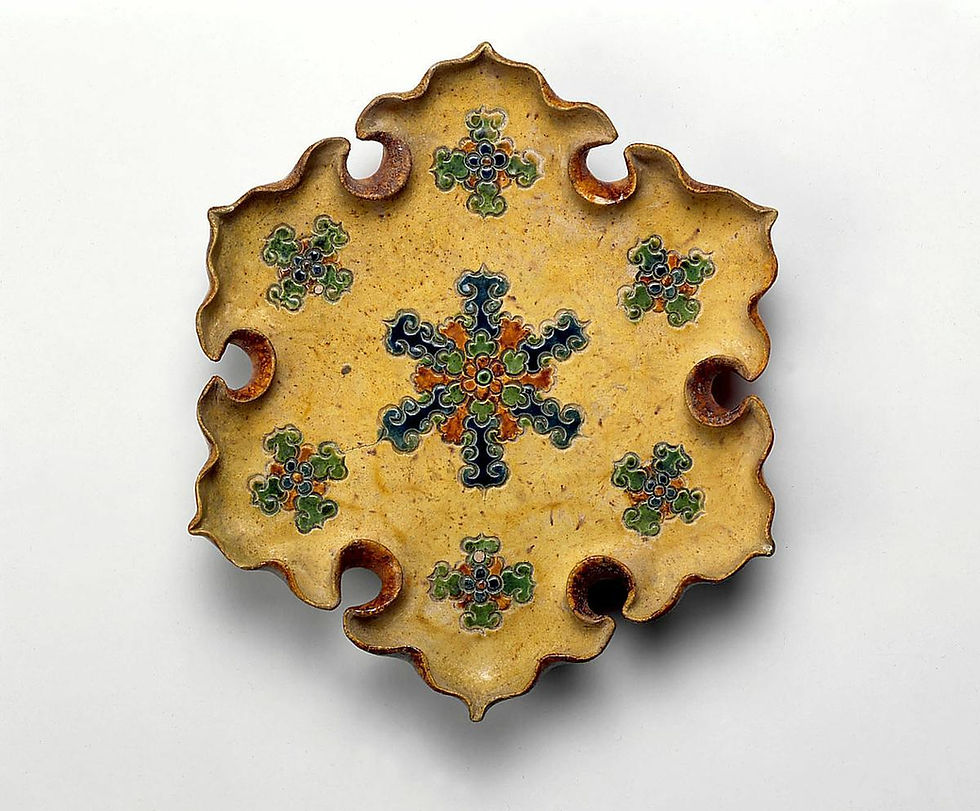
這件唐三彩花形三足盤直徑27.7cm,屬於同類中較大的作品。形態上較為罕見,東京細川家的永青文庫藏有一件細川護立舊藏的唐三彩花型盤,為四個花瓣,而舊金山亞洲藝術博物館這件是為六辦花瓣。色系上,除了褐釉(琥珀釉)、白釉之外,都有藍釉的使用,代表是符合皇家級別標準的三彩器。
This Tang sancai flower-shaped three-legged plate, measuring 27.7 cm in diameter, is among the larger examples of its type. Its form is relatively rare: the Eisei Bunko Collection (Tokyo), formerly part of the Hosokawa Moritatsu Collection, holds a comparable Tang sancai flower-shaped dish with four petals, whereas this piece from the Asian Art Museum in San Francisco features six petals. In terms of coloration, in addition to the brown (amber) and white glazes, it prominently incorporates blue glaze. This combination indicates that the vessel meets the standards of imperial-grade sancai wares.
舊金山亞洲藝術博物館展櫃中最早的釉陶隨葬器約可追溯至公元前 100 年左右,多為綠釉或黃釉。隨後數百年間,中國陶工對鉛釉技術進行了廣泛探索,逐漸將釉色擴展至藍、白及其他多種顏色。至唐代,此類技術臻於巔峰,釉彩可達五、六種之多。這些色彩絢麗的唐代陶瓷,中文稱為「三彩」,即三色釉陶。陶工施釉時,往往不受所塑動物或器物自然色彩的限制,從而使三彩器呈現出中國陶瓷中罕見的率意生動之感。然此表象之下,實則運用了多種精巧技法,例如使用留白劑(resist)及器表刻劃紋樣,以控制釉彩的流動與暈散。三彩器的鼎盛期相對短暫,大約自 690 至 750 年。然其在中國古墓中出土數量龐大,世界各地收藏亦極為豐富,足見這一中古時期中國貴族風尚所具有的持久魅力。

唐三彩花形盤
產地:中國河南省
年代:618–907 年
朝代:唐代(618–907)
材質:陶胎三彩釉
尺寸:高 5.4 厘米,直徑 27.7 厘米
收藏來源:艾弗里·布倫戴奇收藏
館藏編號:B60P524
部門:中國藝術
分類:陶瓷
展覽位置:15 號展廳
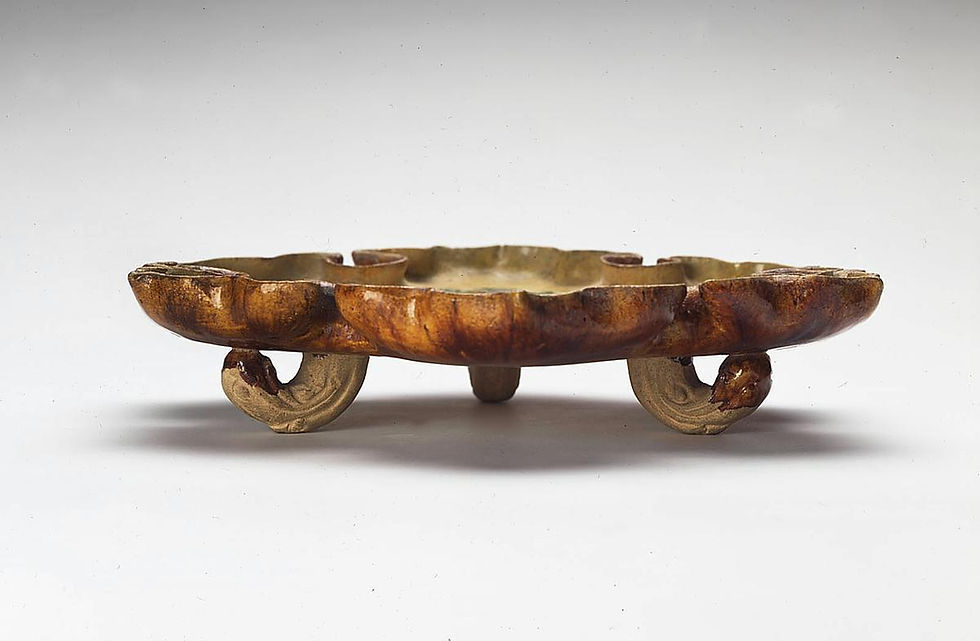
Plate in the Shape of a Flower
Place of Origin: Henan Province, China
Date: 618–907
Dynasty: Tang dynasty (618–907)
Materials: Earthenware with sancai glazes
Dimensions: H. 2 1/8 in x Diam. 10 7/8 in (H. 5.4 cm x Diam. 27.7 cm)
Credit Line: The Avery Brundage Collection
Object Number: B60P524
Department: Chinese Art
Classification: Ceramics
On View: Gallery 15
Glazed Pottery of the Tang Dynasty
The earliest glazed funerary pottery displayed in the cases around you dates to around 100 BCE. Most of these early examples are either green or yellow. Over the following centuries, Chinese potters experimented extensively with lead-based glazes, expanding their palette to include blue, white, and numerous other colors. By the Tang dynasty, at the height of this technical achievement, glazes were produced in five or six colors.
These vibrant Tang-dynasty ceramics are known in Chinese as sancai (三彩), or “three-color wares.” The glazes were applied with little regard for the natural coloration of the animals or objects depicted, lending sancai wares a distinctive sense of spontaneity—one of the rare instances in Chinese ceramic history where such an effect appears. This apparent freedom, however, is often the result of sophisticated techniques, including the use of resists and incised patterns to control the flow and pooling of the glazes.
The peak period of sancai production was relatively brief, lasting from around 690 to 750 CE. Nevertheless, the vast quantities of objects recovered from Chinese tombs and now held in collections worldwide attest to the enduring appeal of this aristocratic fashion from medieval China.


Comments