
三彩筆記 vol.48 洛陽博物館:唐三彩純藍釉馬,武則天的精神遺產 - Luoyang Museum, Tang Sancai Blue Glazed Horse, the Spiritual Relics of Wu Zetian

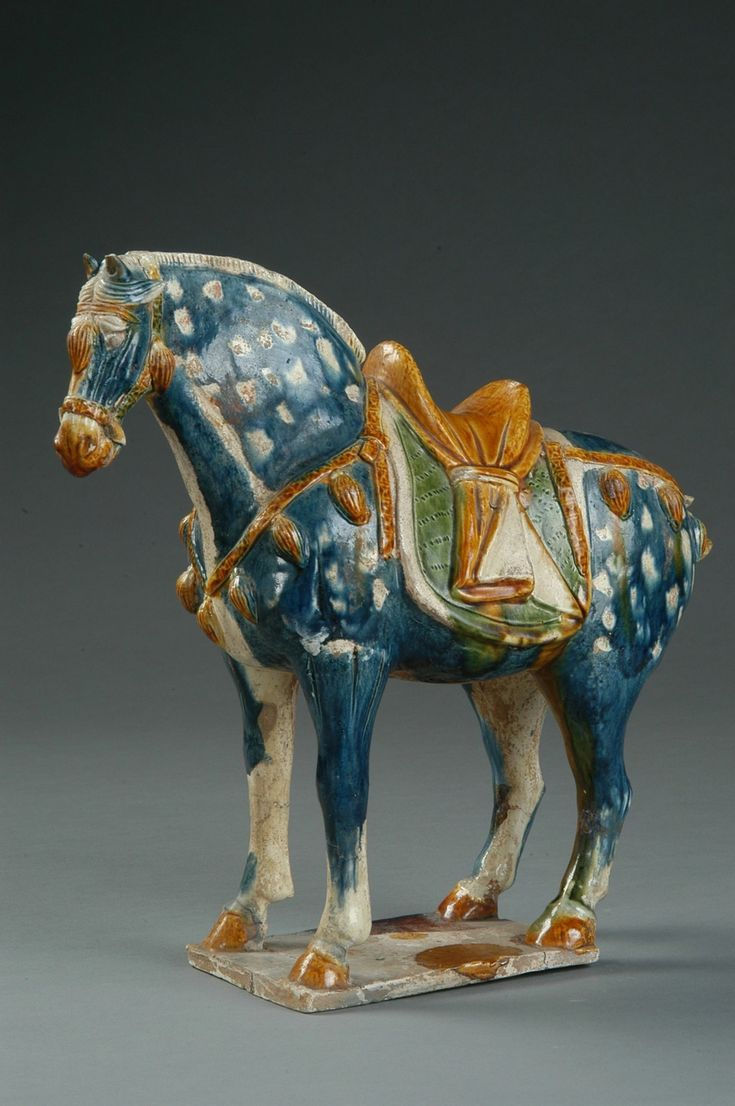
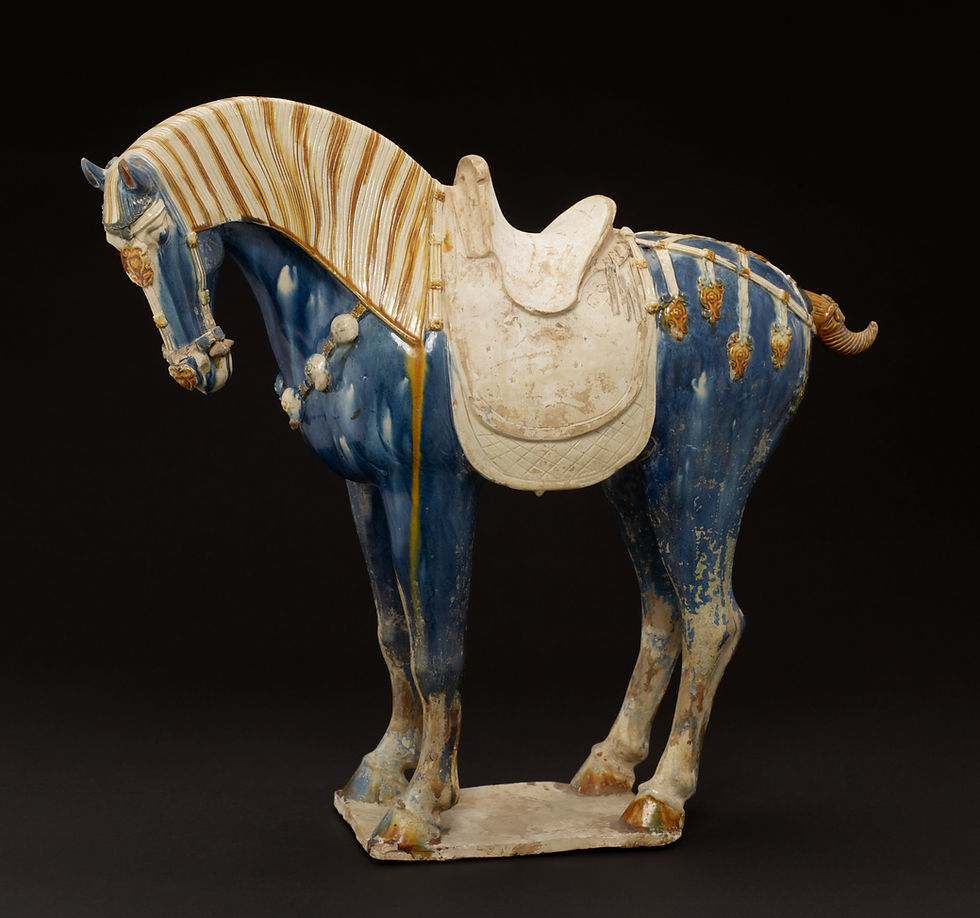
這件唐代唐三彩藍釉馬,高32.5厘米,於1965年出土於洛陽市關林唐墓,現藏洛陽博物館。它以罕見的純藍釉為主,造型生動,體現了唐代陶瓷藝術的巔峰。據知,存世已知公開的唐三彩純藍釉馬僅有四例,此件為其中之一,其餘三例分別藏於美國明尼阿波利斯美術館、美國波士頓美術館,以及香港松隱閣(根據財新《馬年說唐馬》最新披露)。這使得此馬極其珍稀,價值連城。
This Tang Dynasty Sancai blue-glazed horse, measuring 32.5 cm in height, was excavated in 1965 from a Tang tomb in Guanlin, Luoyang, and is now housed in the Luoyang Museum. Predominantly featuring a rare pure blue glaze, its vivid modeling exemplifies the pinnacle of Tang ceramic art. It is known that there are only four publicly documented examples of Tang Sancai pure blue-glazed horses in existence, with this piece being one of them. The other three are held by the Minneapolis Institute of Art in the United States, the Museum of Fine Arts in Boston, United States, and the Song Yin Ge in Hong Kong (as recently disclosed in Caixin's "Horse Year Talks about Tang Horses"). This rarity makes it extraordinarily precious and invaluable.

這件唐代唐三彩藍釉馬不僅珍稀,還曾於2024年10月26日至2025年5月25日在荷蘭李瓦頓的Princessehof國家陶瓷博物館參與「武則天:中國唯一的女皇帝」展覽,作為洛陽博物館借出的高品質文物之一,與其他唐代三彩墓俑(如駱駝、馬匹、樂師和商人)一同展出,突顯了武則天統治下的唐代絲綢之路繁榮與陶瓷藝術成就。展覽聚焦於河南地區文物,洛陽作為武周帝國的「神都」,許多官員在此度過歲月,此馬的出土背景與武則天時代密切相關,雖未直接提及個人連結,但其稀有藍釉象徵了皇家奢華。
藍釉與武則天的關係極為密切,唐代藍釉源自進口波斯鈷料,價格往往數倍於黃金,因此極其珍稀,主要限於皇家與貴族使用,藍釉三彩多見於初唐至中唐高級墓葬。武則天時期藍釉開始廣泛應用,最強有力的證據來自其子李弘(652–675年,唐高宗第五子、武則天長子)和其妻哀皇后墓葬。李弘墓(恭陵)位於河南偃師,1998年發掘出土一批藍釉器物,包括藍釉三彩陶俑、器皿等;哀皇后墓於2005年被盜掘,殘存碎片顯示類似藍釉三彩。這些純藍釉器物被認為是由武則天親自下令製作,用以陪葬其早逝的兒子和媳婦,體現了其對李弘的哀悼與皇家規格。學者劉航宇在《中原文物》2000年第3期〈恭陵美陶〉一文中詳細分析此批藍釉,視為唐代陶瓷史的重要證物,證明藍釉的皇家專屬性與武則天時代的工藝創新。
This Tang Dynasty Sancai blue-glazed horse is not only rare but also participated in the "Wu Zetian: China's Only Female Emperor" exhibition at the Princessehof National Ceramics Museum in Leeuwarden, Netherlands, from October 26, 2024, to May 25, 2025. As one of the high-quality artifacts loaned from the Luoyang Museum, it was displayed alongside other Tang Sancai tomb figures (such as camels, horses, musicians, and merchants), highlighting the prosperity of the Silk Road and ceramic artistry during Wu Zetian's rule. The exhibition focused on artifacts from Henan Province, with Luoyang as the "divine capital" of the Wu Zhou Empire, where many officials resided; the horse's excavation context ties closely to her era, though no direct personal link is mentioned, its rare blue glaze symbolizes imperial luxury.
The blue glaze has a profound connection to Wu Zetian. Tang Dynasty blue glaze derived from imported Persian cobalt, often costing several times more than gold, making it extremely rare and reserved primarily for royalty and nobility, with blue-glazed Sancai commonly found in high-status tombs from the early to mid-Tang. Blue glaze began widespread use during Wu Zetian's time, with the strongest evidence from the tombs of her son Li Hong (652–675, fifth son of Emperor Gaozong and Wu Zetian's eldest son) and his consort Empress Ai. Li Hong's tomb (Gong Mausoleum) in Yanshi, Henan, excavated in 1998, yielded a batch of blue-glazed wares, including blue-glazed Sancai pottery figures and vessels; Empress Ai's tomb was looted in 2005, with remaining fragments indicating similar blue-glazed Sancai. These pure blue-glazed items are believed to have been personally commissioned by Wu Zetian for the burial of her prematurely deceased son and daughter-in-law, reflecting her mourning and imperial standards. Scholar Liu Hangyu's article "Gongling meitao" in Cultural Relics of Central China (2000, no. 3, pp. 66–69) analyzes this batch in detail, considering it key evidence in Tang ceramic history, proving the royal exclusivity of blue glaze and innovations during Wu Zetian's era



Comments