
三彩筆記 vol.47 明尼阿波利斯博物館:唐三彩純藍釉馬,一個世紀的美學教育 - Minneapolis Institute of Art, Tang Sancai Blue Glazed Horse

曾經在Mia:他們騎出去的那匹馬
2016年8月30日
他們是明尼阿波利斯北側老霍桑學校(Hawthorne School)的六年級學生,參加由Junior League贊助的博物館實地考察旅行,他們完全有理由感到驚訝。
那是1956年的春天,這次考察活動名為「Eyes on the East」(目光投向東方)——當時,美國人確實正緊盯著亞洲。韓戰結束不過三年。法國正從越南撤出,而美國軍事顧問正陸續進駐。
然而,對大多數明尼蘇達人來說,亞洲仍是一個謎團。直到1960年代,明尼蘇達的華人人口才翻倍——但仍不到1,300人。即使在美國的藝術圈,中國藝術往往仍被視為一種異國情調的奇物,帶有貶義:冷峻、遙遠。相較於西方藝術,它被認為缺乏感官魅力。「多麼中國啊!」巴納德學院與哥倫比亞大學的藝術批評家與教授Jane Gaston Mahler,在1946年觀看一場中國人物展後評論道,「因為他們全都穿著衣服。」

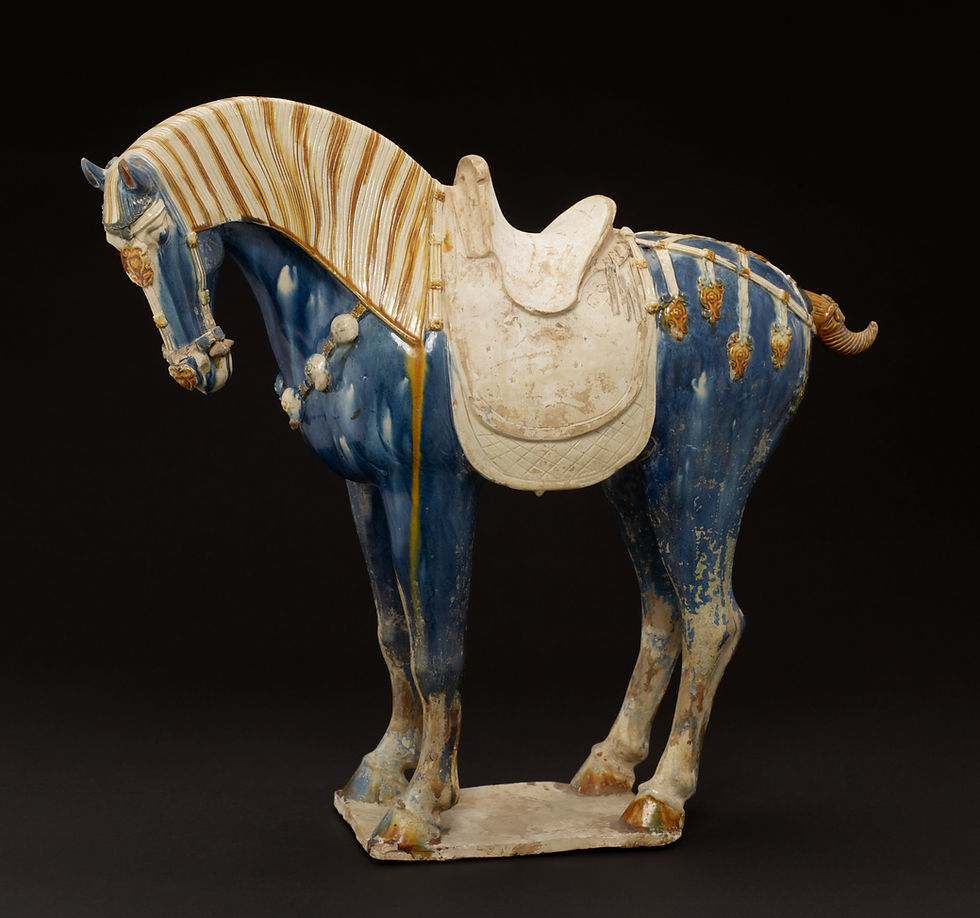
這匹馬——也就是本文主角——在60年後,位於208號展廳從右數第二的位置。
明尼阿波利斯藝術博物館(Mia)於1949年購得這件陶馬,同時入藏的還有其他九件陶俑——包括守衛、駱駝、靈獸等——這些均出自中國唐代一座帝王墓,於前一年(1948年)出土。它們迅速被譽為罕見的發現:一套完整的墓葬陶俑群,覆蓋著大量珍貴的藍釉。這匹馬特別受到博物館青睞,被形容為「迄今發現的最偉大的唐代馬俑之一。其造型充滿徹底的理解,那種受控的躁動不安更顯突出,因為它暗示著一種潛在的力量在驅動著它。」

數十年來,Mia的中國藝術收藏持續擴大。但對這件作品的評價幾乎未變:西方藝術收藏中僅有另一套完整的中國墓葬陶俑群。而這匹馬,如今與它的同伴們一起在208號展廳顯要位置陳列,看起來依然蓄勢待發,準備奔騰而出。
Once at Mia: The horse they rode out on
AUGUST 30, 2016
They were sixth-grade students from the old Hawthorne School on the north side of Minneapolis, on a field trip to Mia sponsored by the Junior League, and they had every right to be surprised.
It was the spring of 1956, and the field trip was called Eyes on the East—at the time, Americans certainly were keeping an eye on Asia. The Korean War had only recently ended, three years earlier. The French were pulling out of Vietnam, and American military advisers were going in.
Yet Asia, for most Minnesotans, remained a mystery. It wasn’t until the 1960s that Minnesota’s Chinese population would double—to less than 1,300 people. And even in American art circles, Chinese art was often still viewed, unfavorably, as an exotic curiosity. Cold. Distant. Lacking in sensuality, compared to Western art. “How Chinese it is!” Jane Gaston Malher, a critic and art professor at Barnard and Columbia, remarked after viewing a 1946 exhibition of Chinese figures. “For all are clothed.”
The horse in question, 60 years later, second from the right in Gallery 208.
Mia acquired this pottery horse in 1949 along with nine other figurines—guardians, camels, spirits—excavated from an imperial tomb of the T’ang Dynasty in China. They were dug up the year before, and quickly hailed as a rare find—a complete set of tomb figures, covered with a generous amount of precious blue glaze. This horse was singled out by the museum as “one of the greatest T’ang horses ever discovered. Modeled with complete understanding, its controlled restiveness is the more striking because of the suggestion of latent power which prompts it.”
Over the decades, Mia’s Chinese collection would grow and grow. But the analysis of this figure hasn’t changed much: only one other complete set of Chinese tomb figures has made it into Western art collections. And the horse, now prominently displayed in Gallery 208 alongside its mates, still looks ready to go.
唐三彩純藍釉馬
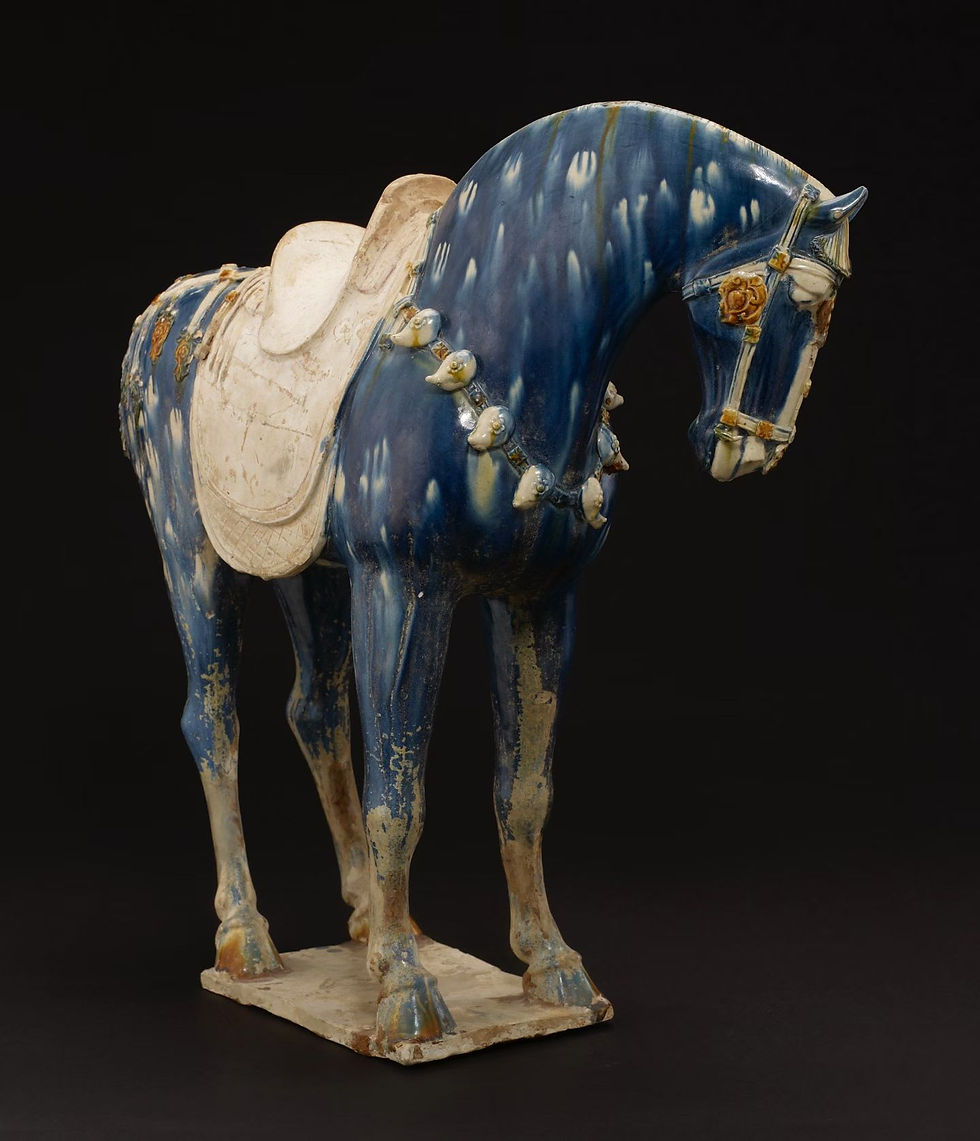
這件唐三彩純藍釉馬是全世界僅存個位數的稀世珍品,唐代陶瓷藝術的巔峰珍寶。藍釉的使用可追溯至武則天時期(7世紀後半葉),開始被宮廷廣泛採用作為皇室與頂級貴族專屬的奢華象徵,可參考武則天長子李弘(太子)及其妃裴氏(追封哀皇后)恭陵出土的多件純藍釉器物(如藍釉雙龍柄尊、藍釉燈等),這些藍釉器證明該技術在高宗、則天時代已臻成熟,用於皇家墓葬以彰顯尊貴。
唐三彩以黃、綠、白三色為主流,但純藍釉(或大面積藍釉)因需使用從西域(波斯)進口的珍貴鈷料,成本高昂、燒製難度極大,僅限皇室與頂級貴族墓葬使用。完整傳世純藍釉馬俑全球屈指可數,目前已知波士頓美術館(Museum of Fine Arts, Boston)藏有一例,根據《財新周刊》文章《馬年說唐馬》(2026年報導),香港松隱閣亦藏有一例唐三彩純藍馬俑。此類純藍釉馬,鮮少流通市場,即使僅撒藍釉的唐三彩馬都極為珍貴,是「三彩掛藍,價值連城」的最佳例證。
This Tang sancai pure blue-glazed horse is one of the extremely rare surviving masterpieces in the world, with only single-digit complete examples known globally—a pinnacle treasure of Tang dynasty ceramic art.
The use of blue glaze can be traced back to the reign of Empress Wu Zetian (second half of the 7th century), when it began to be widely adopted by the imperial court as an exclusive symbol of supreme luxury for the royal family and highest aristocracy. Reference can be made to the pure blue-glazed vessels excavated from the Gongling Mausoleum of Wu Zetian’s eldest son, Crown Prince Li Hong (and his consort, posthumously titled Empress Ai, Pei shi), including blue-glazed double-dragon-handled vases and blue-glazed lamps, which demonstrate that the technique had reached maturity during the reigns of Emperor Gaozong and Wu Zetian, reserved for imperial burials to signify unparalleled status.
While standard Tang sancai pottery features yellow, green, and white glazes as the dominant palette, pure blue glaze (or extensive blue coverage) was exceptionally precious: it required imported cobalt pigment from the Western Regions (Persia), making it vastly more expensive and technically challenging to fire. Such pieces were reserved exclusively for imperial or highest aristocratic tombs. Intact surviving pure blue-glazed Tang horse figurines are countable on one hand worldwide. Currently known examples include one in the Museum of Fine Arts, Boston; according to a report in Caixin Weekly’s article “Speaking of Tang Horses in the Year of the Horse” (published 2026), another is held in the Songyin Ge collection in Hong Kong. Pieces of this caliber rarely appear on the open market—even Tang sancai horses with mere splashes of blue glaze are extraordinarily rare—truly embodying the adage “sancai adorned with blue glaze is worth a fortune.”

圖片:柳揚博士 / Photo: Dr. Yang Liu
這匹馬出自一組共10件墓葬陶俑群,採用三彩(sancai)技法燒製而成。三彩陶最早於北齊時期(550–577年)發展成型,並在唐代得到高度精煉與普及。三彩在唐中國特別流行,因為其流動性的三色釉彩完美契合帝國的 cosmopolitan 品味與先進的陶瓷工藝技術。傳統三彩以琥珀黃、綠、奶油白三色為主,但這件作品以其醒目的藍色表面脫穎而出。藍釉製作極為困難且成本高昂,需仰賴從中亞或波斯進口的鈷料顏料,因此出現頻率遠低於其他顏色。其鮮豔的藍調突顯了唐代在技術上的雄心與 cosmopolitan 美學追求,將這件墓葬俑塑造成奢華與創新的傑出象徵。
This horse comes from a group of 10 tomb figures and is glazed in sancai (“three-color”) ware, a technique first developed during the Northern Qi period (550–577 CE) and refined in the Tang. Sancai became especially popular in Tang China because its flowing tricolor glaze suited the empire’s cosmopolitan tastes and advancing ceramic technologies. While traditional sancai features amber, green, and cream glazes, this example is distinguished by its striking blue surface. Blue was difficult and costly to produce, requiring imported cobalt pigments, and appears far less frequently than other colors. Its vivid tone highlights the Tang dynasty’s technical ambition and cosmopolitan aesthetic, transforming this tomb figure into an exceptional expression of luxury and innovation.
Credit: The Ethel Morrison Van Derlip Fund
Accession Number: 49.1.6
Height: 52.1cm


Comments