
三彩筆記 vol.44 蘇黎世瑞特堡博物館:藍釉胡人騎馬吹簫俑 - Rietberg Museum, Tang Sancai Blue-Glazed Horse Rider with Flute


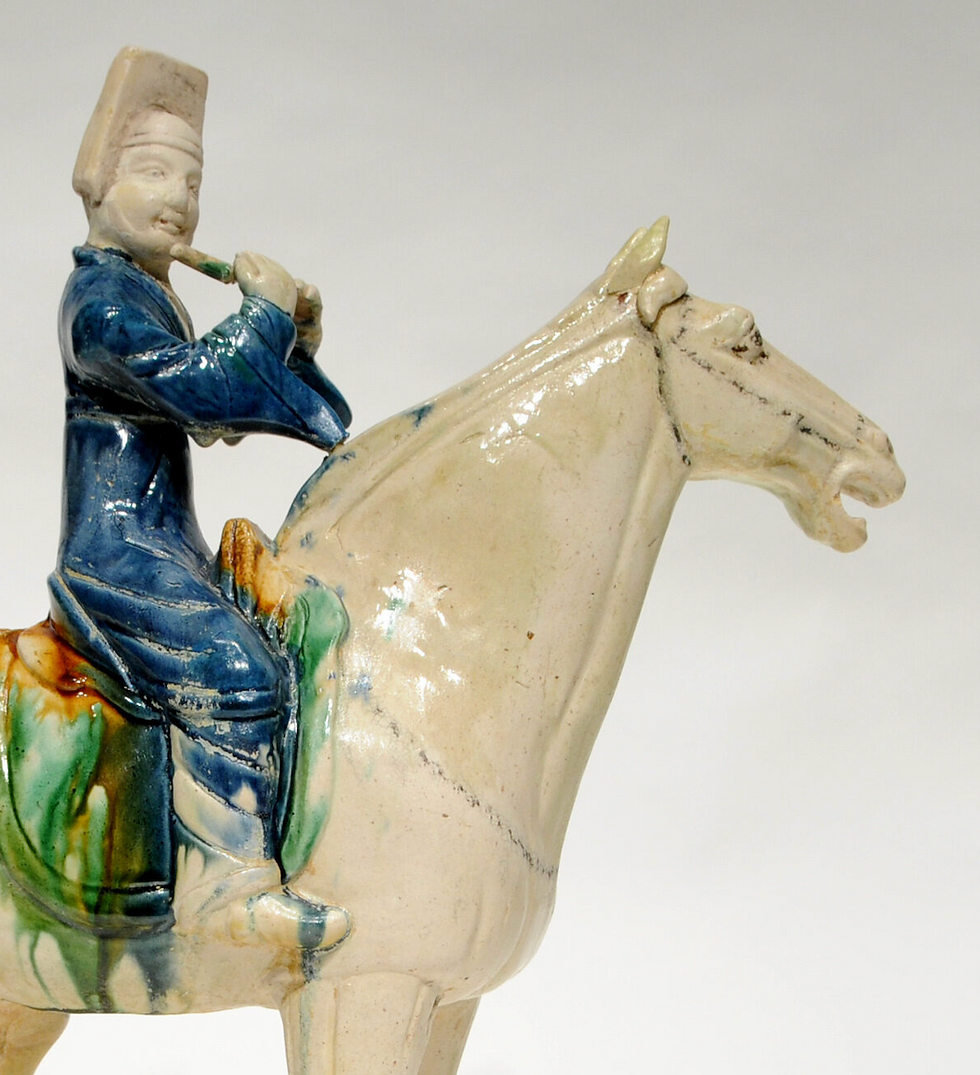
這件唐代藍釉胡人騎馬俑是吹簫音樂俑,在眾多騎馬俑中較為少見,藍釉色彩鮮豔奪目,極其珍貴罕有;俑戴著獨特的尖頂帽,面容生動,體現了胡人特有的異域風情,服飾受當時流行的粟特(Sogdiana)風格影響,反映出唐代絲綢之路的文化交流盛況。此件出自玫茵堂兄弟的珍貴收藏,作為古代藝術界的著名標籤,象徵著頂級中國陶瓷藝術的巔峰水準。
This Tang dynasty blue-glazed Sogdian horseman figurine depicts a flute-playing musician, a rare motif among equestrian figures; its striking blue glaze is exceptional, the pointed hat unique, and the Central Asian features distinctive, showcasing the popular Sogdian attire of the era that highlights cultural exchanges along the Silk Road. From the renowned Meiyintang brothers' collection, it stands as an iconic label in ancient art circles.
藍釉胡人騎馬吹簫俑
尺寸:高44.3厘米
收藏地:蘇黎世里特伯格博物館(Museum Rietberg, Zurich)
編號:MYT 1194
Blue-Glazed Sogdian Flute-Playing Rider on Horseback
Dimensions: Height 44.3 cm
Publications: No specific records (mentioned in Meiyintang collection-related publications) Collection
Location: Museum Rietberg, Zurich
Inventory Number: MYT 1194

唐代三彩陶器以其絢麗多姿的色彩和生動造型,成為唐代藝術中最具代表性的文化遺產,象徵著大唐帝國的繁榮與開放。三彩通常包括綠、黃、白等色,而藍釉在三彩中的稀有度極高,因為藍色需使用進口的鈷料,成本高昂且工藝複雜,僅在少數高規格藝術品中出現,例如武則天之子李弘與哀皇后的相關遺產中偶見藍釉蹤影,彰顯其貴族氣息與藝術價值。此件藍釉胡人騎馬吹簫俑出自玫茵堂兄弟(Stephen and Gilbert Zuellig)的收藏,他們憑藉對中國瓷器的熱愛,打造了世界知名的私人收藏,得到經紀人如埃斯肯納齊(Giuseppe Eskenazi)、藍理捷(J.J. Lally)和戴克誠(Christian Deydier)等專業人士的支持,確保藏品的品質與真實性。胡人在唐代扮演重要角色,多為來自粟特地區的商人、音樂家和藝人,透過絲綢之路帶來異域文化,融入唐朝社會,促進中西交流,體現唐代包容多元的帝國風範。
Tang dynasty sancai (three-color) pottery, with its vibrant hues and lively forms, stands as one of the most representative cultural heritages of Tang art, symbolizing the prosperity and openness of the Great Tang Empire. Sancai typically features green, yellow, and white glazes, but blue glaze is exceptionally rare within this palette due to the high cost and complex process involving imported cobalt, appearing only in select high-status artifacts, such as those associated with Wu Zetian's son Li Hong and the Empress Ai, highlighting their noble essence and artistic value. This blue-glazed Sogdian flute-playing horseman figurine hails from the Meiyintang brothers (Stephen and Gilbert Zuellig)' collection, who built a world-renowned private assemblage of Chinese porcelain with the expert support of dealers like Giuseppe Eskenazi, J.J. Lally, and Christian Deydier, ensuring authenticity and quality. Sogdians in the Tang era played key roles as merchants, musicians, and performers from the Sogdiana region, bringing exotic influences via the Silk Road, integrating into Tang society, and fostering East-West exchanges that embodied the empire's inclusive diversity.

藍釉總結
作為SACA學會,我們一直致力於推廣唐代陶瓷藝術的魅力,尤其是藍釉在三彩中的獨特地位。藍釉是唐代三彩陶器中最珍稀的色彩元素,使用從絲綢之路進口的鈷料(cobalt oxide)作為著色劑,燒成後呈現深邃、絢麗的藍色調,常與黃、綠、褐等釉色搭配,形成斑駁流動的視覺效果。由於鈷料價格高昂(往往超過黃金數倍),藍釉多用於皇家貴族器物,象徵大唐帝國的繁榮、開放與中西文化交流高峰。
在artsaca.com上,我們發布了多篇相關文章,如《三彩筆記vol.07 藍里捷:唐代三彩及藍釉陶馬一對》、《唐代筆記Vol.8 藍釉三彩弦紋匲:大唐帝國的絢爛與克里夫蘭博物館珍寶》、《三彩筆記vol.06 美國辛辛那提藝術博物館:唐三彩藍釉馬》、《三彩筆記vol.38 蘇黎世瑞特堡博物館:唐三彩藍釉龜》、《三彩筆記vol.42 蘇黎世瑞特堡博物館:唐三彩藍釉騎馬俑》,以及《三彩筆記vol.39 蘇黎世瑞特堡博物館:唐三彩藍釉騾子》等,深入探討藍釉的工藝、歷史與博物館珍藏,歡迎瀏覽以獲取更多洞見。
Summary of Blue Glaze
As the SACA Society, we are dedicated to promoting the allure of Tang dynasty ceramic art, particularly the unique role of blue glaze in sancai ware. Blue glaze is the rarest color element in Tang sancai pottery, utilizing imported cobalt oxide from the Silk Road as a colorant, resulting in deep, vibrant blue tones often paired with yellow, green, and brown glazes to create mottled, flowing visual effects. Due to the high cost of cobalt (often exceeding gold by several times), blue glaze was primarily used in imperial and noble artifacts, symbolizing the prosperity, openness, and peak of East-West cultural exchanges in the Great Tang Empire.
On artsaca.com, we have published multiple articles on this topic, such as "Sancai Notes vol.07: J.J. Lally, A Pair of Sancai and Blue Glazed Pottery Horses," "Tang Dynasty Notes Vol.8: Blue Glaze Tripod Lion – The Glory of the Tang Empire and Treasures from the Cleveland Museum of Art," "Sancai Notes vol.06: Cincinnati Art Museum, Tang Sancai Blue Glaze Horse," "Sancai Notes vol.38: Rietberg Museum, Tang Sancai Blue-Glazed Tortoise," "Sancai Notes vol.42: Rietberg Museum, Tang Sancai Blue-Glazed Horse Rider," and "Sancai Notes vol.39: Rietberg Museum, Tang Sancai Blue-Glazed Mule," delving into the craftsmanship, history, and museum collections—feel free to explore for deeper insights.
中文 FAQ
什麼是唐代藍釉? 藍釉是唐代三彩陶器中一種使用鈷料上色的珍稀釉彩,源自伊朗或中亞進口,呈現深邃藍色,象徵高貴與異域風情。由於需低溫二次燒成,工藝複雜,常見於馬俑、人物俑或器皿中,形成斑駁漸層效果。
為什麼藍釉在唐代三彩中如此稀有? 因鈷料進口成本高昂(價格可達黃金數十倍)、工藝複雜(需精準控溫避免色澤不純),僅用於少數精英藝術品,如皇家墓葬器物,反映唐代經濟繁榮與絲綢之路的文化交流。藍釉常與綠、黃、褐釉搭配,增強視覺衝擊。
藍釉如何反映唐代的絲路交流? 藍釉的鈷料來自波斯或粟特地區,經絲路輸入唐朝,體現中西技術融合。許多藍釉文物如胡人騎馬俑,描繪中亞人物,展示唐帝國包容多元的文化風範,促進商貿與藝術交流。
藍釉文物常見於哪些類型? 藍釉多見於馬俑、人物俑、動物俑(如龜、騾子)、器皿(如淨瓶、水注、盤子),例如蘇黎世瑞特堡博物館的藍釉騎馬俑或辛辛那提藝術博物館的藍釉馬,均以大面積藍釉突出奢華感。
如何鑑賞唐代藍釉文物? 注重其生動造型、色彩層次(如藍與橙褐對比)與文化寓意,避免僅視為墓葬品,而視為唐代藝術遺產的生動見證。觀察釉色流動、開片紋及異域風格,可參考artsaca.com文章如《三彩筆記vol.38》深入理解。
藍釉與武則天時期有何關聯? 武則天之子李弘與哀皇后的墓葬中發現藍釉三彩,彰顯皇家奢華。這些文物如藍釉馬或器皿,反映武周時期(690-705年)陶瓷工藝高峰,藍釉使用更頻繁於高規格場合。
現代如何收藏或研究藍釉? 藍釉文物多藏於博物館如大都會、克里夫蘭或瑞特堡,私人收藏需專業鑑定(如經紀人藍理捷支持)。SACA學會建議透過拍賣(如佳士得)或文章研究,注意真偽與保存狀態。
藍釉在拍賣市場的價值如何? 藍釉文物因稀有性,拍賣價高,如佳士得紐約的藍釉淨瓶成交逾6萬美元。價值取決於尺寸、完整度與出處,反映市場對唐代絲路藝術的熱捧。
English FAQ
What is Tang Dynasty Blue Glaze? Blue glaze is a rare glaze in Tang sancai pottery colored with cobalt oxide imported from Iran or Central Asia, producing deep blue hues that symbolize nobility and exotic flair. It requires low-temperature secondary firing, a complex process, and is often found in horse figurines, human figures, or vessels, creating mottled gradient effects.
Why is Blue Glaze So Rare in Tang Sancai? Due to the high import cost of cobalt (often tens of times gold's price) and complex craftsmanship (precise temperature control to avoid impurities), it's limited to elite artifacts like imperial burial items, reflecting Tang prosperity and Silk Road exchanges. It pairs with green, yellow, and brown glazes for enhanced visual impact.
How Does Blue Glaze Reflect Tang Silk Road Exchanges? The cobalt for blue glaze came from Persia or Sogdia via the Silk Road, embodying East-West technological fusion. Many blue-glazed artifacts, like Sogdian horseman figurines, depict Central Asian figures, showcasing the Tang Empire's inclusive multiculturalism and promoting trade and artistic interactions.
What Types of Artifacts Commonly Feature Blue Glaze? Blue glaze appears in horse figurines, human riders, animal figures (e.g., tortoises, mules), and vessels (e.g., ewers, dishes, kundikas), such as the Rietberg Museum's blue-glazed horseman or Cincinnati Art Museum's blue-glazed horse, often with extensive blue coverage for a luxurious feel.
How to Appreciate Tang Blue-Glazed Artifacts? Focus on vivid forms, color layers (e.g., blue contrasting orange-brown), and cultural meanings, viewing them as vibrant Tang art heritage rather than mere burial goods. Observe glaze flows, crackles, and exotic styles; refer to artsaca.com articles like "Sancai Notes vol.38" for deeper understanding.
What is the Connection Between Blue Glaze and Wu Zetian's Era? Blue-glazed sancai was found in tombs of Wu Zetian's son Li Hong and Empress Ai, highlighting imperial luxury. These artifacts, like blue-glazed horses or vessels, reflect the Wu Zhou period (690-705 AD) ceramic peak, with more frequent blue glaze use in high-status contexts.
How to Collect or Study Blue Glaze Today? Blue-glazed artifacts are mostly in museums like the Met, Cleveland, or Rietberg; private collections require expert authentication (e.g., via dealers like J.J. Lally). The SACA Society recommends auctions (e.g., Christie's) or article studies, focusing on authenticity and preservation.
What is the Auction Market Value of Blue Glaze? Due to rarity, blue-glazed artifacts fetch high prices, like Christie's New York blue-splashed kundika sold for over $60,000. Value depends on size, completeness, and provenance, reflecting market enthusiasm for Tang Silk Road art.


Comments