
三彩筆記 vol.41 大都會博物館:唐三彩騎馬俑 - Met Museum, Tang Sancai Horse Rider, Tang Dynasty


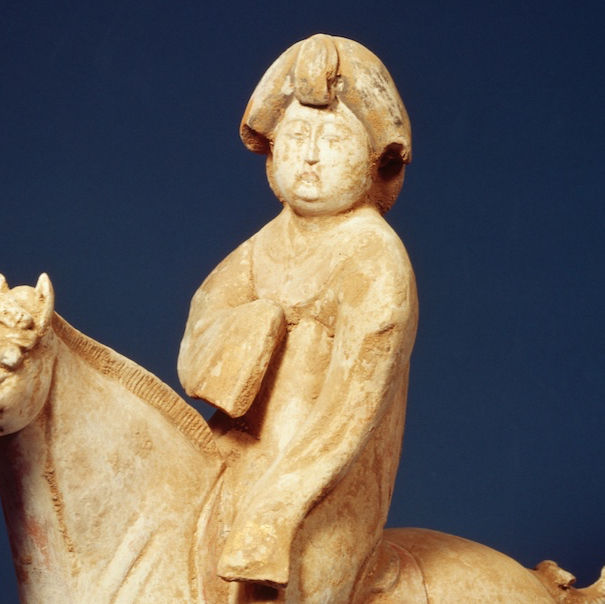
此件馬與騎士三彩(sancai,或稱「三彩」)釉陶俑,在風格與主題上,是8世紀早期——即唐代鼎盛時期——墓葬雕塑的典型代表。彩釉的自由濺灑與滴流技法最早於6世紀開始實驗,而三彩釉透過混合銅(產生藍綠)、鐵(琥珀/黃/褐)與鈷(藍)等礦物顏料,在乳白色底釉上呈現生動的藍、綠、琥珀與黃色光譜,在唐代早期流行,用於墓葬陶、實用器皿及外銷陶器。此騎馬俑的釉色分佈顯示出相對精確的控制力:色彩清晰地突顯駿馬、鞍具、靴子、袍服與兜帽,而非掩蓋其形體。快速的黑彩筆觸細膩描繪騎士的眉毛與髭鬚,以及鞍褥與馬眼,同時刻劃線條強調動物的肌肉結構。
馬匹本身在唐代「黃金時代」積極對外擴張期間,是強有力的象徵。此類大型戰馬既是西征軍事行動的戰利品,也是帝國穩定的基礎,進而促進廣袤帝國的貿易與繁榮。最受追捧的駿馬被稱為「汗血馬」(blood-sweating horses);它們在西方費爾干納(Ferghana)王國養育,大量作為貢品進獻皇帝。馬匹亦是財富與地位的象徵:嚴格的服飾法規(sumptuary laws)限制僅特定階級人士可使用,即使軍中服役者——如本件中從馬上行禮的兜帽士兵——亦須自行提供坐騎。

馬與騎士
中國
8世紀初
展出於大都會藝術博物館第五大道館 207 展廳
時期:唐代(618–907)
年代:8世紀初
文化:中國
材質:陶土,三彩釉及顏料(Earthenware with three-color (sancai) glaze and pigment)
尺寸:高 38.1 cm;寬 10.8 cm;長 33.7 cm
分類:墓葬陶(Tomb Pottery)
購藏:Rogers Fund, 1954
物件號:54.169
部門:亞洲藝術部
來源(Provenance):Alice Boney(紐約),至1954年;售予大都會藝術博物館(MMA)。
展覽歷史:1988年起常展於「中國古代藝術」展;2014年「天馬:馬年慶典」;2015–2016年「大都會館藏中國繪畫傑作(第一輪)」等。
參考:James C. Y. Watt, “The Arts of Ancient China,” The Metropolitan Museum of Art Bulletin (1990), pp. 64–65, cat. 82。
Alice Boney 介紹
Alice Boney Kleykamp(1901年9月10日–1988年12月21日)是一位美國著名亞洲藝術品經銷商與收藏家,專精中國與日本古文物,被譽為「東方藝術經銷商的元老」(Doyenne of Oriental Art Dealers)。出生於費城,早年父母雙亡,由親戚撫養長大。1924年與荷蘭藝術商Jan Kleykamp結婚,同年歐洲蜜月旅行時購得大批唐代墓葬陶俑,返紐約開設Jan Kleykamp Gallery——紐約首家專營中國藝術的畫廊。1936年離婚後獨立經營,在男性主導的領域中脫穎而出。
她的客戶包括大都會藝術博物館(Met)、弗里爾畫廊(Freer Gallery)、英國博物館等多機構,以及私人收藏家如羅伯特·H·埃爾斯沃思(Robert H. Ellsworth,其少年時曾為她工作)、弗洛倫斯與赫伯特·歐文夫婦(Florence and Herbert Irving,其第一件重要亞洲藏品即由她售出)、朱塞佩·埃斯克納齊(Giuseppe Eskenazi)等。她大力推廣齊白石作品,促進西方對中國現代繪畫的研究。1958–1974年居日本,1974年返回紐約後仍從公園大道公寓繼續經營,直至1988年心臟病發逝世。她於1954年將本件唐三彩騎馬俑售予大都會藝術博物館。

大都會博物館騎馬俑 FAQ(常見問答)
Q1: What is this artifact? / 這件文物是什麼?
A1: This is a Tang dynasty (early 8th century) sancai-glazed earthenware tomb figurine of a horse and hooded rider, used as funerary sculpture (mingqi) to accompany the deceased in the afterlife.
回答1: 這是一件唐代(8世紀初)三彩釉陶墓葬俑,描繪兜帽騎士騎馬。
Q2: What is sancai glaze? How was it made? / 三彩釉是什麼?如何製作?
A2: Sancai ("three colors") is a lead-glazed pottery technique popular in early Tang. It uses copper (greens/blues), iron (ambers/yellows/browns), and cobalt (blues) oxides over a white slip on earthenware body, fired to create flowing, vibrant effects. Earlier experiments began in the 6th century.
回答2: 三彩釉是唐代早期流行的低溫鉛釉陶技法,在陶胎上施白色化妝土,再以銅(綠/藍)、鐵(琥珀/黃/褐)、鈷(藍)氧化物呈現流動色彩,6世紀已開始實驗。
Q3: Why were horses so important in the Tang dynasty? / 為什麼馬匹在唐代如此重要?
A3: Horses symbolized military power, imperial expansion westward, trade prosperity, and wealth/status. "Blood-sweating horses" from Ferghana (modern Uzbekistan/Tajikistan) were prized tribute items; sumptuary laws restricted ownership by rank.
回答3: 馬匹象徵軍事力量、帝國西擴、貿易繁榮與財富地位。費爾干納「汗血馬」是最珍貴貢品;服飾法規嚴限階級使用。
Q4: Who was Alice Boney and why is she mentioned? / Alice Boney 是誰?為何提及她?
A4: Alice Boney (1901–1988) was a pioneering New York dealer in Asian art who sold this piece to the Met in 1954. She was a key figure who shaped 20th-century Western collections of Chinese art.
回答4: Alice Boney(1901–1988)是紐約亞洲藝術先驅經銷商,1954年將此俑售予大都會博物館。她是20世紀西方中國藝術收藏的重要推動者。
Q5: What are the dimensions and current location? / 尺寸與目前展出地點?
A5: H. 38.1 cm (15 in.), W. 10.8 cm (4 1/4 in.), L. 33.7 cm (13 1/4 in.). On view in Gallery 207, Met Fifth Avenue, New York.
回答5: 高38.1 cm、寬10.8 cm、長33.7 cm。目前展出於紐約大都會藝術博物館第五大道館207展廳。

Horse and rider
China
early 8th century
On view at The Met Fifth Avenue in Gallery 207
In style and subject matter, this horse and rider with sancai or "three-color" glaze is emblematic of funerary sculpture from the early eighth century, the apex of the Tang dynasty. Free-form splatters and drips of colored glaze were first experimented with in the sixth century and the sancai glazes, made by mixing copper, iron, and cobalt to create a lively spectrum of blues, greens, ambers, and yellows over a milky white background, became fashionable in the early Tang for funerary, utilitarian, and export wares. The distribution of glaze on this horse and rider displays a relative degree of control. The colors clarify, rather than obscure, steed, saddle, boot, tunic, and hood. Swift brushstrokes in black detail the rider's brow and mustache, as well as the saddle blanket and horse's eyes, while etched lines stress the animal's musculature.
The horse itself was a potent image during the vigorous expansion of the Tang "golden age." Chargers such as this large horse were both the reward of military incursions to the west, and the foundation of imperial stability that would in turn encourage trade and prosperity over a vast empire. The most sought-after steeds were known as "blood-sweating horses"; raised in the western kingdom of Ferghana, they were sent in great numbers as tribute to the emperor. Horses also were a sign of wealth: strict sumptuary laws limited the use of the horses to people of a certain rank and even those serving in the military, such as the hooded soldier saluting from astride this horse, had to provide their own mount.
唐 三彩陶騎馬俑
Title: Horse and rider
Period: Tang dynasty (618–907)
Date: early 8th century
Culture: China
Medium: Earthenware with three-color (sancai) glaze and pigment
Dimensions: H. 15 in. (38.1 cm); W. 4 1/4 in. (10.8 cm); L. 13 1/4 in. (33.7 cm)
Classification: Tomb Pottery
Credit Line: Rogers Fund, 1954
Object Number: 54.169
Curatorial Department: Asian Art
Provenance:
Alice Boney , New York, until 1954; sold to MMA
Exhibition History:
New York. The Metropolitan Museum of Art. "Arts of Ancient China," May 1988–Present.
New York. The Metropolitan Museum of Art. "Celestial Steeds: A Celebration of the Year of the Horse," January 27–August 3, 2014.
New York. The Metropolitan Museum of Art. "Masterpieces of Chinese Painting from The Met Collection (Rotation One)," October 31, 2015–October 11, 2016.
Reference:
James C. Y. Watt. "The Arts of Ancient China." The Metropolitan Museum of Art Bulletin, n.s., 48, no. 1, Summer 1990. pp. 64–65, cat. no. 82.

Comments