
茶碗筆記 vol.21 德川美術館:織部筒茶碗 銘「冬枯」,重要文化財 - Tokugawa Museum, ‘Fuyugare’ Oribe Tea Bowl, Edo Period

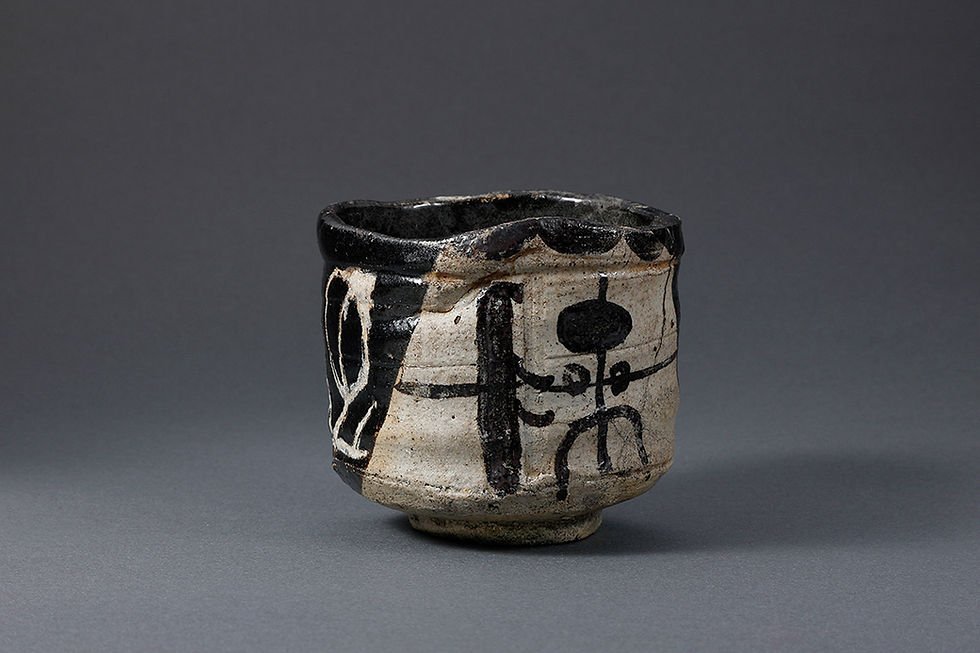
織部筒茶碗 銘 冬枯
本器為黑織部茶碗的代表作。胴部約一半施以鐵釉,另一半以白色化粧土拔出圖案,白地部分則以流暢有力的筆觸描繪抽象圖案。胴部沿圖案刻有線條,並於縱向數處進行削切,形成多面體的稜角效果,在施釉與成形兩方面均富有多重看點。高台內側刻有可讀為「Q」的雕銘,或被視為作者的窯印。本器由岡谷家寄贈。
織部茶碗介紹
織部茶碗是桃山時代至江戶初期(十六世紀末至十七世紀初)美濃燒中最具革新性與代表性的茶器類型。其名稱源自茶人古田織部,他以打破常規的茶道理念,推動陶工創造出大膽變形、抽象裝飾、色彩強烈的作品。相較於利休時代追求素雅侘寂的風格,織部茶碗強調幽默、奇異與玩世不恭的精神,造型扭曲、釉色對比強烈、圖案自由奔放,體現了桃山時代的時代氣息與茶道新風。
織部茶碗依釉色與技法分為青織部、赤織部、黑織部等多種,其中黑織部茶碗以漆黑般的鐵釉為基調,常結合白色化粧土、線刻、鐵繪與削切稜角等技法,呈現強烈的視覺張力與動感。本器即屬黑織部中的傑出之作。
何謂筒茶碗
筒茶碗是一種直壁筒狀的茶碗,器身較高且近乎垂直,口緣與胴部形成筒狀輪廓,與常見的扭曲鞋形茶碗形成對比。筒形提供更深邃的內部空間,有利於茶筅攪拌時的穩定性與視覺上的莊重感。織部茶碗中筒形相對稀少,多數強調變形的鞋形;本器雖為筒形,卻在口緣施以柔和起伏、胴部削切稜角與圖案線刻,巧妙融合了織部特有的不規則中的秩序,兼具雕塑性與實用性,在織部茶碗中尤為珍貴。
This is a representative example of black Oribe ware. Iron glaze covers approximately half the body, with patterns carved out in white slip; the white-ground areas feature fluid, dynamic brushwork rendering abstract motifs. The body is further enhanced by incised lines following the patterns and vertical faceting in several places, offering multiple points of interest in both glazing and forming techniques. Inside the footring is a carved mark readable as “Q,” possibly the potter’s kiln seal. Donated by the Okatani family.
Introduction to Oribe Tea Bowls
Oribe tea bowls (織部茶碗) represent one of the most innovative and iconic categories of Mino ware produced in the late Momoyama to early Edo periods (late 16th to early 17th century) in the Toki area of Gifu Prefecture. Named after the tea master Furuta Oribe (1544–1615), a leading disciple of Sen no Rikyū, these bowls embody his philosophy of “hakai no cha” (iconoclastic tea), deliberately breaking from the austere wabi-sabi aesthetic to embrace bold deformation, strong color contrasts, abstract decoration, and playful eccentricity (heuge-mono). While Rikyū-era wares emphasized quiet restraint, Oribe pieces celebrate the vibrant, dynamic spirit of the Momoyama era through asymmetrical forms, geometric or freehand motifs, and striking glazes.
Oribe wares are classified by glaze and technique into types such as ao-Oribe (copper-green), aka-Oribe, and kuro-Oribe (black iron-glazed with white slip and iron painting). Black Oribe tea bowls, to which this piece belongs, feature a deep iron-black glaze often combined with white slip, sgraffito, iron underglaze painting, and faceting, creating powerful visual tension and movement.
What is a Tsutsu Chawan?
A tsutsu chawan (筒茶碗, cylindrical tea bowl) is characterized by its tall, straight-sided, tube-like form with nearly vertical walls. Unlike the more common distorted kutsu-gata (clog-shaped) Oribe bowls, the cylindrical silhouette provides a deeper interior space that enhances stability during whisking and imparts a sculptural, contained dignity. While cylindrical forms are relatively rare in Oribe ware (most favor exaggerated asymmetry), this example masterfully incorporates Oribe’s signature “intentional irregularity” through subtle rim undulations, vertical faceting, and pattern-aligned incisions—achieving a rare balance of architectural poise and organic vitality.
織部筒茶碗 銘 冬枯
おりべつつちゃわん めい ふゆがれ
黒織部を代表する茶碗です。胴部の半分に鉄釉が掛かり、白抜きで文様が施され、白地の部分にはのびやかな筆で抽象的な文様が描かれています。胴部は文様に沿って線刻が施されるとともに、縦に数箇所面取りされているなど、施釉と成形、両面において見どころの多い茶碗です。高台内には作者の窯印とも見なされている「Q」と読める彫銘があります。岡谷家寄贈。
概要
作品名 | 織部筒茶碗 銘 冬枯 |
作品名ふりがな | おりべつつちゃわん めい ふゆがれ |
作者名 | |
文化財指定 | 重要文化財 |
作品分類 | 陶磁 |
国 | 日本 |
時代 | 江戸 |
世紀 | 17世紀 |
数量 | 1口 |
材質·技法 | |
サイズ | 高9.2cm 口径9.5~10.2cm 高台径5.2cm |


Comments