
茶入筆記 vol.56 救世熱海美術館:漢作大名物唐物文琳茶入 銘 羽室,藥師寺、土屋家、酒井家 - MOA Museum, Daimeibutsu Karamono Bunrin Chaire ‘Hamuro’


唐物文琳茶入「羽室」
漢作大名物
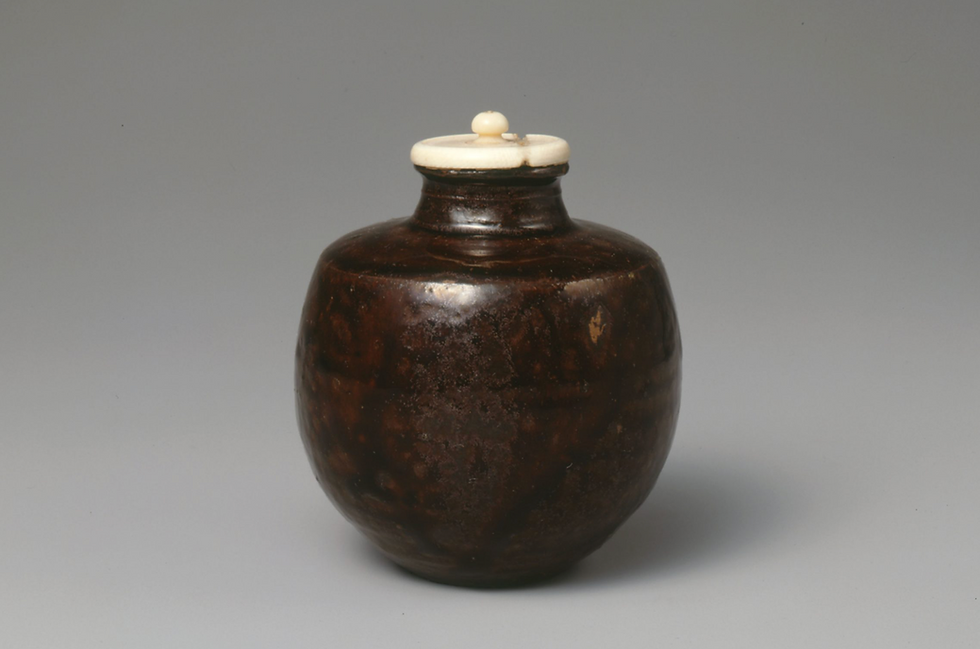
此件茶入為唐物文琳茶入中的大名物,現藏於救世熱海美術館。其銘「羽室」之名,或因羽室姓氏之所持,或出自葉室大納言家之傳承,確切所由尚難斷定。茶入附有藤重所制黑漆四方盆,曾為千宗旦所持,並具原叟之箱書。
其器形於文琳類中尤為獨特,口緣尤寬,捻返深邃,胴部呈平圓狀,近似小大海之姿,為文琳中罕見之變化。胎質輕薄,施以唐物釉,燒成精良。柿色地上覆以黑釉,光澤深潤;甑部周圍見青瑠璃色,流下至近底處而成釉溜。器底露出濃灰色土,中央為圓形平面之糸切痕,畳付處則施箆削痕跡,底作亦呈變化。內部中央呈圓形窪陷,沈筋粗而鮮明,使胴部緊收。釉色之景與胎體之作行相映成趣,為觀賞要處。

「羽室文琳」自室町以降即著名於諸名物記。《東山御物內別帳》、《天正名物記》、《松屋日記》、《麟鳳亀龍》等均有記載,為土屋家所重之名物。
傳承系譜為:藥師院 → 土屋相模守 → 若州酒井家 → 益田家
其附屬品極為完備,包括三蓋箱(桐白木)、小堀遠州筆書付之仕覆四組(鱧魚屋緞子【うつぼや】、下妻間道、紺地剣先龍紋金襴、笹蔓緞子)、仕覆箱、鐵刀木挽家(金粉字形「羽室」)、藤重作四方盆及其中箱,並附小堀宗中筆之目錄。
尺寸:高 6.4 cm、口徑 4.0 cm、胴徑 7.45 cm、底徑 3.5 cm、重 74 g

文琳茶入之名,取自形似林檎(文琳之異稱)。在唐物茶入中,與茄子並列為最高品類。《東山御物內別帳》記「羽室文琳 藥師院」,由此可見其自古即列為名物。
其後由葉室家傳出,入於堺之藥師院,再歸於常陸土浦城主土屋相模守數直,後為若狹酒井家所藏,最終傳至益田家。此器並錄於《大正名器鑑》。

Karamono Bunrin Chaire “Hamuro”
MOA Museum of Art, Atami
This tea caddy is a celebrated karamono Bunrin-type chaire, designated as a meibutsu (noted masterpiece). The name “Hamuro” (羽室) is thought to derive either from an owner bearing the Hamuro surname or from the Hamuro (Hamuro Dainagon) family, though the exact origin remains uncertain. The caddy is accompanied by a square black-lacquered tray made by Fujishige, once owned by Sen Sōtan, with an inscription by Gensō (Genpaku Sō).

The form of this Bunrin is exceptional: the mouth is unusually wide with a deep turning-back lip, while the body assumes a flat, rounded shape, closer to the ko-daikai type than to typical Bunrin forms. It is thinly potted, with a well-fired karamono glaze. The surface reveals a lustrous black glaze over a persimmon-colored ground, with areas of cobalt-blue appearing around the shoulder, flowing down to the lower body and pooling near the base. The lower portion exposes dense gray clay, with a flat circular itokiri mark at the center of the base, and spatula trimming marks circling the foot. The interior has a rounded depression at the center. The pronounced vertical grooves (shimme-suji) tighten the body, enhancing both structural balance and visual appeal.
The tea caddy has been recorded in several early inventories and meibutsuki, including the Tōgudono On-mono Uchibetsuchō, Tenshō Meibutsuki, Matsuya Nikki, and Rinpō Kiryū, attesting to its longstanding recognition as a famous object. It was also known as a Tsuchiya meibutsu.

Provenance: Yakushiin → Tsuchiya Sagami-no-kami → Wakasa Sakai family → Masuda family.
Accompanying accessories are particularly complete: a triple-lidded paulownia box, four shifuku (brocade pouches) with inscriptions by Kobori Enshū (including Utsuboya donsu, Shimozuma kandō, navy ground with kensaki-ryūmon kinran, and Sasakazura donsu), a paulownia storage box with Enshū’s inscriptions, a hikiya made of tagayasan wood inlaid with the gold characters “Hamuro,” and the lacquered square tray by Fujishige with its inner box and inscriptions by Gensō. A catalogue with calligraphy by Kobori Sōchū also survives.
Dimensions: Height 6.4 cm; mouth diameter 4.0 cm; body diameter 7.45 cm; base diameter 3.5 cm; weight 74 g.
The Bunrin type, named after the apple (bunrin being a synonym for the fruit), is ranked alongside the Nasu type as one of the highest categories of karamono tea caddies. The Tōgudono On-mono Uchibetsuchō lists it as “Hamuro Bunrin, Yakushiin,” confirming its recognition since early times. Originally transmitted within the Hamuro family, it later passed to Yakushiin in Sakai, then to Tsuchiya Kazunao, lord of Tsuchiura Castle in Hitachi Province, subsequently to the Sakai family of Wakasa, and later to the Masuda family. It is also illustrated in the Taishō Meikikan.

漢作唐物文琳茶入
銘の由来は羽室姓某の所持によるか、あるいは羽室は葉室大納言家の所持によったのか定かではありません。
添盆は藤重作の黒塗四方盆で、宗旦が所持していたもので、原叟の箱書が添っています。
形は文琳中でも口周りがことに広く、捻り返しも深いです。
胴は平丸形で、文琳としては小海に近く形が変わっていて珍しいです。
造りは薄手で、唐物釉の焼き上がりがよく、柿色地に黒釉の光沢がことに美しいです。
甑周りには青瑠璃色が現われていて、置形なだれが底近くまで下がって釉溜りをなしています。
裾以下は濃い鼠色土をみせ、底中央で円形の平面糸切を覆い、箆で底周りを切り回し、盆付の作行きも形変わりです。
内部は中央が丸く窪んでいます。
沈としき筋も太く鮮明で胴を引き締め、釉景とともに見所の多い茶入です。
『東山御物内別帳』をはじめ『天正名物記』 『松屋日記』 『麟鳳亀龍』など諸名物記に記載されており、土屋名物としても著名です。
【付属物】蓋―三蓋箱 桐白木、書付小堀遠州筆 仕覆―四、うつぼや緞子・下妻間道・紺地剣先龍紋金襴・笹蔓緞子(図版右より) 仕覆箱 桐花櫚搔合、書付同筆家―鉄刀木、金粉文字・書付同筆箱―桐白木、書付同筆 外箱―桐白木、書付同筆 藤重作四方盆 盆中箱 桐白木、書付覚々斎原叟筆 目録小堀宗中筆
【伝来】薬師院―土屋相模守―若州酒井家―益田家
【寸法】 高さ:6.4 口径:4.0 胴径:7.45 底径:3.5 重さ:74
【所蔵】 救世熱海美術館
素地に細かい土が用い、その上に黒褐色の釉が薄くかかり、その厚薄によって変化に富んだ景色を見せている。作りは薄く、手取りも軽い。口はやや大きく、底は糸切り底で、畳付(たたみつき)際に廻し箆がめぐらされている。文琳茶入は、その形状から、林檎の異名である文琳の名で呼ばれるもので、唐物茶入の中でも茄子と並んで最上位に位置づけられている。 『東山御物内別帳』に「羽室文琳 薬師院」と記されるほか、いくつかの記録にその名が見え、古くから名物茶入として知られたことがわかる。もと葉室家に伝わったところから羽室の名を冠していると思われ、その後、堺の薬師院に伝わり、常陸(茨城県)土浦の城主土屋相模守数直が所有し、後、若狭酒井家へと伝来した。
また、この茶入には、青木間道(かんとう)、剣先金襴、笹蔓緞子(どんす)、うつぼや緞子の仕覆(しふく)と金粉字形で羽室と記した鉄刀木(たがやさん)の挽家(ひきや)および、塗師藤重藤厳作の四方盆が添えられている。『大正名器鑑』所載。


Comments