
拍賣筆記 vol.439 蘇富比紐約2026:15360美元售出,唐三彩褐黃釉野豬一對,郎朗老師格拉夫曼收藏 - Sotheby’s NY 2026, Two glazed pottery figures of boars, Gary and Naomi Graffman Collection (Pianist Lang Lang's Mentor), Tang dynasty

Updated: Sep 17

雙豬昂首前伸,鬃毛高拱,肩脊隆起,短尾靈巧側捲,神態矯健。一施赭黃釉,一施琥珀釉,釉水自然下垂不及底座,局部露淺黃陶胎。此對作品為唐三彩之經典釉色,更是傳世唐墓動物俑中極具寫實主義與貴族規格的佳作。有別於盛唐時期常見的斑駁多色三彩,本品完美展現了單色釉工藝,發色瑩潤。
在製作上,其造型擺脫了漢代以來圈養家豬的形象,精準捕捉了華北原野中充滿爆發力的野豬造型。唐代藝匠以精準的解剖學結構,生動刻畫出高聳賁張的鬃毛、剛勁的吻部與隆起的肩胛,將大唐貴族熱衷的狩獵文化與原野野性餘韻展現得淋漓盡致。此對作品釉光完好、神形兼備,在公私收藏中實屬鳳毛麟角。另外來源是郎朗的老師,格拉夫曼,也算是有一定加分。(SACA觀察,2026年9月10日)
拍賣結果:12萬港元,15360美元售出(2026年9月16日更新)。
品相報告
深色野豬: 嘴部有微小釉磕。
淺色野豬: 一腿部見窰裂(需核實是否影響承重結構)。
共有狀況: 底座邊緣有磕損,釉下可見先天窰疵,釉面滿開片。鉛釉開片與座沿磕損均屬此類高古陶器之自然常見現象。
來源
紐約 Mathias Komor
紐約 Parke-Bernet Galleries,1952年11月5–6日,拍品編號 134
紐約蘇富比,2015年9月15–16日,拍品編號 105

SACA觀察
唐代釉陶動物的市場認知與收藏結構,長期傾斜於象徵出行等級的儀仗馬與隨行駱駝。三彩野豬(豕)類作品因以往多見微型或常規尺寸,常被世俗視為低量級的「家畜明器」,導致其市場價值長期處於低位。然而從存世總量與藝術高度來看,這無疑屬於典型的「認知錯位」品種。本對唐三彩野豬極具學術探討價值:其一,釉色十分特殊,一尊黃釉釉色清淡典雅,另一尊則呈現極為濃郁深邃的琥珀釉(接近褐黑釉);其二,尺寸體量極為碩大、雄渾,單隻尺度已與公私大藏並駕齊驅,且成對保存,在同類題材中極罕。
對本品的學術考察應以尺寸與窯釉系統為準,不宜與常見的三彩大馬混為一談。考諸海內外重要舊藏與拍賣紀錄,其可比材料清晰且顯赫:
佳士得香港 2020年7月9日,拍品2869號「唐褐釉陶豕」(寬21公分,1972年經倫敦頂級古董商 Eskenazi 經手),最終以 187,500 港元成交。該拍品圖錄所舉之世界級對例,包括西雅圖藝術博物館(Seattle Art Museum)Eugene Fuller 紀念收藏品(收錄於 William Watson, Tang and Liao Ceramics, 1984, fig. 221)、東京國立博物館藏品,以及《世界陶磁全集》卷11之圖版。
倫敦蘇富比 2012年,拍品210號「唐赭釉陶豕」,同樣出自 1972 年 Eskenazi 舊藏。
本對野豬的單體尺度與上述博物館及頂級古董商所經手的單隻典範完全一致。更為難得的是,本品不僅成對完整傳世,且具備早至 1952 年紐約 Parke-Bernet 的早期權威拍賣著錄(格拉夫曼收藏,Graffman Collection),流傳有序。
本品現時估價為 5,000–7,000 美元。相較於上述單隻過往數十萬港元的成交價,此成對器物的估價顯然大幅偏低。
關於藏家與早期經手
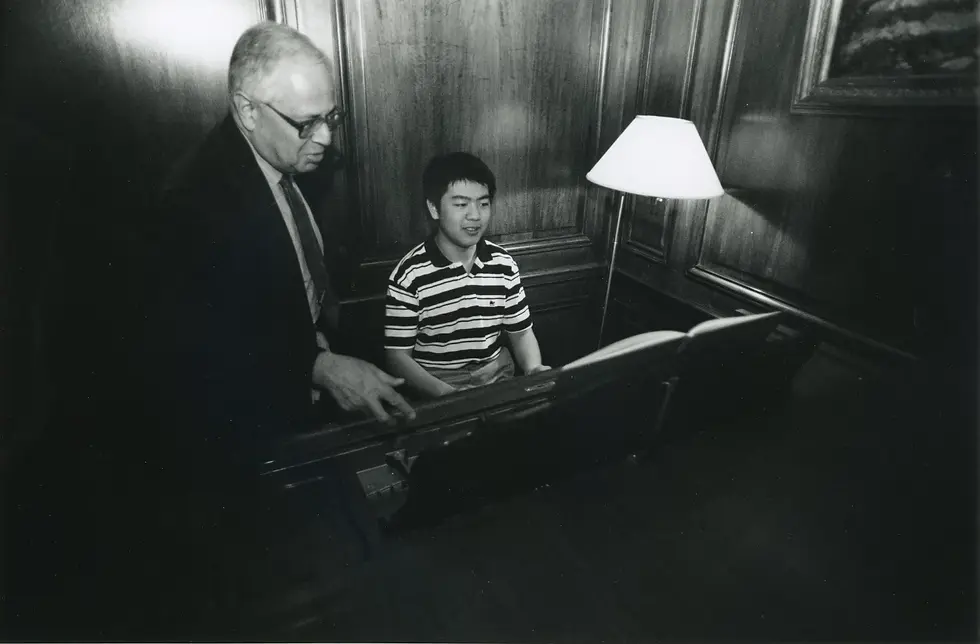
加里·格拉夫曼(Gary Graffman,1928–2025),費城柯蒂斯音樂學院出身,後任院長。1979年右手局灶性肌張力障礙後,轉向左手曲目與教學。郎朗、王羽佳、張昊辰皆出其門下。其中國藝術收藏始於鋼琴家Julius Katchen的引導,繼以巴黎購藏、哥倫比亞大學修習,並自1981年起多次訪華。本場收益歸蓋瑞及娜歐蜜·格拉夫曼基金會。郎朗2025年12月28日所撰,指出其與中國文化及中國學子的長期關係。Mathias Komor為二十世紀中葉紐約重要古物商。Parke-Bernet為蘇富比併入前紐約主要拍賣行。1952年編號134,是本件進入公開市場的最早可靠記錄。


唐褐黃釉野豬一對
年代:唐代(618–907)
尺寸:較大者長21 cm(8¼ in.)
配件:木座(4)
估價:5,000–7,000美元
來源:Mathias Komor,紐約;Parke-Bernet Galleries,紐約,1952年11月5–6日,編號134;蘇富比紐約,2015年9月15–16日,編號105
專場:The Collection of Gary Graffman Sold to Benefit the Gary and Naomi Graffman Foundation
拍賣:蘇富比紐約,2026年9月16日
拍品號:22


FAQ
Q1:本件應定為家豬還是野豬?
應定為野豬型。高拱鬃、厚肩、長吻、尾側捲,與漢唐墓中圓腹家豬俑有別。唐墓家畜組中兩類並存,本件屬寫實野豬一系。
Q2:與三彩馬、駝的關係如何理解?
分屬不同明器系統。馬、駝承擔儀仗與等級;豕承擔畜牧與祭供。體量、釉系、市場定價均不在同一層級。不能以馬、駝的稀缺性推論本件「被嚴重低估」,只能指出豕類長期缺乏獨立研究與獨立定價。
Q3:為何2015年與2026年估價相同?
同一對器物,估價未作調整,說明紐約日場對此品類尚未重新定價。2020年香港Eskenazi單隻21公分成交187,500港元,提供了另一區域的價格坐標。兩地差異需要正視,但不能直接等同為本件必然達到同一價位。
Q4:品相減分項是什麼?
淺色一隻腿部窰裂,須確認是否結構性裂縫。深色吻部釉磕為局部缺陷。座磕與開片屬鉛釉陶塑常態。成對保存與1952年以來的連續來源,是本件主要加分項。
SACA學會相關筆記 / SACA Notes
唐代筆記 vol.41 東京國立博物館:唐三彩褐釉豬
長20.8 cm,高13.5 cm。單色褐釉。與本件尺度最近的館藏對例。
三彩筆記 vol.09 唐三彩藍彩臥牛(蘇富比倫敦,成交138,600英鎊)
寬19.3 cm。家畜俑中帶藍彩的稀見例。
三彩筆記 vol.33 大都會博物館:唐三彩綠釉陶犬,對比岡田美術館唐三彩犬
犬屬守衛與狩獵,與豕的畜牧、祭供不同。
拍賣筆記 vol.260 藍理捷:唐三彩褐釉陶馬,成交1,206,500港元
同為單色褐釉,器類不同,價格結構不同。
Two glazed pottery figures of boars, Tang dynasty. Length of the larger 8¼ in. (21 cm). Wood stands (4). Sotheby’s New York, The Collection of Gary Graffman Sold to Benefit the Gary and Naomi Graffman Foundation, 16 September 2026, lot 22. Estimate US$5,000–7,000.
Both animals stand foursquare on rectangular bases, heads extended, manes arched, shoulders thickened, tails flicked to one side. One is covered in an ochre glaze, the other in amber; the glaze stops above the base, exposing the buff body. The type belongs to the Tang lead-glazed sculptural tradition, functionally distinct from sancai processional horses and camels. Horses and camels encode rank and travel; boars belong to the livestock and sacrificial set. The anatomy—mane, snout, shoulder—follows the wild boar rather than the fattened domestic pig, and represents the more observational strain of Tang animal modelling.
Condition: a small glaze chip to the snout of the darker figure; a firing crack in one leg of the lighter; chips to both bases, firing flaws beneath the glaze, and overall crackle. Crackle and basal chips are expected in low-fired lead glaze. The leg crack must be examined for structural consequence.
Provenance is continuous: Mathias Komor, New York; Parke-Bernet Galleries, New York, 5–6 November 1952, lot 134; Sotheby’s New York, 15–16 September 2015, lot 105. The 2015 estimate was identical: US$5,000–7,000.
SACA Observation
The market for Tang glazed animals has long been organised around the horse and the camel. Boars, classed as farmyard mingqi, have remained at the lower end of the price scale. That classification is incomplete. Livestock figures in Han and Tang tombs are direct evidence of household economy and sacrificial practice; wild-boar types often display closer anatomical study than round-bellied domestic pigs. A pair in two glaze tones, of matching scale, has more documentary value than isolated singles.
Comparanda should be controlled by size and glaze system, not by the prestige of sancai horses. Christie’s Hong Kong, 9 July 2020, lot 2869: a chestnut-glazed Tang boar, 21 cm wide, Eskenazi London 1972, sold for HK$187,500. The catalogue cited the Eugene Fuller Memorial Collection example at the Seattle Art Museum (Watson 1984, fig. 221), a piece in the Tokyo National Museum, and Sekai toji zenshu, vol. 11. Sotheby’s London, 2012, lot 210: an ochre-glazed boar, also Eskenazi 1972. The present pair matches those singles in length, is doubled, and carries a 1952 Parke-Bernet record. The estimate of US$5,000–7,000 reproduces a New York day-sale convention; it does not reflect the range already recorded for the type in East Asia.
SACA has, in recent notes, separated monochrome lead-glazed livestock figures from the sancai processional group. The brown-glazed pig in the Tokyo National Museum measures 13.5 cm high and 20.8 cm long—virtually the same length as the larger Graffman boar. That note argues that familiar animals were often glazed in a single colour to heighten realism, not to produce the splashed spectacle of tomb pageantry. See Tang Notes vol. 41. Related SACA texts on a recumbent buffalo and on sancai dogs treat ox, dog and pig as distinct mingqi functions—offering, guard, husbandry—and refuse to price them as reduced horses.
Two neighbouring categories must be kept apart. Sancai hounds, especially those with cobalt blue, belong to the hunt and to court spectacle. Han green-glazed dogs belong to an earlier guardian type. The present objects are Tang lead-glazed wild-boar figures. Subject, function and glaze system are not interchangeable.
The Graffman provenance does not alter the typology. It supplies a verifiable American collecting history: Komor, Parke-Bernet, Sotheby’s 2015, then a musician’s collection. Biography cannot replace connoisseurship; accumulated ownership is itself evidence. Whether the estimate is conservative should be tested against the 2020 Hong Kong result, reduced where necessary for the leg crack and snout chip, and settled only after inspection.
On the collector and the early trade
Gary Graffman (1928–2025) trained at the Curtis Institute and later served as its president. After focal dystonia ended two-handed performance in 1979, he developed a left-hand repertoire and a teaching line that includes Lang Lang, Yuja Wang and Haochen Zhang. His interest in Chinese art began with the pianist Julius Katchen, continued through purchases in Paris and study at Columbia, and through travel to China from 1981. Proceeds benefit the Gary and Naomi Graffman Foundation. Lang Lang’s statement of 28 December 2025 documents a personal relationship with China and with Chinese students; it is background to the collection, not a criterion of dating.
Mathias Komor was a principal New York dealer at mid-century. Parke-Bernet was the city’s chief auction room before the Sotheby’s merger. Lot 134 of November 1952 is the earliest secure public record of the pair.
FAQ
Q1: Domestic pig or wild boar?
Wild-boar type. Arched mane, heavy shoulder, elongated snout, tail to the side. Tang tombs contain both fattened pigs and this naturalistic boar; the present figures belong to the latter.
Q2: How should they be placed against sancai horses and camels?
They belong to a different mingqi set. Horses and camels serve procession and rank; boars serve husbandry and offering. Scale, glaze and market structure are not shared. The point is not that the boars are “undervalued horses,” but that the livestock group has lacked a separate scholarly and commercial frame.
Q3: Why is the 2026 estimate unchanged from 2015?
The same pair has been given the same numbers. New York day sales have not re-priced the type. The 2020 Hong Kong Eskenazi single at HK$187,500 is a separate regional coordinate. The difference should be noted; it does not automatically set the result for this lot.
Q4: What are the condition deductions?
The firing crack in one leg of the lighter figure must be checked for structure. The snout chip on the darker figure is local. Basal chips and crackle are normal. The pair and the provenance from 1952 are the principal additions to value.
Two glazed pottery figures of boars, Tang dynasty
Date: Tang dynasty (618–907)
Dimensions: Length of larger 8¼ in., 21 cm
Accessories: wood stand (4)
Estimate: US$5,000–7,000
Provenance: Mathias Komor, New York; Parke-Bernet Galleries, New York, 5–6 November 1952, lot 134; Sotheby’s New York, 15–16 September 2015, lot 105
Sale: The Collection of Gary Graffman Sold to Benefit the Gary and Naomi Graffman Foundation
Auction: Sotheby’s New York, 16 September 2026
Lot: 22
參考文獻 / References
館藏與研究
Seattle Art Museum, Eugene Fuller Memorial Collection,唐釉陶豕。William Watson, Tang and Liao Ceramics, New York, 1984, p. 201, fig. 221.
東京國立博物館藏唐褐釉豬。SACA:《唐代筆記 vol.41》。https://www.artsaca.com/post/tang41-1
《世界陶磁全集》卷11,東京,1976,彩色圖版194。
Ezekiel Schloss, Ancient Chinese Ceramic Sculpture: From Han through Tang, Stamford, 1977, vol. 1, p. 76, fig. 12.
拍賣(蘇富比、佳士得)
5. Christie's Hong Kong, 9 July 2020, lot 2869.
A chestnut-glazed pottery figure of a boar, Tang dynasty, 21 cm wide.
Provenance: Eskenazi Ltd., London.
Literature: Eskenazi, London, March 1972, no. 31.
Sold for HK$187,500.
6. Sotheby’s London, 2012, lot 210.
An ochre-glazed pottery boar, Tang dynasty.
Provenance: Eskenazi, London, 29 February 1972.
Estimate £3,000–5,000.
7. Sotheby’s New York, 15–16 September 2015, lot 105.
The present pair. Estimate US$5,000–7,000.
SACA學會其他參考
8. SACA,《三彩筆記 vol.09 唐三彩藍彩臥牛》。https://www.artsaca.com/post/sancai09-1
9. SACA,《三彩筆記 vol.33 大都會博物館:唐三彩綠釉陶犬》。https://www.artsaca.com/post/sancai33
10. SACA,《拍賣筆記 vol.260 藍理捷:唐三彩褐釉陶馬》。https://www.artsaca.com/post/auction260
收藏史
11. Sotheby’s, sale essay and Lang Lang statement, 28 December 2025.


Comments