
拍賣筆記 vol.424 蘇富比香港2026:64萬港元售出,東周春秋青銅蟠虺紋三足蓋鼎,岡田博物館 - Sotheby’s 2026, Okada Sales Part 2, An Archaic Ritual Bronze Tripod Food Vessel And Cover, Ding, Eastern Zhou Dynasty, Spring And Autumn Period

Updated: Sep 4

64萬港元售出。SACA拍場,2026.09.04。
日本傳統古董商往往帶有某種約定俗成的矜持,甚或可視為一種近乎傲慢的堅持。以壺中居為例,其慣常作風是將所經手器物的既往傳承悉數抹去。「守正」是否必然意味著一成不變?日本傳統美學中素有「不易流行」之哲理,意指在堅守事物核心本質(不易)的同時,亦須順應時代的變遷而革新(流行)。京都450年老店瓢亭的主人高橋英一常以此自勉,強調不變的是精神底色,變的則是外在形式。這種既不僵化固守、亦不盲從潮流的哲學,本應是百年老舖立足的基石。
縱觀當下古董市場,亦非所有傳統老舖皆固步自封。繭山龍泉堂便是與時俱進的典型:其以現代企業形態運作,對市場環境具備敏銳的適應力。在器物傳承的處理上,該堂雖會出於商業考量隱去近三年內的直接來源,但對更早的歷史脈絡與顯赫的收藏譜系卻予以完整保留。這不僅是對歷史的敬畏,更是對器物學術價值的尊重。對比之下,兩家老舖的格局與理念分歧已涇渭分明。當代藏家的審美與學術要求日益精進,正立於這一市場規則演變的十字路口。
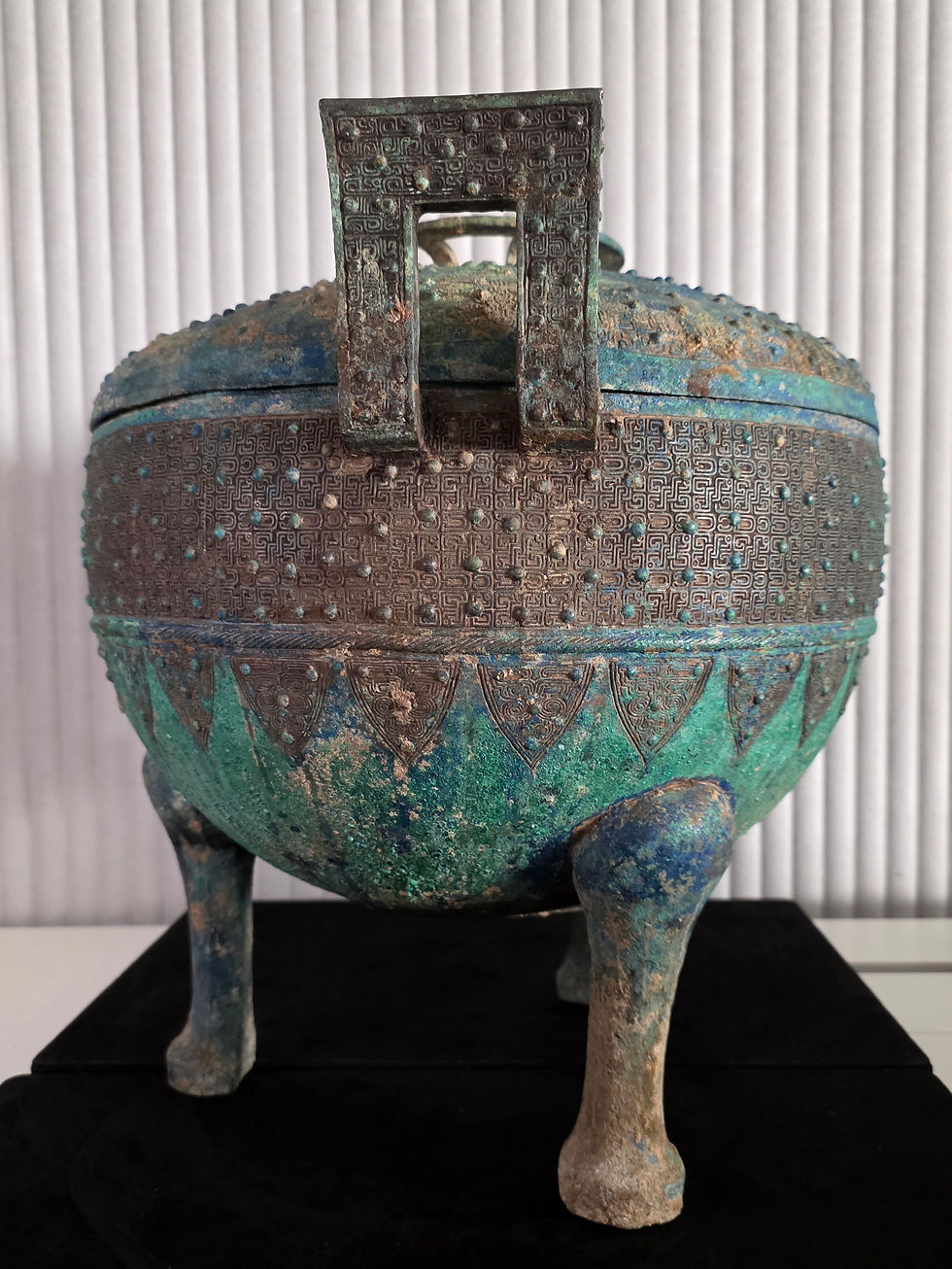
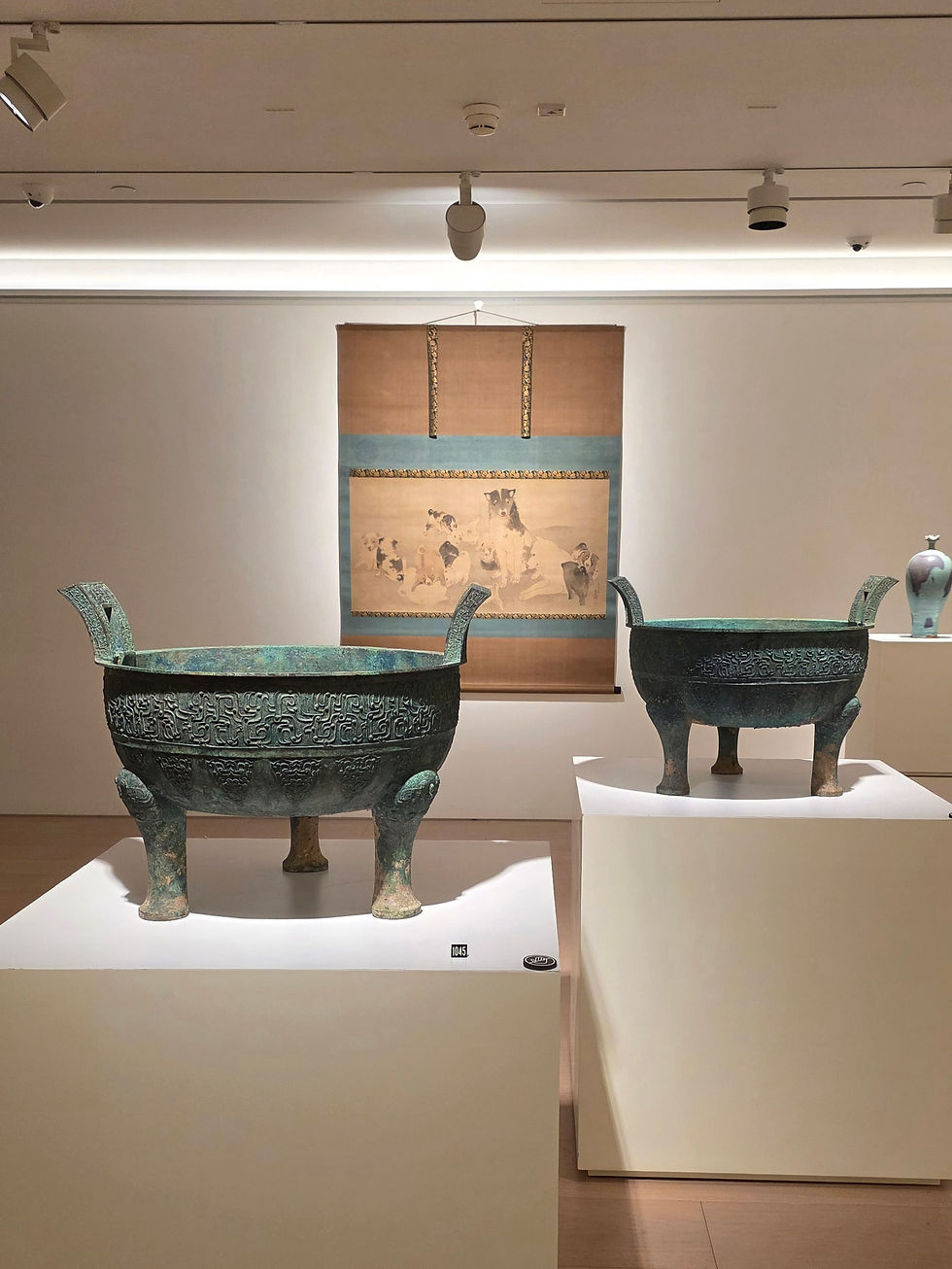
以此番釋出的東周青銅三足龍紋鼎為例,其器型、紋飾及各項指標皆屬上乘。從藝術風格推斷,不排除為楚地或晉地之作,且高度指向山西侯馬地區的青銅工坊(誠如王秋生於《財新》專欄中所述之「細緻與磅礡」《東周青銅三足龍紋鼎:侯馬工坊的細緻與磅礡|收藏》)。然而,關於此類重器究竟何時、經由何種途徑流入日本,壺中居既未交代,亦拒絕披露。在「來源有序」愈發成為業界共識的今日,博物館、學者與頂級藏家皆已深刻意識到:清晰的歷史背景與收藏譜系,不僅賦予器物更為厚重的文化底蘊,更是其核心歷史信息的關鍵載體。這種重量級的歷史痕跡,理應被置於文物價值評估的基準線之上,而非被刻意剝離。
從市場估值來看,一件體量達 40 公分、以極致「塊範法」鑄造的東周青銅大鼎,僅給出 40 至 80 萬的估價,無疑是被嚴重低估的,或許亦是其傳承信息缺失所付出的市場代價。

東周春秋 青銅蟠虺紋三足蓋鼎
A large archaic ritual bronze tripod food vessel and cover, ding, Eastern Zhou dynasty, Spring and Autumn period
Estimate
400,000 - 800,000 HKD
Japanese wood box
40.8 cm
來源
壺中居,東京
展覽
《開館5周年記念展―美のスターたち―光琳.若冲.北斎.汝窯など名品勢ぞろい》, 岡田美術館,箱根,2018–19年,展覽編號14(沒載圖)
此鼎巨碩,當屬一套列鼎中最大者。其形制與紋飾可參考河北省文物研究所藏乳丁蟠蛇紋鼎,見《中國青銅器全集》,北京,1996年,卷9,編號96;又可比較一例,2021年9月23日售於紐約蘇富比,尺寸較本件稍小,編號19。
Provenance
Kochukyo Co., Ltd, Tokyo.
Exhibited
5th Anniversary Exhibition. All-Stars of the Okada Collection: Masterworks of Korin, Jakuchu, Hokusai and the Ru Ware Kilns, Okada Museum of Art, Hakone, 2018–19, exh. no. 14 (unillustrated).
Of massive proportions, the present ding would likely have been the largest in a set of lieding. Compare a ding with similar bosses and coiled snakes in the Hebei Provincial Institute of Cultural Relics, illustrated in Zhongguo qingtongqi quanji [Complete Collection of Chinese Bronzes], Beijing, 1996, vol. 9, no. 96. Compare also a slightly smaller example, sold in New York rooms, 23rd September 2021, lot 19.
Traditional Japanese antique dealers often operate with a certain unspoken reserve, a stance that might even be perceived as a borderline arrogant insistence. Take Kochukyo, for instance: their customary practice is to systematically erase the prior provenance of the antiquities they handle. But does "upholding tradition" inevitably mean remaining static? In traditional Japanese aesthetics, there is the philosophy of Fueki Ryuko (fluidity and eternity)—the principle that while the immutable core essence (fueki) must be preserved, one must also adapt to the shifting tides of time (ryuko). The proprietor of Hyotei, a centuries-old Kyoto establishment, frequently cites this concept to emphasize that the underlying spiritual ethos remains constant, even as the external form evolves. This philosophy—neither ossifying tradition nor blindly chasing trends—should theoretically serve as the bedrock for historic institutions.
Looking at the current antique market, it is clear that not all venerable dealers are resting on their laurels. Mayuyama & Co., Ltd. serves as a prime example of evolving with the times. Operating as a modern corporate entity, it demonstrates a keen adaptability to the contemporary market environment. Regarding the handling of an object's transmission, while the gallery may withhold direct sources from the past three years for commercial reasons, it impeccably preserves earlier historical lineages and illustrious collection records. This reflects not only a reverence for history but also a profound respect for the academic value of the objects. The contrast in vision and philosophy between these two historic dealers is now starkly evident. Today's collectors, whose aesthetic and academic standards are increasingly sophisticated, find themselves standing at the crossroads of this evolving market paradigm.
Take, for example, the recently offered Eastern Zhou bronze tripod ding with dragon motifs. Its form, ornamentation, and overall metrics are of the highest caliber. Judging from its artistic style, it is highly likely a creation of the Chu or Jin states, pointing strongly to the bronze foundries of Houma in Shanxi (echoing the "meticulousness and majesty" described in Wang Qiusheng’s Caixin column). However, as to exactly when and through what channels this significant vessel entered Japan, Kochukyo offers no explanation and refuses to disclose any details. In an era where "impeccable provenance" has become an industry consensus, museums, scholars, and top-tier collectors profoundly recognize that a clear historical background and collection lineage not only endow an object with profound cultural gravity but also serve as the crucial carrier of its core historical information. Such weighty historical traces should be positioned at the very forefront of artifact valuation, rather than being deliberately stripped away.
From a market valuation perspective, an estimate of 400,000 to 800,000 for a massive 40-centimeter ding, masterfully cast using the highly complex piece-mold technique, is undeniably a severe undervaluation. This is not merely a misjudgment of the vessel's intrinsic artistic worth; it is also, perhaps, the inevitable market penalty exacted for its erased provenance.




Comments