
拍賣筆記 vol.412 蘇富比香港2026:唐三彩萬年罐,浦上蒼穹堂,岡田博物館 - Sotheby’s 2026, Okada Sales Part 2, A Sancai Wannian Jar, Tang Dynasty
- SACA

- 1 day ago
- 3 min read
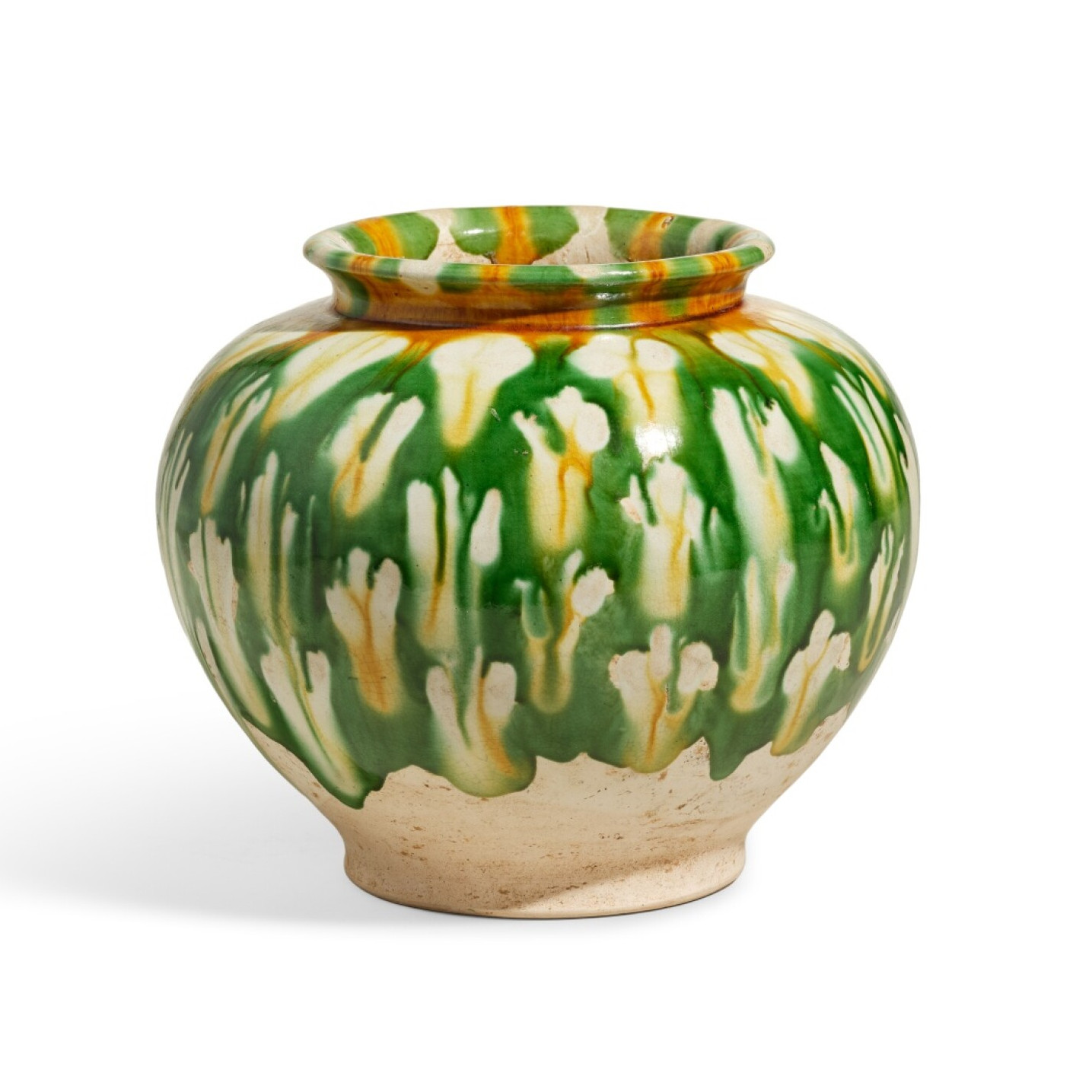

此件唐三彩萬年罐,配色與本場拍賣中岡田博物館所出唐三彩長頸瓶極為相近(參見:拍賣筆記 vol.400 蘇富比香港2026:岡田博物館,唐三彩長頸瓶 - Sotheby’s HK 2026, Okada Sale Part 2, Sancai Long Neck Bottle, Tang Dynasty),同為啟發日本奈良時期三彩的重要範本。此類釉色搭配於唐三彩中並不多見。
器出著名古董商浦上蒼穹堂舊藏。創始人浦上滿曾於繭山龍泉堂修業。其父浦上敏朗,為山口縣萩市著名收藏家,亦是當時繭山龍泉堂的重要客戶,擔當者即彼時社長高橋敏朗。浦上滿入龍泉堂後,上司正是高橋。高橋書法精妙,當時許多題簽皆具鮮明辨識度。高橋、繭山順吉與浦上父子關係素來密切。適逢日本經濟騰飛之際,眾人曾聯袂赴歐,整批購藏歐洲藏家之珍品,隨行者尚有安宅英一助手伊藤。
父親為收藏家,兒子卻放棄藏二代身份,選擇以古董商為業——此在日本殊為罕見。歐美與日本藝界,藏家與行家界線分明,行業規矩與相互尊重亦相對完善,故此一選擇尤顯意味深長。
浦上滿精力充沛,既是浮世繪的大藏家,又以中國藝術為主業。其審美之眼極為敏銳,所甄選器物多能穿越週期,甚至於價值爆發之際再放異彩。例如岡田博物館第一場專場中,由浦上滿為岡田和生甄選的隋至初唐白瓷鸚鵡盃,即以1818.7萬港元刷新紀錄(參見:拍賣筆記 vol.271 蘇富比香港:浦上滿,1818.7萬港元成交,初唐白瓷鸚鵡盃)。


唐三彩萬年罐
A sancai jar, Tang dynasty
Estimate
100,000 - 150,000 HKD
拍賣時間:2026年9月4日
Description
h. 18.7 cm
來源
浦上蒼穹堂,東京
Condition Report
Good overall condition, with only a small original firing chip to the base edge, and light surface wear.
整體品相良好。僅底沿見一小原生窰磕。輕微器面磨痕。
Provenance
Uragami Sokyu-do Co., Ltd, Tokyo.


這類小磕碰無傷大雅
This Tang sancai wannian jar shares a closely related colour scheme with the Tang sancai long-neck bottle from the Okada Museum of Art offered in the present sale (see Auction Notes vol. 400, Sotheby’s Hong Kong 2026: Okada Museum, Tang Sancai Long-Neck Bottle). Both pieces served as important models that inspired the sancai wares of Japan’s Nara period. Such a glaze combination is comparatively uncommon among Tang sancai ceramics.
The jar comes from the collection of the distinguished Tokyo dealer Uragami Sokyu-do. Its founder, Mitsuru Uragami, apprenticed at Mayuyama Ryusendo. His father, Toshiro Uragami, was a noted collector from Hagi in Yamaguchi Prefecture and an important client of Mayuyama; his principal contact there was the then president, Takahashi Toshiro. After joining the firm, Mitsuru worked under Takahashi. Takahashi’s fine calligraphy is readily identifiable on many period labels. Close personal ties linked Takahashi, Junkichi Mayuyama, and the Uragami father and son. During Japan’s economic boom they travelled together to Europe, acquiring entire collections from European owners; accompanying them was Ito, assistant to Eiichi Ataka.
While the father remained a collector, the son deliberately forsook the path of a second-generation collector to become a dealer—a choice still relatively rare in Japan. In Europe, America and Japan alike, the boundary between collector and dealer is clearly drawn, and professional etiquette and mutual respect are comparatively well established; the decision therefore carries particular significance.
Mitsuru Uragami is a man of prodigious energy, a major collector of ukiyo-e (especially Hokusai Manga) while treating Chinese art as his principal business. His eye is exceptionally acute; the pieces he selects frequently transcend market cycles and, at moments of value explosion, prove particularly rewarding. A telling example is the early Tang transparent-glazed parrot cup that he selected for Kazuo Okada, which realised a record 18.187 million Hong Kong dollars in the first Okada Museum sale (see Auction Notes vol. 271, Sotheby’s Hong Kong: Mitsuru Uragami, 18.187 m HKD, Early Tang White-Porcelain Parrot Cup).


Comments