
拍賣筆記 vol.400 蘇富比香港2026:38.4萬港元售出,唐三彩長頸瓶,岡田博物館 - Sotheby’s HK 2026, Okada Sale Part 2, Sancai Long Neck Bottle, Tang Dynasty

Updated: Sep 4

從實際上手的圖片和視頻看,這件瓶的配色、分色、流動性審美極高。值得注意的是,日本早在奈良時代就開始致敬唐三彩,學習製作出來的配色就與這件器物類似。這件唐三彩長頸瓶,可以看作是經典的唐三彩範本。
SACA學會此前曾詳細介紹過一件幾乎同款的唐三彩撇口瓶——川端康成舊藏那件(高約20.4 cm)。該瓶於2025年9月9日蘇富比香港「伊勢彥信珍藏重要中國陶瓷」專場登場,估價60–80萬港元,最終以292.1萬港元成交,約為低估價的4.8倍。川端康成作為1968年諾貝爾文學獎得主,將此瓶視為「愛すべく美しい」(可愛而美麗)的存在,並將其圖像置於《川端康成全集》卷十《名人》的扉頁,賦予這件器物濃厚的文人氣質與歷史溫度。
唐三彩長頸瓶
來源:岡田博物館
估價:400,000 - 800,000 HKD
拍賣時間:2026年9月4日
尺寸:高21.5 cm
本件唐三彩撇口長頸瓶,造型優雅,瓶身圓潤飽滿,細長頸部自然收束後向外翻撇,整體線條流暢而含蓄,正是唐代三彩長頸瓶中最經典、最受藏家青睞的形制之一。三彩釉色以琥珀、綠、乳白為主,流淌自然,層次豐富,釉面光澤溫潤,整體氣質端莊而不失生動。配原日本木箱,保存狀態良好。
There is overpaint around the neck-shoulder join, suggesting possible consolidation or restoration; as well as overpaint in one small area on the mouth rim’s top surface (approx. 2cm), and another on the body (approx. 2cm). Expected light wear to the surface and glaze.
頸肩相接處經潤飾,或為加固/修復。口沿一處(約2公分)及器身一處(約2公分)亦稍經潤飾。輕微器面及釉面磨痕。
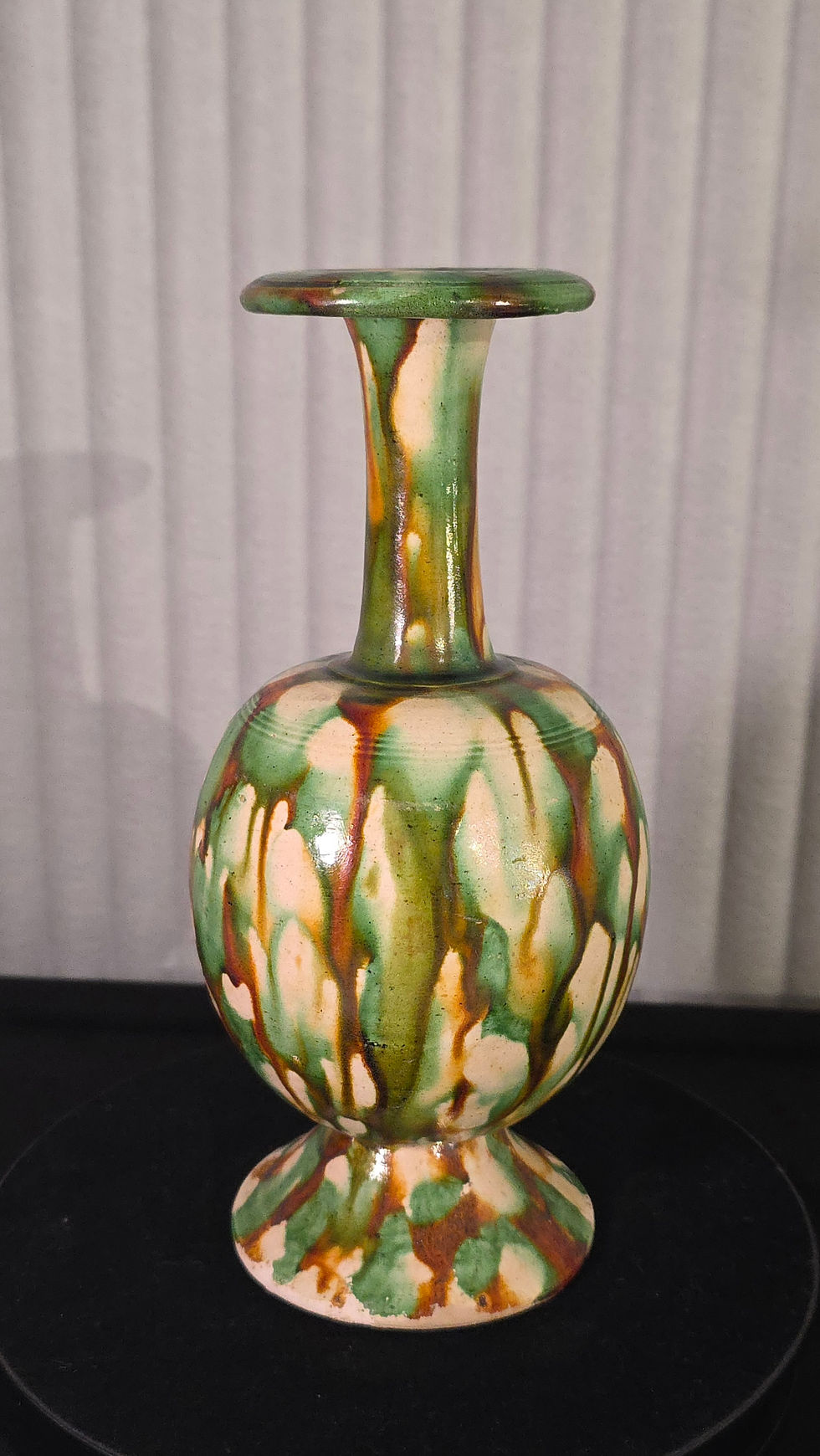


此次岡田博物館釋出的這件,雖然沒有川端康成的文豪加持,但其三彩呈現的質量、釉色流動的自然程度,以及整體比例的優雅,絲毫不遜色於川端舊藏。經過上一次伊勢專場與岡田第一場拍賣的市場洗禮,此類小型精品唐三彩長頸瓶的珍稀程度,已在藏家圈形成廣泛共識。
需要特別提醒的是:岡田博物館2025年11月第一場專場,以及此前的伊勢彥信專場,均出現了相當誇張的溢價現象。部分拍品成交價達到估價的十倍、二十倍甚至更高(例如岡田場中唐三彩鷹形壺約達低估價二十餘倍)。因此,雖然本次估價區間(40–80萬港元)顯得相當吸引,買家仍應以充分的預算準備面對激烈競投。
隨著唐三彩市場逐漸從過往的低估狀態走向價值回歸,此類質量上乘、形制經典的長頸瓶,已成為高古陶瓷中相對明確的價值錨點。綜合比較川端舊藏的成交表現與近年同類作品的稀缺性,本件仍建議以十倍估價的預算去爭奪,方有較大機會收入囊中。

Sotheby’s Hong Kong 2026: Okada Museum of Art, Part 2
A sancai bottle vase, Tang dynasty
Estimate:HK$400,000 – 800,000
Japanese wood box
Height 21.5 cm
This elegantly potted Tang sancai long-neck bottle vase features a well-rounded globular body rising to a slender, waisted neck and a gracefully flared mouth. The form is among the most classic and desirable of Tang sancai bottle shapes. The lead glazes — amber, green and cream — cascade naturally across the surface, creating rich layers and a warm, lustrous effect. The piece is accompanied by its original Japanese wood box and appears to be in good condition.
SACA previously published a detailed note on a nearly identical example formerly in the collection of Yasunari Kawabata (1899–1972), the Nobel Prize-winning Japanese novelist. That vase (approx. 20.4 cm high) appeared in Sotheby’s Hong Kong “Masterpieces of Chinese Ceramics from the Ise Collection” sale on 9 September 2025 with an estimate of HK$600,000–800,000 and sold for HK$2,921,000 — roughly 4.8 times the low estimate. Kawabata regarded the piece as “愛すべく美しい” (lovable and beautiful) and featured its image as the frontispiece of volume 10 of his complete works (Meijin), lending it significant literary and historical resonance.
The present Okada example lacks the literary prestige of the Kawabata provenance, yet in terms of glaze quality, fluidity of colour, and overall elegance of proportion, it is in no way inferior. After the market education provided by the Ise sale and the first Okada Museum sale, the rarity of well-preserved, finely potted small Tang sancai long-neck bottles of this type has become widely acknowledged among serious collectors.
A note of caution is essential. Both the November 2025 Okada Museum sale and the earlier Ise Collection sale saw substantial premiums, with some lots achieving ten, twenty, or even higher multiples of their pre-sale estimates (the Tang sancai hawk ewer in the Okada sale, for instance, reached more than twenty times its low estimate). Although the current estimate of HK$400,000–800,000 appears attractive, bidders should prepare for strong competition.
As Tang sancai continues its gradual return to more rational valuations, classic forms of this quality have become relatively clear value anchors within the early ceramics market. Taking into account the Kawabata result and the established scarcity of comparable pieces, it is advisable to approach this lot with a budget of approximately ten times the estimate in order to have a realistic chance of success.


Comments