
拍賣筆記 vol.344 蘇富比紐約2026:4.48萬美元售出,唐代澤州窯綠釉葫蘆瓶 - Sotheby’s 2026, A Green-Glazed Double-Gourd Vase, Possibly Zezhou Kiln, Tang Dynasty Sold for US$44,800
- SACA

- Mar 25
- 6 min read
Updated: Mar 26

4.48萬美元售出,成為澤州窯的參考器。
蘇富比2026年拍賣的這件唐綠釉葫蘆瓶(高25.3 cm),屬於「釉之詩意——美國重要私人珍藏早期陶瓷」專場,估價10,000-15,000 USD,曾於2005年紐約蘇富比上拍(編號293)。該瓶綠釉鮮亮,造型特殊,在拍賣前已備受關注。其亮眼釉色得益於唐代鉛釉或鐵釉配方在還原氣氛下的呈色效果,視覺上晶瑩潤澤,富有玻璃光澤。造型的特殊性在於雙球腹的比例協調,束腰自然流暢;據描述及同類器物特點,此類瓶底部常見穿孔或貫耳設計(用戶提及底部有穿戴孔),可能用於懸掛、固定或儀式用途,反映其非純實用性。
這種底部穿孔或貫耳的設計,源自青銅器傳統。宋代龍泉窯、南宋官窯常見的貫耳瓶有類似的設計,底部雙孔直接模仿商周青銅禮器,體現宋人「復古」審美與對古代禮制的尊崇。唐代葫蘆瓶的穿孔元素則更早,可能兼具裝飾與功能性。

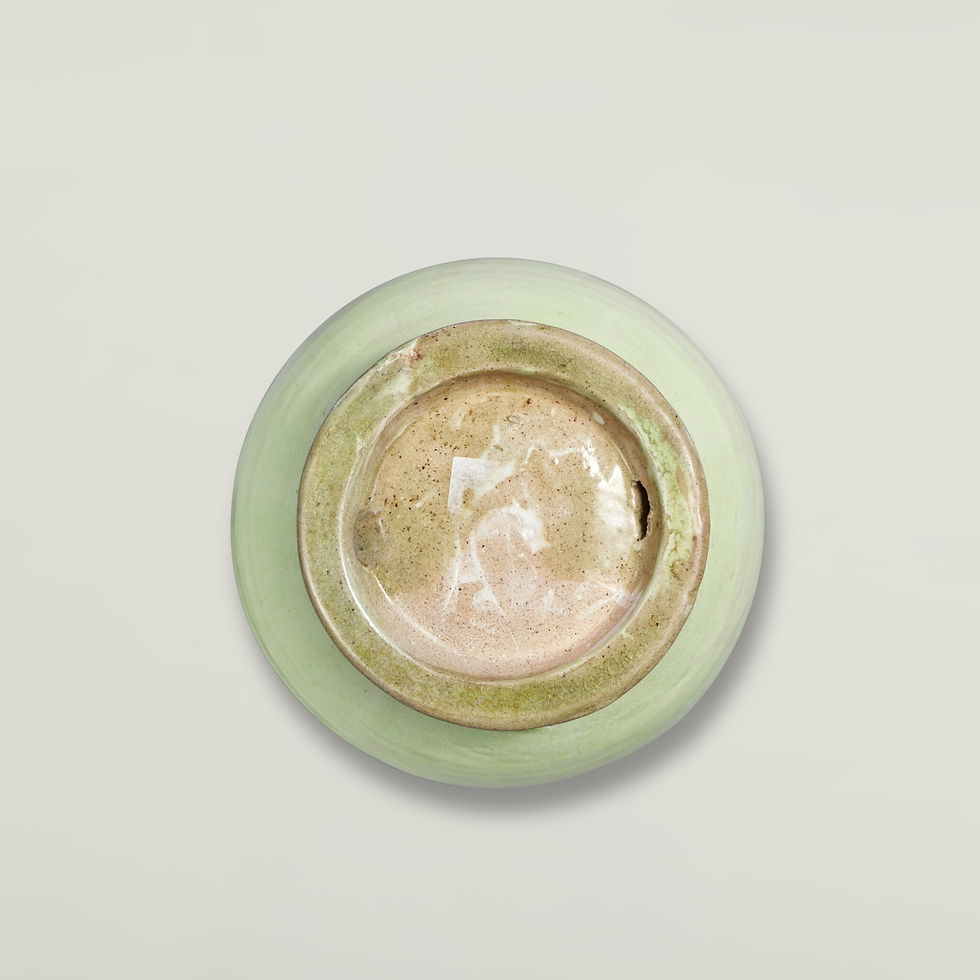
唐綠釉葫蘆瓶(或為澤州窯)
估價
10,000 - 15,000 USD
Chinese Art
現場拍賣 25 March 2026|09:30 EDT
New York
品相
整體見少許釉面經加固,包括上整體見正常表面磨損及少許微細窯燒瑕疵,包括足部上方一短道窯裂。
出處
紐約蘇富比2005年9月22日,編號293

澤州窯(Ze Zhou Kiln)是中國古代北方重要的陶瓷產區之一,位於今山西省晉城市(古稱澤州)一帶。該窯在唐代已開始燒製陶瓷,以生產低溫或中溫綠釉、三彩及相關釉色瓷器聞名。澤州窯產品多為陶質或半瓷質胎體,釉色以綠釉為特色,常呈現明亮、潤澤的翠綠或黃綠調,部分帶有細碎開片或自然流淌效果,反映唐代陶瓷工藝的多元實驗性。
澤州窯的燒製技法受唐代長安周邊窯口(如壽州窯、耀州窯早期)影響,採用本地瓷土,器型包括瓶、罐、盤、俑等,裝飾手法有印花、刻劃、貼花等。唐代澤州窯綠釉器物多見於墓葬出土,釉層較厚,玻璃質感強烈,部分作品色彩鮮豔,接近唐三彩的低溫鉛釉系統,但也有高溫燒成傾向。宋代以後,澤州窯繼續發展,但影響力逐漸被南方青瓷及北方其他名窯所超越。整體而言,澤州窯代表了唐代北方民間陶瓷的生動風貌,工藝質樸卻富有活力,為研究唐代陶瓷技術交流提供了重要實物依據。
雙葫蘆瓶(Double Gourd Vase)及其在越窯的類似五代製品
葫蘆瓶以天然葫蘆為造型原型,分上下兩球腹,中間束腰,寓意「福祿」(葫蘆諧音),兼具吉祥與實用(可貯酒或藥)。唐代綠釉雙葫蘆瓶較為罕見,多為低溫或中溫綠釉,胎體較厚,釉色亮麗,造型飽滿圓潤,體現唐人對自然形態的喜愛與工藝創新。
關於越窯(Yue Kiln)類似五代製品:越窯位於今浙江餘姚、上林湖一帶,是唐五代南方青瓷的代表,以「秘色瓷」(mise ci)聞名,釉色青翠如玉,胎薄釉潤,燒成溫度高,屬高溫青瓷系統。唐晚期至五代(907-960),越窯進入鼎盛期,生產大量青釉器物,包括葫蘆形執壺、瓶等。
五代越窯青釉葫蘆瓶(或葫蘆形執壺)已有多件傳世與出土實例,例如河南陝縣唐墓出土的青釉葫蘆瓶(高約17.6 cm,初唐風格但五代延續),以及佳士得拍賣的五代越窯青釉葫蘆形執壺(高19 cm)。這些製品特點為:
釉色:秘色或橄欖青,勻淨溫潤,無低溫綠釉的鮮豔跳躍感。
造型:雙腹或單腹葫蘆形,流線優雅,部分帶流或執柄,胎壁薄而輕盈。
工藝:輪製精細,釉層薄而均勻,底部多露胎或施護胎汁,燒成後呈現「如冰似玉」的質感。
與唐澤州窯綠釉葫蘆瓶相比,越窯五代製品更注重「青」而非「綠」的色調,工藝更精緻,屬宮廷或上層用瓷;澤州窯則更具北方民間活力,釉色亮眼且富變化。兩者均體現唐五代陶瓷對葫蘆造型的青睞,但南方越窯強調高溫還原燒成,北方澤州窯則可能兼用氧化/還原氣氛,產生更豐富的綠調。文獻與出土顯示,五代越窯葫蘆器常見於墓葬與窖藏,證明其在當時的流行程度。
這件唐綠釉葫蘆瓶的吸引力,正來自其釉色鮮亮(區別於越窯的沉靜青)、造型罕見(雙葫蘆比例完美,底部穿孔增添神秘感),以及與青銅器傳統的聯繫。在當代收藏市場,此類早期綠釉器因稀有性與視覺衝擊力,備受關注,預計將繼續成為焦點。

THE POETRY OF GLAZE - EARLY CERAMICS FROM AN IMPORTANT AMERICAN PRIVATE COLLECTION
A rare green-glazed double-gourd vase, Tang dynasty
2026 March 25, 09:30 PM HKT
Estimate
10,000 - 15,000 USD
Height 10 in., 25.3 cm
Condition Report
With scattered patches of consolidation to the glaze overall, including to approx. half of the upper bulb. Overall with age-consistent wear and minor firing imperfections, including a firing crack above the foot rim.
Provenance
Sotheby's New York, 22nd September 2005, lot 293.

Ze Zhou Kiln (澤州窯)
The Ze Zhou Kiln was one of the important ceramic production centers in northern China during the Tang dynasty, located in the modern Jincheng area of Shanxi Province (historically known as Ze Zhou). Active from the Tang period, it specialized in green-glazed wares, sancai (three-color) ceramics, and related glazed pottery. Products often featured a bright, lustrous green glaze—ranging from vivid emerald to yellowish-green—with a glassy quality and occasional fine crackles. The kiln utilized local clays, producing both earthenware and stoneware-like bodies. Decorative techniques included stamping, incising, and appliqué. While influenced by kilns near the Tang capital, Ze Zhou wares reflected a lively folk aesthetic. Production continued into later periods but was gradually overshadowed by more famous southern celadons and northern rivals. Today, Ze Zhou kiln artifacts provide valuable insights into Tang ceramic experimentation and regional diversity.
The Double Gourd Vase and Similar Five Dynasties Examples from Yue Kiln
The double gourd vase (hulu ping) draws its form from the natural bottle gourd, symbolizing "blessings and prosperity" (fu lu) in Chinese culture due to homophonic associations. It features two spherical bulbs connected by a narrow waist, making it both auspicious and functional for storing liquids. Tang green-glazed double gourd vases are relatively rare, typically executed in low- or medium-fired green glazes with thick, vibrant coatings.
The Sotheby's 2026 auction piece—A Rare Green-Glazed Double Gourd Vase, Tang dynasty (height 25.3 cm)—belongs to the "The Poetry of Glaze" collection from an important American private collection. It previously appeared at New York Sotheby's in 2005 (lot 293), with an estimate of USD 10,000–15,000. The vase has attracted significant pre-auction interest due to its strikingly bright green glaze, which exhibits a luminous, glassy sheen achieved through Tang lead- or iron-based formulations under specific firing conditions. The form is exceptionally elegant, with well-proportioned bulbs and a graceful waist. Notably, similar examples often include perforations or tube-like holes at the base (as mentioned), possibly for suspension, attachment, or ritual purposes, adding to its distinctive character.
Regarding comparable Five Dynasties (907–960) pieces from the Yue Kiln: Yue ware, centered in the Shanglin Lake region of northern Zhejiang, represents the pinnacle of southern celadon production. Famous for its "secret-color" (mise) porcelain—subtle, jade-like olive-green or bluish-green glazes fired at high temperatures—Yue kilns produced refined gourd-shaped vessels during the late Tang to Five Dynasties transition. Examples include a Five Dynasties Yue celadon double-gourd ewer (height approx. 19 cm, previously at Christie's) and an early Tang-style green-glazed gourd vase excavated from a tomb in Shaanxian, Henan (height 17.6 cm), with the style persisting into the Five Dynasties.
Key characteristics of Five Dynasties Yue gourd vessels:
Glaze: Delicate, even olive-green or "secret-color" celadon, thin and translucent, evoking ice or jade—contrasting with the bolder, brighter green of northern Tang wares.
Form: Graceful double- or single-gourd profiles, often with spouts or handles; thin walls and precise wheel-throwing.
Technique: High-fired reduction atmosphere, minimal decoration, exposed footrings sometimes coated with protective slip.
Compared to the Tang Ze Zhou green-glazed example, Yue Five Dynasties pieces emphasize refinement and subtlety suited to elite or imperial use, while Ze Zhou wares display more vibrant, experimental northern vitality. Both traditions highlight the popularity of gourd forms in Tang-Five Dynasties ceramics, yet differ in firing technology and aesthetic: southern Yue prioritizes serene elegance, northern Ze Zhou offers dynamic color and robustness. Excavations and auction records confirm the widespread appeal of such shapes across regions.
The pre-auction attention on this Tang vase stems precisely from its exceptional glaze brilliance, rare double-gourd proportions, base perforation details, and cultural links to bronze prototypes. Such early green-glazed ceramics continue to captivate collectors for their historical significance and visual impact.


Comments