
唐代筆記 vol.47 常盤山文庫:魯山窯黒釉青白斑水注 - Tokiwayama Bunko, Lushan Kiln Black Glazed Ewer with Blue and Purple Splashes, Tang Dynasty


魯山窯黑釉青白斑弁口水注
唐代 高30.2公分
常盤山文庫藏(No.21009)
此件作品通體施黑釉,並於其上以白濁釉料薄施散點,形成青白色斑紋。此類施有白濁斑的黑釉器,常被稱為「海鼠釉」,主要見於唐代後期河南一帶窯口的製品。
然而,本器與一般所謂的「海鼠釉」器物有所不同。後者多以厚釉覆全器,白濁感強烈;而本器的釉色則薄施於表面,呈現出細碎而輕盈的散斑效果。整體釉色在黑與青白之間交融流動,顯出唐代釉料調配與施釉技法中極具探索性的一面。
本作曾刊載於:《唐磁 白磁・青磁・三彩》(根津美術館,1988年,解說:內田サアラ),及《常盤山文庫と町田市立博物館が語る 中国陶磁うつくし》(町田市立博物館,2016年,解說:佐藤サアラ)。

Black-Glazed Ewer with Blue and White Splashes, Lushan Kiln
Tang dynasty
Height: 30.2 cmTokiwayama Bunko Collection, No.21009
This ewer is coated overall with a lustrous black glaze, over which thinly applied milky-white splashes create subtle bluish-white mottling. Vessels with such milky splashes on a dark ground are often referred to as namako-yu (“sea cucumber glaze”) and are known to have been produced in Henan Province during the late Tang period. However, the present piece differs notably from the typical namako-yu wares: whereas those examples are heavily encrusted with thick, opaque glaze, producing a dense milky appearance, the present ewer exhibits a much lighter and more dispersed application. The result is a delicate interplay of black and pale tones across the surface, demonstrating the experimental refinement of Tang glazes and firing techniques.
Published and illustrated in: Tōji: Hakujō, Seiji, Sansai (Tang Ceramics: White, Celadon, and Sancai), Nezu Museum, Tokyo, 1988 (text by Uchida Saara); and Chinese Ceramics: Beauty through the Eyes of Tokiwayama Bunko and Machida City Museum, Machida City Museum, 2016 (text by Satō Saara).
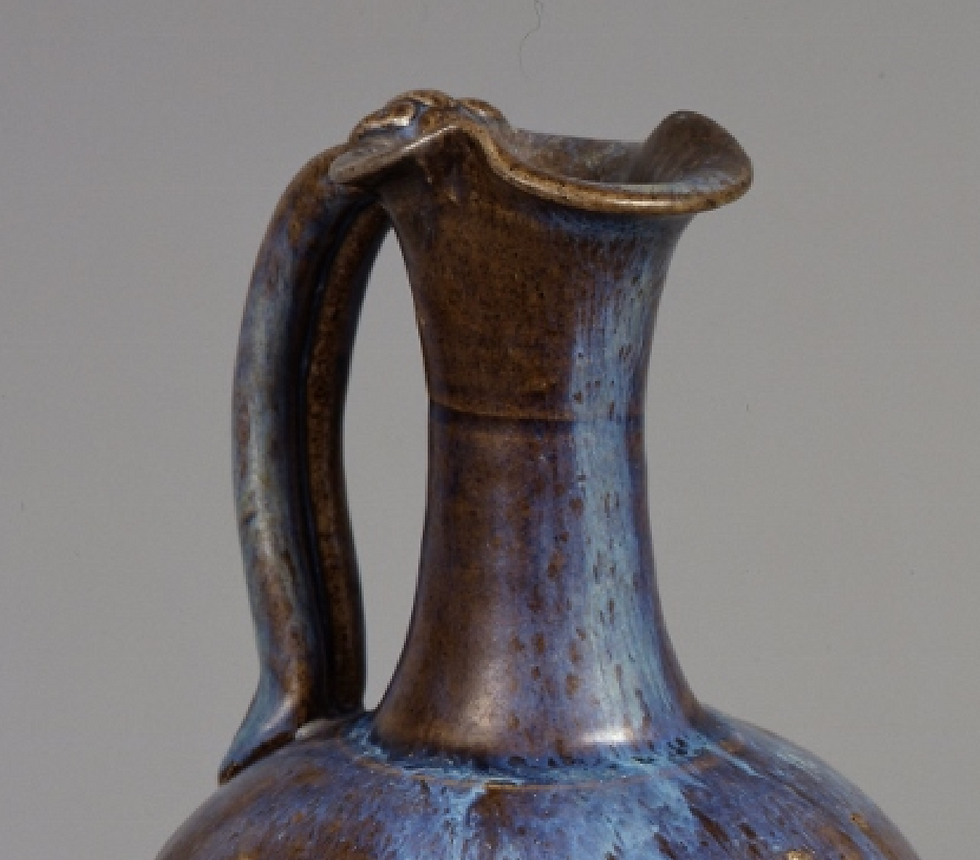
黒釉青白斑弁口水注
こくゆうせいはくはんべんこうすいちゅう
高 30.2cm
唐時代
常盤山文庫 No.21009
黒釉に白濁した釉薬を厚くかけた作品はしばしば「海鼠釉(なまこゆう)」の名でよばれ、唐時代後期の河南省で焼かれていたことが知られるが、本作はそれらとは釉のかかり方がやや異なる。いわゆる海鼠釉が、器物に厚くかかり白濁感が強いのに対し、本作は薄く全体に散らすようにかかっている。
掲載図書『唐磁 白磁‧青磁‧三彩』根津美術館、1988年(解説 内田サアラ)『常盤山文庫と町田市立博物館が語る 中国陶磁うつくし』町田市立博物館、2016年(解説 佐藤サアラ)

Comments