
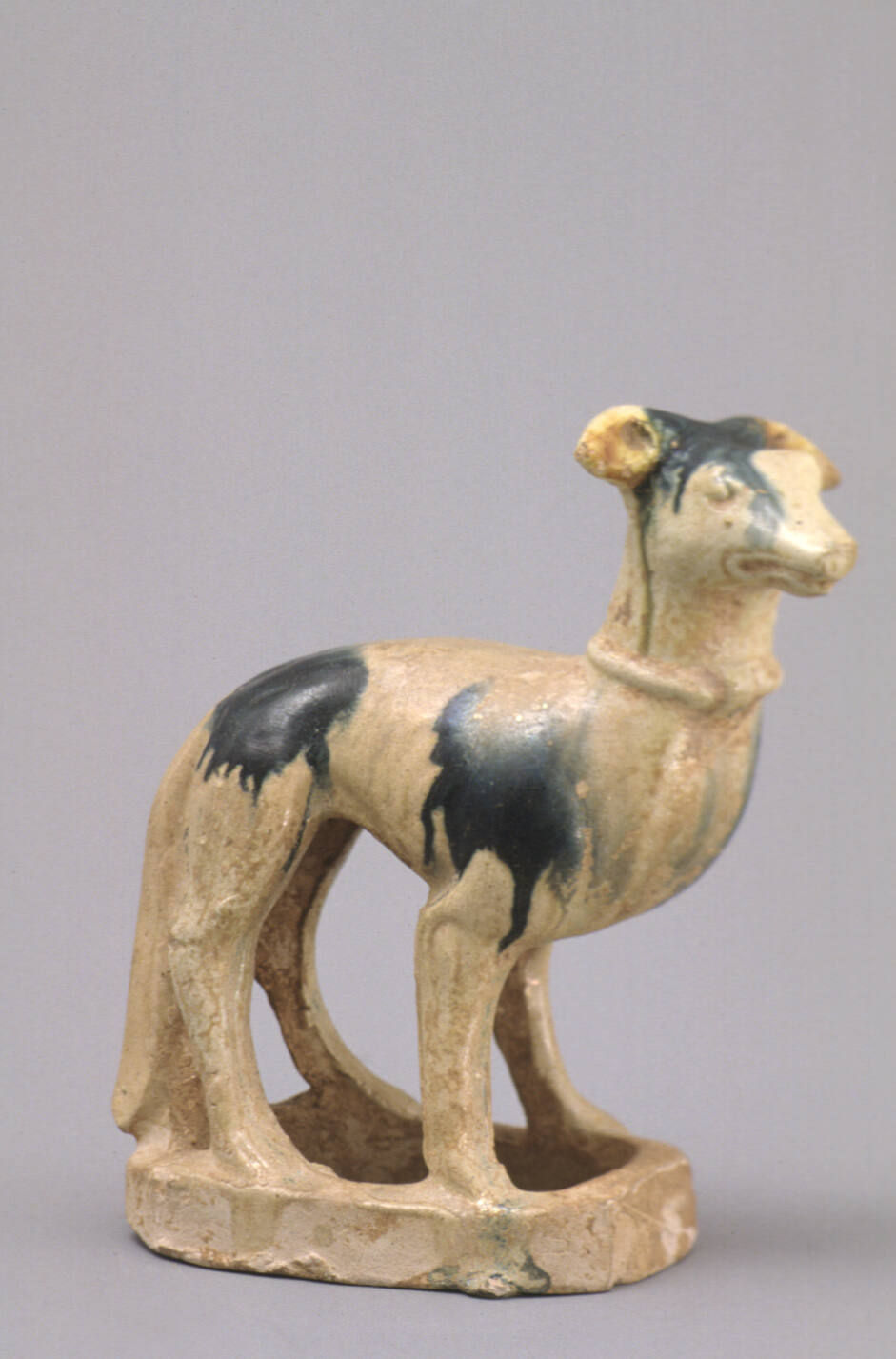
三彩筆記 vol.73 維多利亞與阿爾伯特博物館:唐三彩袖珍撒藍釉萬年罐,1911年入藏的早期三彩 - V&A Museum, Miniature Tang Sancai Splash Blue-Glazed Wannian Jar, Tang Dynasty


本品高僅11公分,尺寸袖珍特殊,施撒藍釉,極具學術研討價值。
維多利亞與阿爾伯特博物館(V&A)文獻顯示,本品於1911年購自倫敦卡莫米爾街25號的 S. M. Franck & Co.。彼時距離1905年唐三彩之首次發現僅歷時六載。時值1909年,該公司由合夥人朱利葉斯·斯皮爾(Julius Spier)接掌。鑑於中國內地修築鐵路引發高古陶瓷、早期雕塑及建築構件的大量出土,該公司敏銳捕捉商機,轉向源頭直採,專營中國早期考古文物之進口與批發。在一戰爆發前,該公司已成為大英博物館主要的中國文物供應商,乃至Bluett & Sons等倫敦西區知名零售古董商,亦從其倉庫批發置貨。本品於1911年入藏,正處於清末汴洛鐵路大規模掘出唐三彩(1905-1911)與法蘭克公司轉型中國高古文物的黃金交叉點。
唐三彩之發現,始於清光緒年間(1899-1905)汴洛鐵路的修建,因工程掘開洛陽邙山一帶的唐代墓葬而面世。出土之初,此類絢麗陶器曾因隨葬屬性被視為不祥,甚有遭砸毀者。及至運抵北京琉璃廠,方獲羅振玉、王國維等學者垂青,考證其為唐代明器,並依其低溫鉛釉交融之色彩特徵,定名為「唐三彩」。
隨著近年印尼、埃及、伊拉克及日本等海外貿易與宮殿遺址中三彩殘片的陸續發現,現今學術界與收藏界已逐漸更新認知,打破了唐三彩專用於「陪葬」的傳統觀念,證實其兼具盛唐高檔日用品與貿易外銷瓷之雙重屬性。此項認知轉變,結合其生動寫實的雕塑美學,使唐三彩在1928年隨鐵路擴建再度大規模出土後,更進一步確立了其在中國陶瓷史與東西方文化交流史上不可動搖的崇高地位。(SACA觀察,2026.11.6)


唐三彩袖珍撒藍釉萬年罐
高:11公分
直徑:13公分
唐代(700–750年)
藍鉛釉陶器
館藏編號:C.43-1911
購自 S. M. Franck & Co.(地址:倫敦卡莫米爾街25號),1911年入藏。此項入藏資訊記錄於亞洲部登記冊中,為2022年藏品傳承研究計畫的一部分。
Height: 11cm
Diameter: 13cm
Tang dynasty
700-750
Earthenware with blue lead glaze
Museum no. C.43-1911
Purchased from S. M. Franck & Co. (25 Camomile Street, EC.), accessioned in 1911. This acquisition information reflects that found in the Asia Department registers, as part of a 2022 provenance research project.
Tang Sancai (Tang Tri-color glaze) was first discovered during the late Qing dynasty—specifically between 1899 and 1905 during the reign of the Guangxu Emperor—when the construction of the Bian-Luo Railway unearthed numerous Tang dynasty tombs in the Mangshan area of Luoyang. Initially, these newly excavated, brilliantly glazed ceramics were regarded as ominous and unlucky because of their funerary origins, and some were even destroyed by laborers. It was not until they were transported to the Liulichang antiquities market in Beijing that they caught the attention of prominent scholars such as Luo Zhenyu and Wang Guowei. Through rigorous textual research, they identified these wares as mingqi (burial goods) from the peak period of Tang dynasty lavish burial customs and officially named them "Tang Sancai" based on their defining feature of intermingling low-temperature lead glazes in yellow, green, and white.
However, recent archaeological discoveries of Tang Sancai shards at overseas trade and palace sites—including Indonesia, Egypt, Iraq, and Japan—prove that these wares also served as high-end daily utensils and export commodities in their day. This evidence has prompted contemporary academia and collectors to gradually update their understanding, breaking away from the traditional view of Tang Sancai as strictly "funerary objects." This paradigm shift, combined with the realism and vitality of their forms and their unique artistic value, further cemented the irreplaceable and lofty status of Tang Sancai in the histories of both Chinese ceramics and East-West cultural exchange, especially following a second, even larger-scale excavation during railway expansions in 1928. (SACA Analysis, 2026.11.6)
This specific piece is of miniature dimensions, standing at only 11 cm in height—a particularly rare and unusual size—and features a cobalt-blue ("sprinkled blue") glaze. According to records from the Victoria and Albert Museum (V&A), this object was acquired from S. M. Franck & Co. (located at 25 Camomile Street, London) and entered the museum collection in 1911, just six years after the initial discovery of Tang Sancai in 1905.
In 1909, the management and operations of S. M. Franck & Co. were taken over by its partner, Julius Spier. It was precisely during this period (circa 1909–1911) that the company keenly recognized the commercial potential of early archaeological artifacts—including early ceramics, Tang Sancai, early sculptures, and architectural components—which were being unearthed in massive quantities in mainland China due to railway construction. Consequently, the firm began sourcing goods directly from China, transforming its business model to specialize in the import and wholesale of early Chinese antiquities. Prior to the outbreak of the First World War, the company became one of the primary suppliers of Chinese antiquities to the British Museum. The accession of this object in 1911 marks the golden convergence between the large-scale unearthing of Tang Sancai by late-Qing railway works (1905–1911) and the strategic pivot of S. M. Franck & Co. into early Chinese archaeological artifacts. Many prominent retail dealers in London’s West End, such as the renowned Bluett & Sons, routinely sourced their inventory through wholesale purchases from Franck’s warehouse on Camomile Street.


Comments