
三彩筆記 vol.70 東京國立博物館:宋三彩兔紋盤,至元六年銘 - Tokyo National Museum, Sancai Rabbit Dish, Jin-Yuan Dynasty


金至元之際,磁州窯系於灰胎之上施白化粧,以均勻而深刻之線條界定紋樣輪廓,再填以黃、綠低溫彩料,偶點褐鐵作眼、耳、尾之醒目,遂成世稱「宋三彩」之器。此類刻線填彩,意在使釉色不混、紋樣明快,與唐代鉛釉自由流淌之三彩判然有別,而更近北方民窯實用而富生活氣息之審美。東京國立博物館所藏三彩兎文皿(TG-1429),高2.5公分、徑12.4公分、高台徑6.4公分,盤心以黃地為主,對稱葉紋分割畫面,中央一兔回首瞪目,神態機警;高台周圍墨書「至元六年(1269)……」,為現存同類型中極少見之明確紀年例。兎紋於磁州窯盤器中本較花卉稀少,本件因紀年而屢為中外文獻所引,成為斷代與工藝比對之基準。
維多利亞與艾伯特博物館所藏金代磁州窯三彩盤(CIRC.123-1936,徑約19公分),同樣以深刻線條區隔黃綠白彩,刻雙兔與花葉,出自Eumorfopoulos舊藏,現陳列於南肯辛頓陶瓷室;佳士得曾拍賣中十三世紀磁州窯白兔盤(徑16公分),說明文字明確以東京國立博物館此件為「略小而同具1269年紀年」之對比例。另有金代小型三彩兎盤(徑11.9公分)見於私人舊藏,以及東京國立博物館同系三彩刻花雙魚文皿(TG-1428),工藝與色系皆相一致。王秋生於財新專欄〈宋三彩兔紋小盤|品瓷〉(2025年12月31日)中記述自浦上蒼穹堂所得同類小盤,盤中肥碩兔子低頭蜷伏,並指出歷代兔器精品流通極少,屬兔藏家尤珍視之,足見此題材於收藏界之稀缺與吉祥寓意。(SACA觀察,2026.10.21)
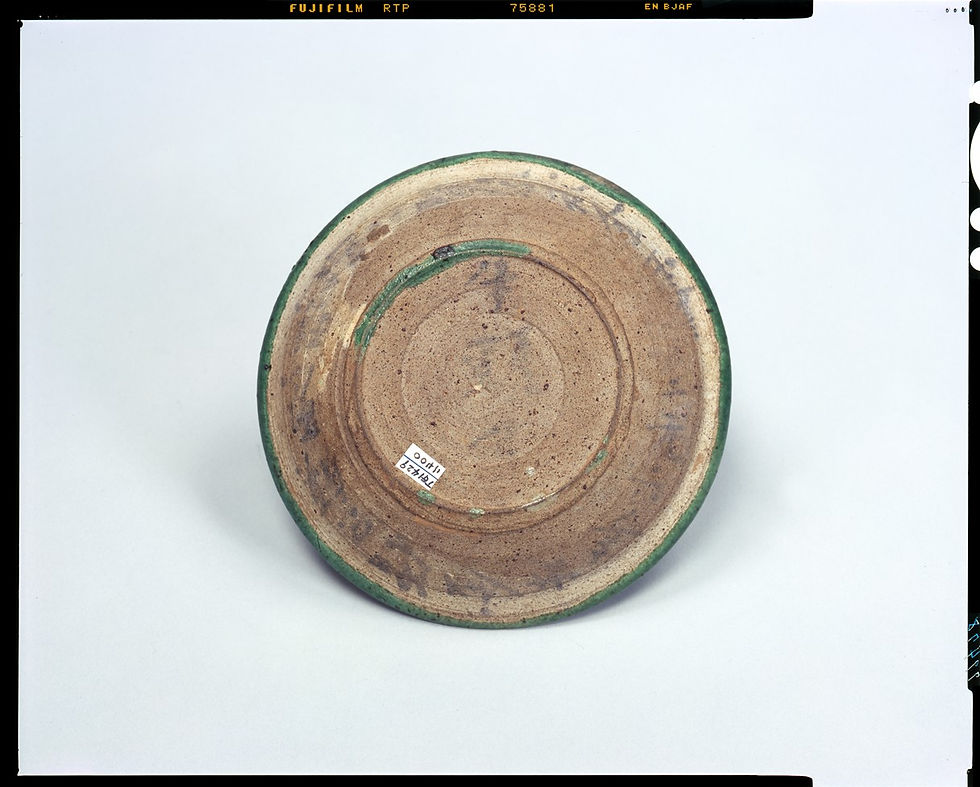
東京國立博物館 TG-1429 三彩兎文皿
高2.5 cm,徑12.4 cm,高台徑6.4 cm;高台墨書「至元六年(1269)……」
博物館同類型
維多利亞與艾伯特博物館 CIRC.123-1936
金代磁州窯三彩盤,徑約19 cm;刻雙兔與花葉,黃綠白彩,深刻線條。Eumorfopoulos舊藏,現展於南肯辛頓 Ceramics Room 137。
東京國立博物館 TG-1428
三彩刻花雙魚文皿(金代,橫河民輔寄贈),工藝與色系與本件同系。
拍賣與文獻對比
佳士得中13世紀磁州窯白兔盤(徑16 cm)
拍品說明明確以東京國立博物館 TG-1429 為「略小而同具1269年紀年」之對比例。
(文獻引述見 Christie’s 相關拍品說明)
佳士得金代小型三彩兎盤(徑11.9 cm)
綠、琥珀、白、褐彩,兎於草間;比利時私人舊藏。
王秋生財新專欄
〈宋三彩兔紋小盤|品瓷〉(2025年12月31日)
記述自浦上蒼穹堂所得同類宋三彩兔紋小盤(肥碩兔子低頭蜷伏)。

〈宋三彩盤中的鴻雁意象|品瓷〉(2026年1月25日)
文中回溯前述兔盤為收藏起點。
SACA Observation
During the Jin to Yuan transition, Cizhou-type kilns applied white slip over a grey body, then deeply and evenly incised the outlines of motifs before filling them with yellow and green low-temperature pigments, occasionally adding brown iron accents to eyes, ears and tails. The resulting ware, conventionally called “Song sancai,” keeps the colours distinct and the designs crisp—unlike the freely flowing lead glazes of Tang sancai—and reflects the practical yet lively aesthetic of northern folk kilns. The dish in the Tokyo National Museum (TG-1429), measuring 2.5 cm high, 12.4 cm in diameter and 6.4 cm across the foot, presents a yellow ground divided by symmetrical leaves, with a rabbit at the centre turning its head, eyes wide and alert; the ink inscription around the foot reading “Zhiyuan 6th year (1269)…” is among the rare absolute dates on surviving examples of the type. Rabbit motifs are less common than floral ones on Cizhou dishes, and this piece’s dated inscription has made it a frequent point of reference in international scholarship.
A closely related Jin-dynasty Cizhou sancai dish in the Victoria and Albert Museum (CIRC.123-1936, diameter approximately 19 cm) likewise uses deep incisions to separate yellow, green and white glazes, depicting two rabbits amid foliage; it comes from the Eumorfopoulos collection and is currently displayed in Ceramics Room 137 at South Kensington. Christie’s has offered a mid-thirteenth-century Cizhou white-hare dish (diameter 16 cm) whose catalogue note explicitly cites the Tokyo National Museum example as “a slightly smaller” piece “also incised with the date 1269.” A smaller Jin-dynasty sancai hare dish (diameter 11.9 cm) is recorded in a private collection, while the Tokyo National Museum itself holds a related sancai-incised double-fish dish (TG-1428) of the same technique and palette. In his Caixin column “Song Sancai Rabbit Dish” (31 December 2025), Wang Qiusheng describes a comparable small dish acquired from Uragami Sōkyōdō, noting the plump rabbit crouching with head lowered, and observes that fine rabbit-themed ceramics have always been scarce in the market, particularly prized by collectors born in the Year of the Rabbit—an indication of both their rarity and their auspicious associations.
三彩兎文皿 |
画像番号: | C0099478 |
撮影部位: | 高台 |
列品番号: | TG-1429 |
時代: | 至元6年(1269) |
形状: | 口径12.4_底径2.6 |
数量: | 1枚 |
フィルムサイズ: | 4×5 |
撮影日: | 2010-04-26 |


Comments