
三彩筆記 vol.45 蘇黎世瑞特堡博物館:唐三彩藍釉雙龍耳瓶- Rietberg Museum, Tang Sancai Blue-Glazed Double-Dragon-Handled Amphora


這件唐代三彩藍釉雙龍耳瓶(又稱雙龍飲或雙龍耳壺)是玫茵堂收藏中的珍稀代表作,現長期借展於瑞士蘇黎世瑞特堡博物館(Museum Rietberg),編號MYT 1300。器高40 cm,採用低溫藍釉陶器工藝,雙龍耳設計源自唐代受西方影響的雙耳壺造型,龍首咬住杯狀口沿,展現盛唐時期中西文化交融的藝術風貌。此類藍釉雙龍瓶極為罕見,堪稱全世界孤品或近乎孤品;玫茵堂另藏一件黃釉版本,同樣珍貴。相較之下,白釉雙龍瓶存世較多,但其中高度超過50 cm並帶貼塑裝飾的才屬頂級;黃釉、藍釉及純三彩變體則極少見,藍釉尤為稀有,體現唐代高級釉料技術與皇家審美。
This Tang dynasty blue-glazed double-dragon-handled amphora (also known as double-dragon vase or handled vessel) is a rare masterpiece from the Meiyintang Collection, on long-term loan to the Museum Rietberg in Zurich, Switzerland, under inventory number MYT 1300. Standing 40 cm tall, it is crafted in low-fired earthenware with cobalt-blue glaze. The distinctive double-dragon handles, with dragon heads biting the cupped rim, reflect the Tang era's adaptation of Western amphora forms infused with Chinese dragon motifs, symbolizing the cosmopolitan cultural fusion of the period. Blue-glazed examples of this type are extraordinarily rare, possibly unique worldwide; the Meiyintang Collection also holds a yellow-glazed counterpart of similar rarity. In comparison, white-glazed double-dragon vessels survive in greater numbers, but only those over 50 cm in height with applied molded decoration rank at the highest level. Yellow-glazed, blue-glazed, and pure sancai variants remain exceedingly scarce, with blue glaze representing one of the most prized and technically challenging achievements.
唐代三彩藍釉雙龍耳瓶(雙龍飲)
Tang Dynasty Blue-Glazed Double-Dragon-Handled Amphora
尺寸:高40 cm
出版:玫茵堂收藏目錄(Regina Krahl主編,Azimuth Editions,1994-2010多卷);
相關展覽圖錄如倫敦大英博物館(1994)、紐約大都會博物館(1995、2000)等
收藏地:瑞特堡博物館(Museum Rietberg),長期借展自玫茵堂 編號:MYT 1300
Dimensions: Height 40 cm
Publications: Meiyintang Collection catalogues (edited by Regina Krahl, Azimuth Editions, 1994-2010 volumes); related exhibition catalogues such as British Museum, London (1994), Metropolitan Museum of Art, New York (1995, 2000), etc. Collection
Location: Museum Rietberg, Zurich, on long-term loan from the Meiyintang
Inventory Number: MYT 1300
唐代三彩(sancai)是中國陶瓷史上最具代表性的藝術遺產之一,以低溫鉛釉技法呈現綠、黃、白等多色流動效果,象徵盛唐的繁榮與開放氣象。藍釉在三彩體系中屬於極端稀有品種,因需進口鈷料(主要來自中亞或波斯地區)著色,成本高昂、技術難度大,多限於宮廷或高級訂製,如武則天時期為其子李弘及哀皇后(李弘之妻蕭氏)相關器物中偶見藍釉應用,體現皇家奢華與工藝巔峰。
此件玫茵堂藍釉雙龍瓶不僅工藝精湛,更體現中外交流:壺形源自希臘-羅馬雙耳壺,經唐人改造為高肩細頸、龍耳造型,龍首象徵權威與祥瑞,藍釉則彰顯異域技術輸入。
玫茵堂收藏由斯蒂芬·祖利格(Stephen Zuellig,1917-2017)與吉爾伯特·祖利格(Gilbert Zuellig,1918-2009)兄弟於1950年代末開始系統構建,生於馬尼拉的他們透過遠東商業活動培養對亞洲藝術的熱情。吉爾伯特專注新石器時代至宋代早期陶瓷,包括唐代三彩;斯蒂芬則收集元明清瓷器及商周青銅。
兄弟倆於1994年成立玫茵堂基金會,委託專家Regina Krahl編撰多卷目錄(1994-2010),成為陶瓷研究權威參考。收藏歷程獲著名經紀人Giuseppe Eskenazi(倫敦Eskenazi畫廊)長期支持,他為祖利格兄弟提供頂級來源,如1999年購得玫茵堂雞缸杯;Krahl則負責學術鑑定與出版;其他協力者包括戴克誠(青銅器部分)等,提供市場洞察與專業指導,使玫茵堂成為20世紀後期最重要的私人中國陶瓷收藏之一,2012年起早期部分長期借展瑞特堡博物館,確保公眾與學術曝光。
唐代胡人(中亞、西域民族,如粟特人)活躍於長安,帶來玻璃、金屬工藝與異域造型,深刻影響陶瓷發展,如藍釉鈷料即源自波斯輸入,雙龍耳壺亦融匯胡風,成為唐文化包容性的最佳例證,反映絲綢之路上的技術與審美交匯。
Tang dynasty sancai ware stands as one of the most iconic artistic legacies of Chinese ceramics, employing low-fired lead glazes to achieve flowing effects in green, amber, white, and other hues, embodying the prosperity and cosmopolitan spirit of the High Tang era. Within sancai, blue glaze ranks among the rarest varieties due to the high cost and technical challenge of using imported cobalt oxide (primarily from Central Asia or Persia) as colorant, often reserved for imperial or elite commissions, as seen in rare applications during Wu Zetian's time for artifacts associated with her son Prince Li Hong and Empress Ai (Xiao, wife of Li Hong), highlighting royal opulence and technical mastery.
The blue-glazed double-dragon-handled amphora exemplifies exquisite craftsmanship while highlighting Sino-foreign exchange: the form derives from Greco-Roman amphorae, reinterpreted in Tang China with high-shouldered silhouette, slender neck, and arched dragon-head handles symbolizing imperial authority and auspicious power.
The Meiyintang Collection was systematically assembled by brothers Stephen Zuellig (1917-2017) and Gilbert Zuellig (1918-2009) starting in the late 1950s, born in Manila and fostering a passion for Asian art through their Far East business endeavors. Gilbert focused on early ceramics from the Neolithic period through the Han, Tang, and Song dynasties, including sancai wares; Stephen specialized in Yuan, Ming, and Qing porcelains as well as Shang-Zhou bronzes. In 1994, they established the Meiyintang Foundation, commissioning expert Regina Krahl to author multi-volume catalogues (1994-2010), which serve as definitive scholarly references. Their collecting history benefited from longstanding support by renowned dealer Giuseppe Eskenazi (of London's Eskenazi Gallery), who sourced premier pieces such as the Meiyintang chicken cup acquired in 1999; Krahl handled academic authentication and publication; additional collaborators included Christian Deydier and others, offering market insights and professional guidance, elevating Meiyintang to one of the foremost private Chinese ceramics collections of the late 20th century.
From 2012, the early portion has been on long-term loan to the Museum Rietberg, ensuring public and scholarly access. During the Tang, Sogdian and other Central/West Asian "Hu" peoples thrived in Chang'an, introducing glass, metalwork, and exotic forms that profoundly influenced ceramics—cobalt for blue glazes came via these routes, and the double-dragon amphora itself blends foreign silhouettes with Chinese dragon motifs, epitomizing Tang cultural inclusivity and the technological-aesthetic confluence along the Silk Road.
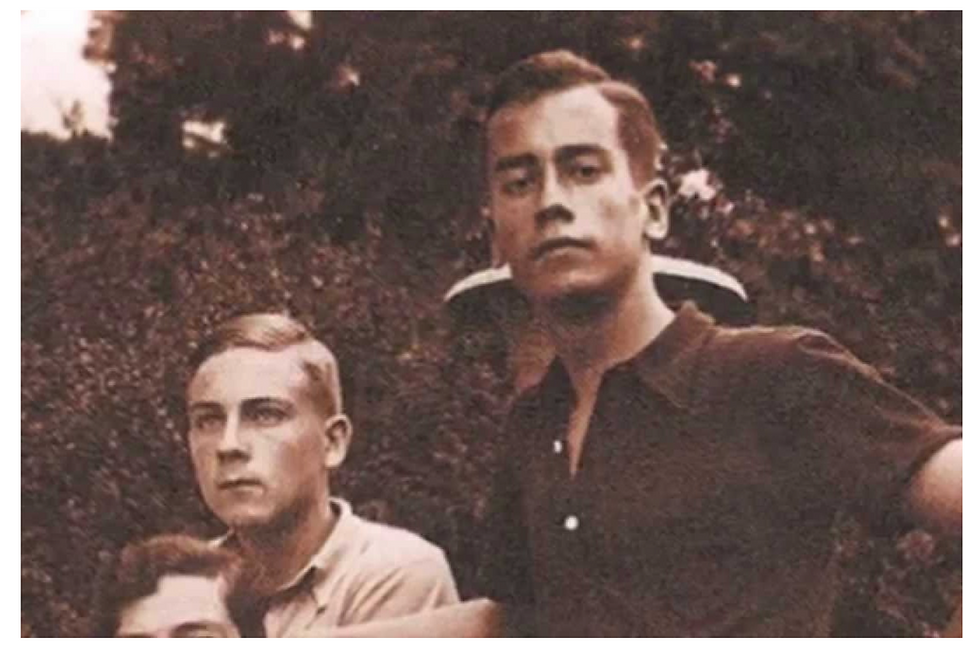
The Zuellig brothers - Gilbert (left) and Stephen (right)
SACA學會長期關注唐代藍釉陶瓷,曾刊載多篇專題,包括唐三彩藍釉珍稀度分析(如武則天時期宮廷訂製藍釉器物,參考李弘及哀皇后相關出土例證,但強調其藝術與文化價值而非墓葬屬性)、藍釉與灑藍變體比較(探討鈷料進口與燒成技術挑戰)、以及藍釉在唐代宮廷禮儀與藝術地位的探討(分析其象徵皇家奢華與中西融合)。相關文章強調藍釉不僅技術稀有,更承載盛唐國際視野與工藝創新,推薦會員透過比較研究(如東京國立博物館藍釉兔子或倫敦維多利亞與阿爾伯特博物館藏品)深化理解唐陶瓷巔峰。
SACA has long focused on Tang blue-glazed ceramics, publishing articles on topics such as the extreme rarity of Tang sancai blue glazes (citing imperial commissions during Wu Zetian's era, with references to artifacts linked to Prince Li Hong and Empress Ai, but stressing their artistic and cultural significance over funerary contexts), comparisons between pure blue and sprinkled-blue variants (examining cobalt importation and firing challenges), and the role of blue glaze in Tang court ritual and artistic prestige (analyzing its symbolism of royal luxury and Sino-Western synthesis). These pieces underscore that blue glaze is not only technically scarce but also embodies High Tang global outlook and innovation, encouraging members to explore further through comparative studies (e.g., the blue-glazed rabbit in Tokyo National Museum or holdings in the Victoria and Albert Museum, London) for a deeper appreciation of Tang ceramic zeniths.
藍釉雙龍瓶詳細問答
Q: 藍釉雙龍瓶為何如此稀有?
A: 藍釉在唐代三彩體系中極罕見,主要因鈷料需從中亞或波斯進口,燒成過程需精準控制低溫鉛釉以避免顏色變異,技術門檻高;存世藍釉器多限於宮廷或精英層級,全球已知完整藍釉雙龍瓶僅此一件或極少,體現唐代陶瓷工藝的頂級成就。
Q: 與白釉、黃釉版本有何區別?
A: 白釉雙龍瓶存世較多,常見於唐代一般器物,但頂級者需高度逾50 cm並附貼塑裝飾;黃釉與藍釉則極罕,黃釉多見於鐵基色料,藍釉依賴鈷氧化物,玫茵堂藏黃釉一件(類似造型),藍釉更珍稀,因其顏料進口成本與燒成難度更高,代表更高階的宮廷審美。
Q: 此器與墓葬有關嗎?
A: 雖然部分唐三彩器物出土於皇家相關遺址,但藍釉多見於宮廷使用或高級藝術品脈絡;學術上更視其為唐代藝術文化遺產的典範,強調其體現盛唐開放與工藝創新,而非僅限墓葬功能,符合現代陶瓷史研究對唐器多功能性的認識。
Q: 玫茵堂收藏背景?
A: 玫茵堂由斯蒂芬·祖利格與吉爾伯特·祖利格兄弟於1950年代末創建,透過遠東商業積累資源,系統收集逾2000件中國陶瓷;吉爾伯特專注新石器至宋代早期,包括唐三彩,斯蒂芬則元明清瓷器與青銅;1994年起委託Regina Krahl編多卷目錄,獲Giuseppe Eskenazi經紀支持(提供來源與鑑定),以及Julian Thompson等專家指導;2011-2012部分拍賣(蘇富比香港),但早期藏品2012年起借展瑞特堡博物館,成為全球陶瓷研究關鍵資源。
Q: 藍釉如何反映唐代胡人影響?
A: 唐代胡人(粟特等中亞民族)帶來鈷料與異域工藝,藍釉即由此輸入;雙龍瓶造型融希臘-羅馬元素,經胡人貿易渠道傳入長安,體現絲綢之路上的文化交融,學者研究顯示胡人匠師可能參與燒窯,提升唐陶瓷國際性。
Q: Why is the blue-glazed double-dragon vase so rare?
A: Blue glaze in the Tang sancai system is exceptionally scarce, as cobalt pigment required importation from Central Asia or Persia, with precise low-fired lead glaze control to prevent color variation posing significant technical hurdles; surviving blue-glazed vessels were largely confined to imperial or elite contexts, with known intact blue-glazed double-dragon amphorae being unique or nearly so globally, exemplifying the pinnacle of Tang ceramic artistry.
Q: How does it differ from white- or yellow-glazed versions?
A: White-glazed double-dragon vessels are more common in Tang wares, typically for general use, but elite examples exceed 50 cm in height with applied molded decoration; yellow and blue glazes are exceedingly rare, with yellow derived from iron-based colorants and blue from cobalt oxide—the Meiyintang holds one yellow counterpart (similar form), but blue is rarer due to higher import costs and firing complexities, signifying superior courtly aesthetics.
Q: Is this piece primarily associated with tombs?
A: While some Tang sancai artifacts have been excavated from imperial-related sites, blue glazes often served courtly or high-status artistic purposes; scholarly emphasis places it as an exemplar of Tang artistic and cultural heritage, highlighting its representation of High Tang openness and innovation rather than solely funerary roles, aligning with modern ceramic historiography's recognition of Tang wares' multifunctionality.
Q: What is the background of the Meiyintang Collection?
A: The Meiyintang was founded by brothers Stephen Zuellig and Gilbert Zuellig in the late 1950s, leveraging Far East business resources to systematically amass over 2,000 Chinese ceramics; Gilbert specialized in Neolithic to Song-era early wares, including sancai, while Stephen focused on Yuan-Ming-Qing porcelains and bronzes; from 1994, Regina Krahl was commissioned for multi-volume catalogues, with dealer Giuseppe Eskenazi providing sourcing and authentication, alongside experts like Julian Thompson for guidance; portions were auctioned in 2011-2012 (Sotheby's Hong Kong), but the early collection has been on loan to the Museum Rietberg since 2012, serving as a vital resource for global ceramic studies.
Q: How does blue glaze reflect Tang-era Hu influences?
A: Tang Hu peoples (Sogdians and other Central Asians) introduced cobalt pigments and exotic techniques, enabling blue glaze; the double-dragon amphora's form integrates Greco-Roman elements transmitted via Hu trade routes to Chang'an, embodying Silk Road cultural fusion—scholarly analyses indicate Hu artisans may have contributed to kilns, enhancing the international character of Tang ceramics.


Comments