
春秋戰國 vol.17 美秀博物館:秦國,鷙鳥鴟梟形金飾片,甘肅省禮縣大堡子山遺址 - Miho Museum, Qin, Gold Plate in Bird Form of Dabaozishan, Gansu


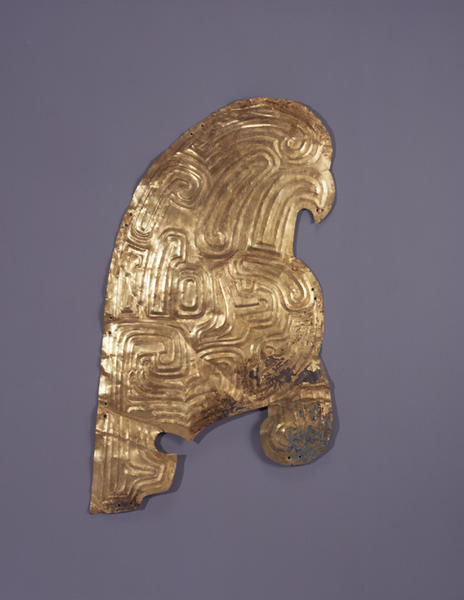
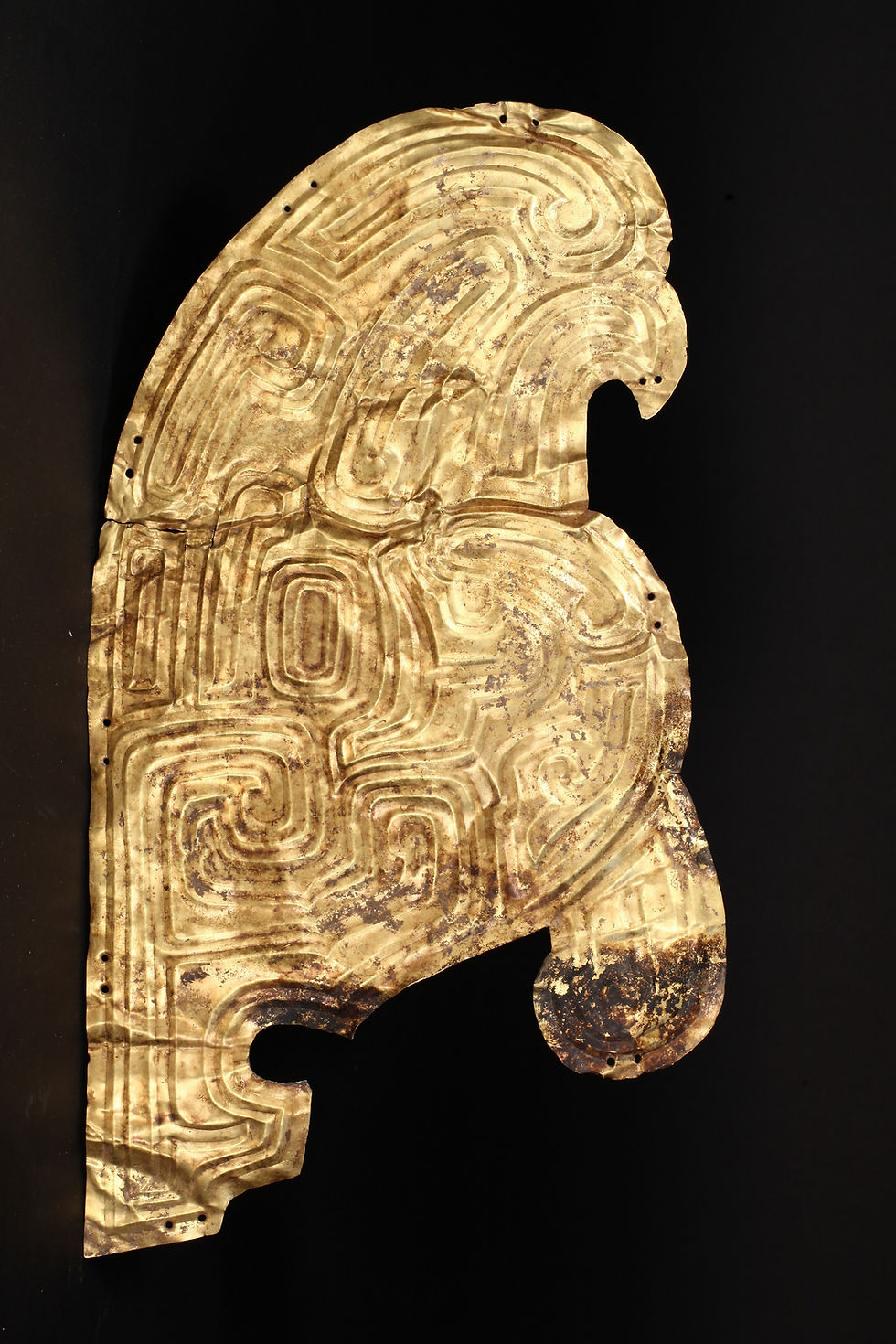
鷙鳥鴟梟形金飾片
中國・西周时代(美秀),实际甘肃礼县大堡子山,春秋秦国
高46釐米,寬26.5釐米 金製
日本美秀博物館(MIHO Museum)藏
這件鴟梟形金飾片,體量恢宏,在西周金工中顯得格外醒目。金板錘揲成梟形(或鳳凰形)的正面輪廓,勾喙、圓目、展翅之勢隱約可辨,整體簡潔而富有張力。美秀博物館的解說指出,它與同館所藏金虎屬同一時代、同一地域的棺飾系統,並特別強調其「異例的用金」——在西周中原金器相對節制的風氣中,這種大量使用黃金的做法顯得格外突出。
館方進一步推測,此類器物很可能出自西周王朝中心偏西的區域,尤其是早期秦人活動的地帶。秦人自有與殷商相似的猛禽創生神話,始祖少昊以「鷙」為名,鳥圖騰信仰深植其文化記憶。以金鳥裝飾棺椁,正是將族神與祖先護佑具象化的方式。這一解讀,與甘肅禮縣大堡子山秦公陵園出土、後經法國回歸的大型鷙鳥形金飾片,在觀念與尺度上均形成清晰呼應。
美秀此件高達46釐米,與大堡子山那些長達四十餘釐米的大型金鳥同屬「以金鳥飾棺」的高等級傳統。大型金鳥鋪陳於棺椁表面,氣勢恢宏,象徵祖先圖騰的庇護;無論出自大堡子山抑或美秀所藏,它們都指向同一個文化邏輯:在西垂故地,黃金與猛禽共同構築了秦人早期的喪葬與信仰景觀。
這件金鳥,因此成為理解大堡子山金飾系統的重要海外參照。早期秦人的金工並非孤立的奢華展示,而是與圖騰神話、地域認同與棺飾制度緊密相連的物質表達。美秀博物館將其明確聯繫到西周秦地與猛禽神話,為我們觀察這批仍散落海外的金器,提供了另一個清晰的學術視角。

尋蹤|海外遺存的金鳥與未竟之路
這件高46釐米的鴟梟形金飾片,現藏日本美秀博物館,是目前公開可見、且由館方明確聯繫到西周秦地與猛禽神話的大型金鳥實例之一。美秀同時收藏一對金虎,二者被視為同時代、同地域的棺飾系統。二零二六年春季,該館在特別展《古代黄金の物語》中展出相關金器,使這批仍流散海外的秦系金工再次進入公眾視野。
與之形成鮮明對照的,是二零一五年從法國回歸的大堡子山大型鷙鳥形金飾片。上世紀九十年代初,禮縣大堡子山秦公陵園慘遭大規模盜掘,金飾片被走私出境。法國古董商戴克成(Christian Deydier,中文名戴克成/戴克誠)於一九九三年前後購得一批,一九九四年出示給韓偉,後又獲兩對大型鷙鳥。經希拉克牽線,皮諾購得兩對並連同戴克成所捐二十八件一併捐入吉美博物館。中國方面以科學證據與外交努力追索,最終因當時法國公立館藏「不可讓渡」的法律限制,只能由原捐贈人撤銷捐贈後以私人名義返還。二零一五年四月至九月,三十二件金飾片分批回歸,全部劃撥甘肅省博物館永久收藏。這是中國首次成功主動追索並實現大規模回歸的早期秦文物事件。
時至今日,大堡子山類型金鳥的追索仍未結束。美秀所藏這件高46釐米的鴟梟形金飾片,以及同館金虎,與比利時等私人收藏中所見鏤孔鷙鳥形金飾片,共同構成早期秦人「金鳥飾棺」傳統的海外遺存譜系。二零二六年五月九日,法國頒布《關於歸還因非法佔有而喪失的文物的法律》,為一八一五至一九七二年間非法取得的文物建立了常設返還框架,以行政法令即可移出公共領域,無需再「一物一法」。然而,一九九〇年代盜掘走私的大堡子山金器並不在其時間範圍之內,現代盜掘案件仍需依賴UNESCO公約、雙邊協商與私人自願返還。
從周原「秦人」卜甲的文字自覺,到圓頂山弄器的精緻玩賞,再到大堡子山與美秀金鳥的圖騰護佑,SACA的「春秋戰國・秦國」系列正是在這些散落的物質與文字之間,逐步重建早期秦人的精神世界。金鳥雖已部分歸巢,西垂故地的完整圖景,仍有待更多文物的歸來,以及持續的法律與外交努力,方能真正拼合。
FAQ|常見問題
Q1:這件美秀鴟梟形金飾片與大堡子山回歸的大型鷙鳥形金飾片是什麼關係? A:二者同屬「以金鳥飾棺」的高等級傳統。美秀此件高46釐米,與大堡子山大型金鳥(四十餘釐米)尺度相近,均為鋪陳於棺椁表面的主要裝飾。美秀館方本身即將其聯繫到西周秦地與猛禽創生神話,與大堡子山金鳥的文化邏輯一致。
Q2:為什麼美秀博物館認為它可能出自早期秦地? A:館方指出,此類大量用金的做法在西周中原相對罕見,更可能來自王朝中心偏西的區域。同時,秦人擁有與殷商相似的猛禽創生神話,始祖少昊以「鷙」為名,以金鳥飾棺正是這一信仰的物質表達。
Q3:美秀還收藏了哪些相關的秦系金器? A:美秀同時收藏一對金虎,被認為與這件鴟梟形金飾片同時代、同地域,同屬棺飾系統。二零二六年春季特別展中,相關金器曾公開展出。
Q4:目前還有多少大堡子山類型的金鳥流散海外? A:除美秀所藏大型鴟梟形金飾片與金虎外,比利時等私人收藏中亦見鏤孔鷙鳥形金飾片的記載。整體數量與分布仍待更系統的調查與公布。
Q5:法國2026年新法對這類海外金鳥有影響嗎? A:新法主要適用於1815–1972年間非法取得的文物,為公立館藏的返還提供了常設行政程序。但1990年代盜掘走私的大堡子山金器不在其時間範圍內。美秀所藏若屬私人或更早入藏,亦需另循途徑。新法對圓明園等較早掠奪文物更具潛在意義。
Q6:這件金鳥在SACA「秦國」系列中的位置是什麼? A:它與vol.14「秦人」卜甲(文字自覺)、vol.15蟠龍紋銅車形器(弄器傳統)、vol.16大堡子山鷙鳥形金飾片(圖騰棺飾與回歸之路)共同構成早期秦人精神世界的物質與文獻矩陣。從海外遺存到回歸實物,系列正逐步拼合西垂故地的完整圖景。
This owl-shaped gold ornament is impressive in scale and stands out within the corpus of Western Zhou goldwork. The gold sheet has been hammered into the frontal silhouette of an owl (or phoenix-like bird), with a hooked beak, rounded eyes and the suggestion of outstretched wings rendered in a concise yet forceful manner. According to the Miho Museum’s own commentary, the piece belongs to the same chronological and regional group as the museum’s gold tigers and is understood to have served as coffin decoration. What the museum particularly emphasizes is the exceptional quantity of gold employed—an unusual feature against the generally restrained use of the metal in Zhou-period China.
The museum further suggests that such objects most likely originated in a region lying west of the Zhou royal centre, notably the area associated with the early Qin. The Qin shared with the Shang a creation myth centred on birds of prey; their ancestral figure Shaohao was named after a fierce raptor, and avian totemism remained deeply embedded in their cultural memory. Decorating coffins with golden birds was a means of giving tangible form to ancestral and divine protection. This interpretation resonates closely, both in concept and in scale, with the large raptor-shaped gold plaques recovered from the Qin ducal cemetery at Dabuzishan in Li County, Gansu, and later repatriated from France.
Measuring 46 cm in height, the Miho plaque belongs to the same high-ranking tradition of “golden birds adorning the coffin” as the Dabuzishan examples that exceed 40 cm. These large plaques were spread across the coffin surface to create an imposing visual field, embodying the protective power of the ancestral totem. Whether from Dabuzishan or the Miho collection, they point to a shared cultural logic: in the western homeland of Qin, gold and the raptor together constructed an early funerary and religious landscape.
This golden bird therefore provides an important overseas reference point for understanding the Dabuzishan gold assemblage. It reminds us that early Qin goldwork was not merely a display of luxury, but a material expression tightly bound to totemic myth, regional identity and coffin-decoration systems. By explicitly linking the piece to Western Zhou Qin territory and to raptor mythology, the Miho Museum offers another clear scholarly perspective on this group of gold ornaments that remain dispersed overseas.
Tracing the Trail|Overseas Golden Birds and the Unfinished Journey
This owl-shaped gold ornament, standing 46 cm high, is held by the Miho Museum in Japan and is one of the publicly visible large golden birds that the museum itself explicitly links to Western Zhou Qin territory and to raptor mythology. The museum also holds a pair of gold tigers, regarded as belonging to the same period, region and coffin-decoration system. In spring 2026 these related gold pieces were exhibited in the special exhibition Tales of Ancient Gold, bringing this still-dispersed body of early Qin goldwork once more into public view.
A striking contrast is provided by the large raptor-shaped gold plaques from Dabuzishan that returned from France in 2015. In the early 1990s the Qin ducal cemetery at Dabuzishan in Li County suffered catastrophic looting; the gold ornaments were smuggled abroad. The French dealer and scholar Christian Deydier (Chinese name 戴克成 / 戴克誠) acquired a substantial group around 1993 and showed them to Han Wei in 1994; he later obtained two further pairs of the large raptors. Through the introduction of President Chirac, François Pinault purchased two pairs and, together with twenty-eight plaques donated by Deydier, presented them to the Musée Guimet. China pursued the case with scientific evidence and diplomatic effort. Because French public collections were then strictly inalienable, the only viable path was for the original donors to revoke their gifts and return the objects in a private capacity. Between April and September 2015 the thirty-two plaques came home in stages and were permanently allocated to the Gansu Provincial Museum. This was China’s first successful large-scale active repatriation of early Qin cultural relics.
To this day the recovery of Dabuzishan-type golden birds remains incomplete. The 46 cm owl-shaped plaque at Miho, together with the museum’s gold tigers and the openwork raptor plaques noted in private collections (including in Belgium), form the overseas remnant spectrum of the early Qin tradition of “golden birds adorning the coffin.” On 9 May 2026 France promulgated the Law on the Restitution of Cultural Property that has been the Subject of Unlawful Appropriation, establishing a standing framework for objects illicitly acquired between 1815 and 1972 and allowing deaccession from the public domain by administrative decree rather than case-by-case legislation. The 1990s looting of Dabuzishan, however, falls outside this temporal scope; modern illicit excavation cases continue to rely on the 1970 UNESCO Convention, bilateral diplomacy and voluntary private returns.
From the textual self-awareness of the “Qin people” oracle bone at Zhouyuan, through the refined playfulness of the nongqi miniature cart at Yuandingshan, to the totemic protection embodied in the golden birds of Dabuzishan and Miho, the SACA “Spring and Autumn–Warring States: Qin” series is gradually reassembling the spiritual world of the early Qin people from these scattered material and textual remains. While some of the golden birds have returned to the nest, the complete picture of the western homeland still awaits the return of further pieces, sustained legal effort and continued diplomatic will before it can be fully restored.
Q1: What is the relationship between this Miho owl-shaped plaque and the large raptor plaques repatriated from Dabuzishan? A: Both belong to the high-ranking tradition of “golden birds adorning the coffin.” The Miho piece measures 46 cm in height, comparable in scale to the Dabuzishan examples (over 40 cm), and would have been spread across the coffin surface as a principal ornament. The Miho Museum itself links the piece to Western Zhou Qin territory and raptor mythology, aligning with the cultural logic of the Dabuzishan gold birds.
Q2: Why does the Miho Museum attribute it to early Qin territory? A: The museum notes that such extensive use of gold was unusual in the relatively restrained metalwork of the Zhou central regions and more likely originated further west. The Qin shared a bird-of-prey creation myth with the Shang; their ancestor Shaohao was named after a fierce raptor. Decorating coffins with golden birds gave material form to this totemic belief.
Q3: What other related Qin gold objects does Miho hold? A: The museum also holds a pair of gold tigers, considered to belong to the same period, region and coffin-decoration system. Related gold pieces were publicly exhibited in the spring 2026 special exhibition Tales of Ancient Gold.
Q4: How many Dabuzishan-type gold birds remain overseas? A: Besides the large owl-shaped plaque and gold tigers at Miho, openwork raptor-shaped plaques have been noted in private collections, including in Belgium. The overall number and distribution still await more systematic survey and publication.
Q5: Does France’s 2026 restitution law affect these overseas gold birds? A: The new law primarily covers cultural property illicitly appropriated between 1815 and 1972 and creates a standing administrative procedure for deaccessioning from public collections. The 1990s looting of Dabuzishan falls outside this temporal scope. Objects at Miho, if privately acquired or earlier in date, would require other channels. The law holds greater potential for earlier cases such as the 1860 Yuanmingyuan objects.
Q6: What is the place of this gold bird in the SACA “Qin” series? A: It forms part of a matrix with vol.14 (“Qin people” oracle bone—textual self-awareness), vol.15 (coiled-dragon miniature cart—nongqi tradition), and vol.16 (Dabuzishan raptor plaques—totemic coffin decoration and the path of repatriation). From overseas remnant to returned object, the series is gradually reassembling the complete picture of the western homeland.


Comments