
漢代筆記 vol.30 舊金山亞洲藝術博物館:漢代青銅說唱俑席鎮,布倫戴奇舊藏 - Asian Art Museum, Four Bronze Seated Figure, Avery Brundage Collection, Han Dynasty


香港2026年展出的漢風泱泱展覽中有一例人形錯金銅席鎮,標註為:銅說唱俑席鎮,西漢(前202-8年),1968年河北滿城陵山一號漢墓出土,河北博物院藏。舊金山亞洲藝術博物館這套一組四個人形銅鎮(原或為銅鎏金),符合席鎮的規格,是為說唱的可能性高。滿城漢墓出土的帶精密錯金,級別更高,銅鎏金的級別雖不能比擬,但依然是值得重視的漢代文藝生活的實證。
參見:王秋生財新專欄文章:《漢風之泱泱|觀展》


In the 2026 “Han Style: The Grandeur of the Han Dynasty” exhibition in Hong Kong, a human-figure inlaid bronze mat weight was displayed with the following label: “Bronze Storyteller Mat Weight, Western Han dynasty (202 BCE–8 CE), excavated in 1968 from Tomb No. 1 at Lingshan, Mancheng, Hebei Province, collection of the Hebei Museum.”
The set of four human-figure bronze mat weights in the Asian Art Museum of San Francisco (originally likely gilt bronze) conforms to the standard dimensions for mat weights. The possibility that they depict storytellers is high. While the Mancheng tomb example features exquisite gold inlay and represents a higher level of craftsmanship, these gilt bronze examples, though not of comparable rank, remain important archaeological evidence of literary and performing arts in Han dynasty daily life.
坐姿人形俑
產地:中國河南省 年代:25–220 年 時期:東漢時期(25–220) 材質:青銅 尺寸:高 8.6 厘米,寬 6.3 厘米,深 5.7 厘米 收藏來源:艾弗里·布倫戴奇收藏 館藏編號:B60B802 部門:中國藝術 分類:雕塑 展覽位置:15 號展廳
展品說明 墓葬人形俑
至漢代(公元前206–220年),人殉已不再是葬禮的一部分,取而代之的是以陶俑隨葬。大多數陶俑代表死者的侍從與守護者,包括武士、樂人、廚師、馬夫以及宮廷女侍。透過研究這些墓葬模型,我們可以對漢代時尚變遷與女性審美理想進行饒有趣味的考察。
墓葬中的人形俑按明確的等級排列。侍從與輔助人員的模型通常置於墓室地面及壁龕之中;而死者本人及其同儕、受尊崇的歷史人物以及神靈形象,則以彩繪、石雕或模印於陶磚的形式,裝飾在棺槨及墓室牆壁上。

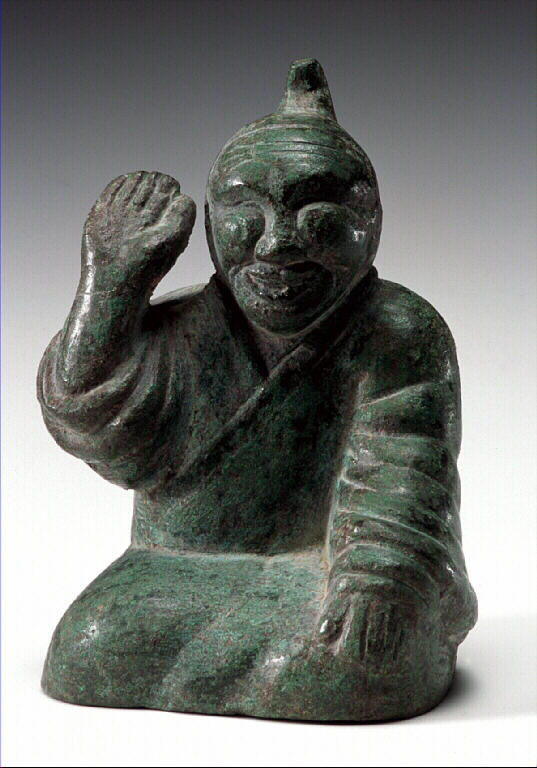
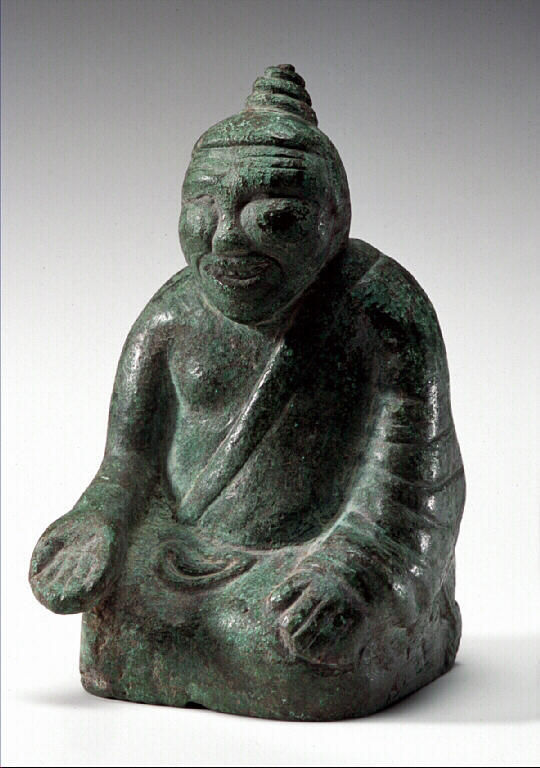
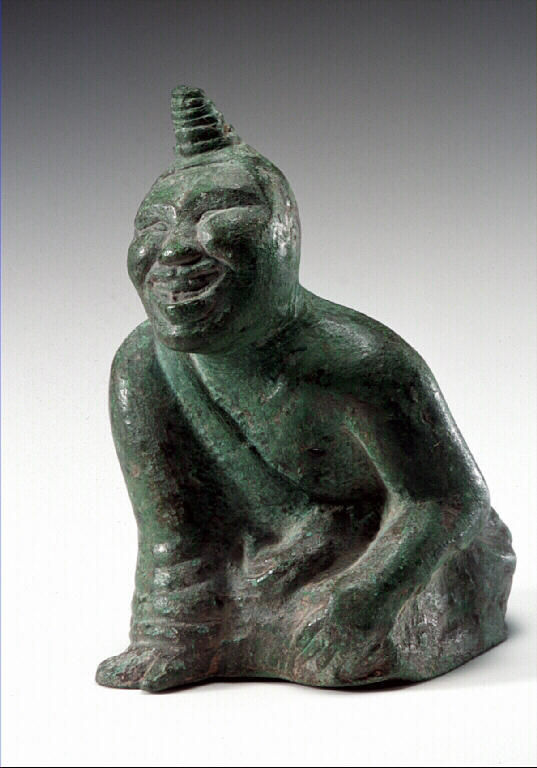
Four Bronze Seated figure
Place of Origin: Henan province, China; Henan province
Date: 25-220
Period: Eastern Han period (25-220)
Materials: Bronze
Dimensions: H. 3 3/4 in x W. 2 3/8 in x D 2 1/4 in, H. 8.6 cm x W. 6.3 cm x D. 5.7 cm
Credit Line: The Avery Brundage Collection
Object number" B60B802
Department" Chinese Art
Classifications" Sculpture
Location
Gallery Location: Gallery 15
Text Entries
Object Label
Tomb Figurines in Human Form
By the Han dynasty (206 BCE–220 CE) human sacrifice was no longer part of the funerary ceremony, and clay models were buried instead. Most clay figurines represented the servants and protectors of the deceased, including warriors, entertainers, cooks, grooms, and maidservants of the court. A fascinating study of changes in fashion and ideals of feminine beauty can be made by examining these tomb models.
The human figurines in these tombs were arranged in a definite hierarchy. Models of servants and support staff were arranged along the floors and niches. Images of the deceased and his or her peers, as well as admired historical personalities and divine beings, were painted, carved in stone, or impressed in the clay tiles that made up the sarcophagus and the walls of the tomb chamber.


Comments