
拍賣筆記 vol.512 蘇富比香港2026:清宮舊藏,五代到北宋定窰瀝粉方花紋方盤,卡爾·坎普舊藏,萬古之幽專場 - Sotheby’s HK 2026, A Heirloom Dingyao Slip-Decorated Square Dish, Imperial Collection, CK, Five Dynasties to Northern Song Dynasty


「方华蔓长,名此曰昌」 — 戰國鏡銘
方形器型於定窰極為罕見,應仿前朝銅鏡形制發展;以瀝粉堆線為飾,屬晚唐至北宋早期定窰白瓷中的特殊類別,存世量極少。來源顯赫,是東方陶瓷學會創始會員卡爾·坎普(Dr Carl Kempe,又稱CK)舊藏;倫敦蘇富比2008年5月14日 lot 301。出版著錄是Bo Gyllensvärd, Chinese Ceramics in the Carl Kempe Collection, Stockholm, 1964, pl. 393。
一方頂十圓,自商周青銅器以來,方器無論從製作工藝和藝術難度上都是普通器的數十倍。四葉狀柿蒂的「堆線方花紋」完整器較蝴蝶或花卉紋更罕見,柿蒂的母題可以直接追溯到漢代的傳統紋飾,在漆器上多見;出土與拍賣例多以蝴蝶或花瓣紋為主。另外,要區分遼代白瓷和本類定窯的區別。主要是在釉色的潤度和堆積的自然,本品定窯無疑,釉色的質感和積釉處自然流動,呈現出典型定窯的特徵。另外外壁的弧度,也是較為罕見的細膩做法,相對而言,遼白瓷外壁線條處理較為硬朗,通常都是以直壁線條處理。

⬆️ 蘇富比萬古之幽現場圖
從絕對的同類花紋、同類製作的全球例子中,只有根津美術館有一件同款,但非傳世品。本拍品從傳承,造型,清宮造辦處的銅釦上推測,應該是清宮舊藏的傳世品。卡爾·坎普博士早期購買的大批清宮舊藏定窯,可能都來自大維德爵士(Sir Percival David),後者在1929年7月24日向北京故宫捐款6,264.40元,修缮景阳宫瓷器陈列室。期間在北京購藏鹽業銀行的清宮抵押品,據傳來源是慈禧。這件定窯方盤應該是通過大維德爵士和當時陪同前往北京喬治·尤摩弗帕勒斯(George Eumorfopoulos)帶回英國。(SACA觀察,2026.10.28)
文章核心观点:根据战国铜镜铭文“方华(蔓)长,名此曰昌”,主张将所谓“柿蒂纹”正名为“方华纹”或“方花纹”(标志四方之花),并可通用于战国至汉代铜器、漆器、瓦当、画像石等各类器物上的同类四瓣花纹。
上手圖&視頻:


⬆️ 1951年-1952年湖南長沙伍家嶺出土的西漢“中國大寧”瑞獸博局紋鎏金銅鏡。攝影/新京報記者 浦峰

本拍品


⬆️ 出版著錄:Bo Gyllensvärd, Chinese Ceramics in the Carl Kempe Collection, Stockholm, 1964, pl. 393

⬆️ 本品2008年CK專場圖片
博物館/出土同款或相近例
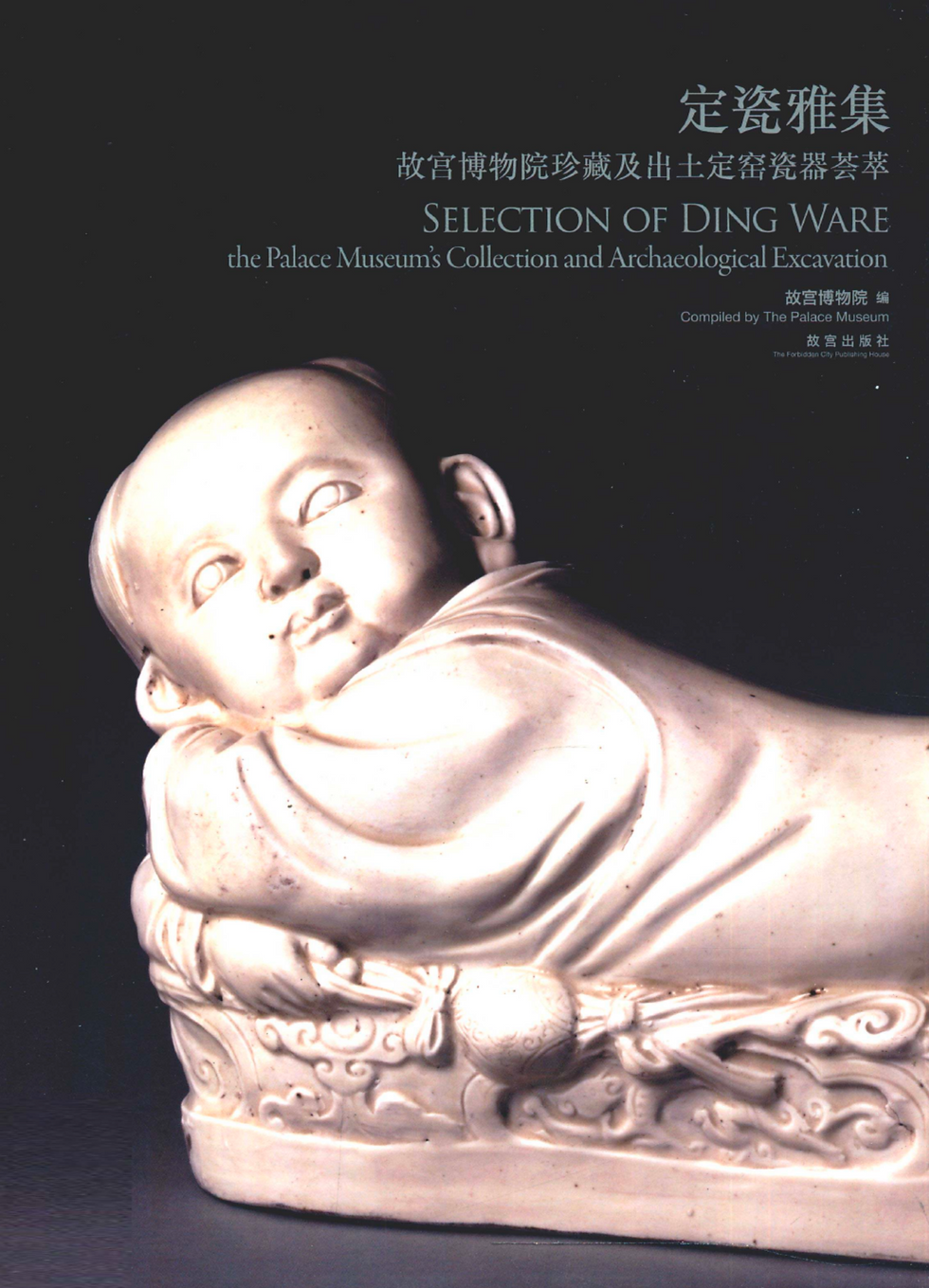
曲陽定窰遺址出土殘片(河北省文物研究所藏):形制相近,盤心瀝粉堆花作蝴蝶紋,晚唐至五代。載《定瓷雅集:故宮博物院珍藏及出土定窯瓷器薈萃》,北京,2012年,圖版20。
湖南長沙晏家嶺出土完整方盤:蝴蝶紋,五代。張柏編《中國出土瓷器全集》第13卷,圖版196上。
吉林雙遼桑樹遼墓出土一對白釉盤:較複雜模印紋。張柏編《中國出土瓷器全集》第2卷,圖版168。
河北省文物研究所藏一對花口方盤:內底飾牡丹紋,無款。載《中國出土瓷器全集:天津、遼寧、吉林、黑龍江》第2冊,編號11。
根津美術館(東京):文獻記載有相近例(參考下圖)。

⬆️ 根津美術館同款,非傳世品


⬆️ 定窯窯址出土參考
拍賣同款或相近例
佳士得香港 2018年5月30日 lot 2925:五代至北宋初 定窰瀝粉堆花「官」字款方盤一對,9.6 cm。946萬港元售出。
SACA 相關筆記連結如下:
拍賣筆記 vol.175(五代至北宋初 定窰瀝粉堆花「官」字款方盤一對,兼論 Kempe 舊藏相近方盤):
聚焦國外博物館藏品——漢代銅鏡中明確標示 quatrefoil(四葉紋/柿蒂紋):
對不同時代的母題以當下的理解和材質重新詮釋,是行為藝術的一種。五代至北宋的宮廷,將柿蒂紋從漢代的銅鏡中解脫出來,重置於定窯白瓷之中,從方鏡,到方花瓷碟,傳世千年。
Metropolitan Museum of Art(紐約大都會藝術博物館)
Mirror with quatrefoil design
東漢,2世紀
直徑10.2 cm,Rogers Fund, 1917(17.118.91)
東漢 四葉纹銅鏡
Mirror with quatrefoil design(另一件)
東漢,2世紀
直徑10.5 cm,Rogers Fund, 1918(18.56.67)

Cleveland Museum of Art(克利夫蘭藝術博物館)
Mirror with Quatrefoil, Concentric Circles, and Linked Arcs
東漢(25–220年),直徑15 cm
Drs. Thomas and Martha Carter 捐贈(1995.318)
Mirror with Quatrefoil, Four Nipples, Animals, and Birds
西漢(公元前4世紀末至公元50年),直徑17.4 cm
Drs. Thomas and Martha Carter 捐贈(1995.302)
Mirror with Quatrefoils and Linked Arcs
西漢(公元前1世紀),直徑14 cm
Drs. Thomas and Martha Carter 捐贈(1995.276)


Harvard Art Museums / Arthur M. Sackler Museum(哈佛藝術博物館/賽克勒博物館)
• Circular Mirror with Four Bosses, Thread-Relief Decoration of Dragons, Birds, Tigers, and Other Animals, Quatrefoil, and Auspicious Inscription西漢,公元前1世紀,直徑18.6 cmEdmund Chi Chien Lin 遺贈
中心為四葉紋,葉間有「長宜子孫」銘文https://www.harvardartmuseums.org/collections/object/315418

方华蔓长 名此曰昌
李零文章節選:
“方華”即方花,意思是標誌四方的花。這個詞又可讀為“芳華”,指芬芳的花,一語雙關。
“芳華”屢見於古代詩賦,不勝枚舉。如屈原《楚辭·九章·思美人》:“芳與澤其雜糅兮,羌芳華自中出。”王逸注對前一句的解釋是“正直溫仁,德茂盛也。”對後一句的解釋是“生含夭姿,不外受也。”《文選》卷一九宋玉《登徒子好色賦》:“臣觀其麗者,因稱《詩》曰:‘遵大路兮攬子祛,贈以芳華辭甚妙。’”李善注指出,前一句的《詩》指《詩·國風·鄭風》的《遵大路》,後一句,李善注的解釋是:“折芳草之華以贈之,為辭甚妙。”陶淵明《桃花源記》:“芳華鮮美,落英繽紛。”梁武帝《樂府·芳樹》:“綠樹始搖芳,芳生非一葉。一葉度春風,芳華自相接。”從《登徒子好色賦》李善注和梁武帝《樂府·芳樹》看,“芳華”一詞的“華”字,既可指草本植物的花,也可指木本植物的花。
蔓有蔓延義。《詩·大雅·緜》“綿綿瓜瓞”就是形容子孫綿延不絕。“昌”是古代吉語,璽印、鏡鑒、磚銘多有之,常與富、貴連言。富是有錢,貴是有勢,昌訓盛,常指多子多孫。如漢鏡銘文“子孫蕃昌”,就是指多子多孫。這兩句連起來讀,意思是說,方花的蔓很長,綿延不絕,它象徵著子孫蕃昌,故可呼之為“昌”。
五代到北宋定窰瀝粉方花紋方盤
A Dingyao slip-decorated square dish, Northern Song dynasty
Live auction begins on:
October 30, 10:00 AM HKT
Estimate
80,000 - 160,000 HKD
Description
11 cm
Condition Report
In overall good condition. As expected with wares of this type, there are minor firing imperfections inherent to the manufacturing process, including a small firing flaw to one corner of the base. The exterior with characteristic uneven glazing formed during firing. Minor surface wear and light scratches commensurate with age.
整體品相良好。帶有原生輕微窯疵,包括底部一角露胎出有一小缺失。偶見典型釉面不均,表面有與年代相符的輕微磨損與淺劃痕。
來源
卡爾肯普博士(1884–1967年)收藏
倫敦蘇富比2008年5月14日,編號301
出版
Bo Gyllensvärd,《Chinese Ceramics in the Carl Kempe Collection》,斯德哥爾摩,1964年,圖版393


Square forms are extremely rare in Ding ware, likely developed as imitations of metalwork or wooden prototypes. Adorned with slip-trailed (li-fen) raised thread decoration, this piece belongs to a highly specialized category of Ding white porcelain dating from the late Tang to the early Northern Song dynasty. It boasts an exceptionally illustrious provenance, formerly in the renowned collection of Dr. Carl Kempe (also known as CK), a founding member of the Oriental Ceramic Society. It was later sold at Sotheby's London on May 14, 2008, as lot 301. Its published literature includes: Bo Gyllensvärd, Chinese Ceramics in the Carl Kempe Collection, Stockholm, 1964, pl. 393.
As the traditional connoisseurs' saying goes, "one square vessel is worth ten round ones." Since the Shang and Zhou dynasties, the production craftsmanship and artistic difficulty of square vessels have been dozens of times greater than those of standard round vessels. Complete vessels featuring a four-lobed persimmon calyx pattern in "raised thread decoration" are even rarer than those with butterfly or floral motifs. The persimmon calyx motif can be traced directly back to traditional decorations of the Han dynasty, commonly seen on lacquerware, whereas most excavated and auctioned examples feature predominantly butterfly or flower petal patterns. Furthermore, a distinction must be made between Liao white porcelain and this specific type of Ding ware. This differentiation lies primarily in the lustrous texture of the glaze and the natural pooling of the accumulation. This piece is undoubtedly Ding ware; the quality of the glaze and the natural flow at the pooled areas exhibit classic characteristics of Ding kilns. Additionally, the curvature of the exterior wall represents a rarely seen, delicate approach to craftsmanship. By contrast, the exterior walls of Liao white porcelain are treated with a harsher linearity, usually rendered with rigid, straight vertical walls.
Among identical global examples featuring the exact same pattern and craftsmanship, the Nezu Museum holds the only counterpart, though it is not a family heirloom heirloom (chuan-shi) piece. Based on its provenance, form, and the copper mount crafted by the Qing Imperial Workshop (Zaobanchu), it can be inferred that this auction lot was originally a transmitted heirloom piece from the Qing imperial collection. The large quantity of Ding ware from the Qing imperial collection purchased by Dr. Carl Kempe in his early years may well have come from Sir Percival David. On July 24, 1929, Sir Percival David donated 6,264.40 yuan to the Palace Museum in Beijing to renovate the porcelain exhibition room in the Jingyang Palace. During this period in Beijing, he acquired Qing imperial collateral from the Yanyan (Salt Industry) Bank, which was rumored to have originated from Empress Dowager Cixi. This Ding square dish was likely brought back to the United Kingdom by Sir Percival David and George Eumorfopoulos, who accompanied him to Beijing at the time. (SACA Observations, October 28, 2026)
Provenance
Collection of Dr Carl Kempe (1884–1967).
Sotheby’s London, 14th May 2008, lot 301.
Literature
Bo Gyllensvärd, Chinese Ceramics in the Carl Kempe Collection, Stockholm, 1964, pl. 393.
Catalogue Note
The square shape of the present dish is extremely rare among Ding wares but appears to have been developed by the Ding kilns, perhaps following wooden or metal models. A fragment of a very similar dish but with a butterfly design in slip relief in the centre, has been excavated at the Ding kiln site in Quyang county in a late Tang/Five Dynasties context, and is illustrated in Ding ci ya ji. Gugong Bowuyuan zhencang ji chutu Dingyao ciqi huicui (Selection of Ding Ware. The Palace Museum’s Collection and Archaeological Excavation), Beijing, 2012, pl. 20; and one complete square Ding dish, again with butterfly design, excavated at Yanjialing, Changsha, Hunan, and attributed to the Five Dynasties period, is published in Zhang Bai, op. cit., vol. 13, pl. 196 top. Compare also a pair of white dishes with more complex moulded design discovered in a Liao tomb at Sangshu, Shuangliao county, Jilin, in Zhang Bai ed., Zhongguo chutu ciqi quanji (Complete Collection of Ceramic Art Unearthed in China), Beijing, 2008, vol. 2, pl. 168.


Comments