
拍賣筆記 vol.500 蘇富比香港2026:瓊肯三世,漢代玉馬首,萬古之幽專場 - Sotheby’s HK 2026, A Jade Head of a Horse, Junkunc III Collection, Han Dynasty

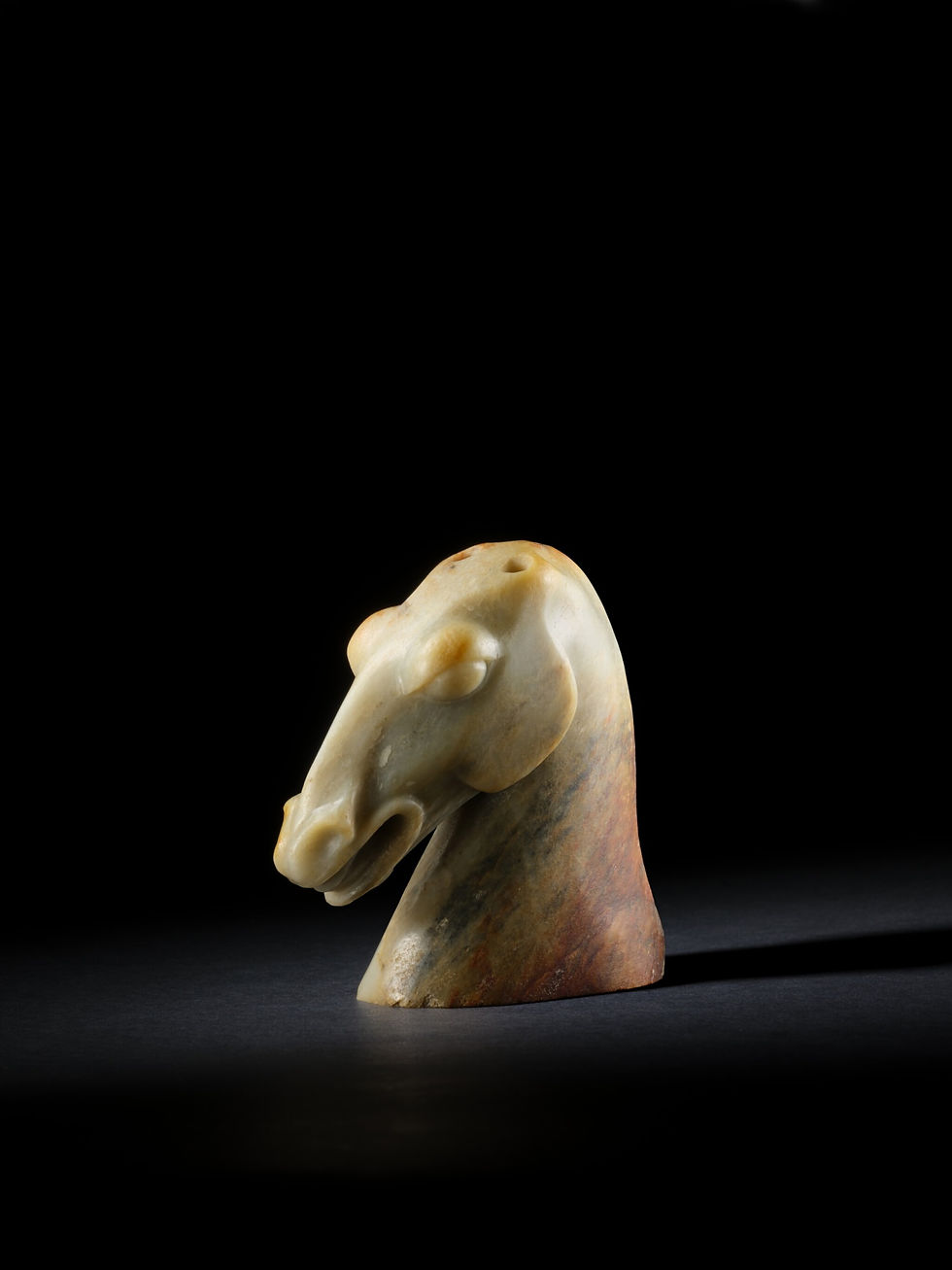
瓊肯三世的來源,馬首以陶製為多,玉質製作而成的極少。造型上是典型的漢代馬的造型,留有耳朵的兩個插孔,眼睛雕刻十分立體,這點是陶馬首難以比擬的,另外黃玉的材質也加分不少。(SACA觀察,2026.10.24)

瓊肯三世 漢代玉馬首
A yellowish-grey and russet jade head of a horse, Han dynasty
Live auction begins on:
October 30, 10:00 AM HKT
Estimate
500,000 - 1,000,000 HKD
Description
11.8 cm

來源
瓊肯三世(1978年逝)收藏
紐約佳士得2021年3月18日,編號653
出版
Alfred Salmony,《Chinese Jade Through the Wei Dynasty》,紐約,1963年,圖版 XXXII-4
本品以黃灰玉雕琢而成,局部帶有天然褐斑。馬首線條遒勁,頸部微拱,雙目圓睜,鼻孔微張,生動展現了漢代玉雕匠人高超的技藝。匠人巧妙利用玉料天然的色澤與肌理,更添天馬剛健不凡的氣韻。馬首頂部帶有明顯鑽孔,推測本品原應為一件大型拼接玉馬之局部,該孔或用於插嵌其他材質製作之雙耳或鬃毛。
漢代尊崇駿馬,不僅因其為保衛疆土之重要軍備,更賦予其神聖的宗教色彩。漢武帝曾遣使求取大宛「天馬」,深信此等神駒能載人升仙。同時,道家思想認為玉能防腐朽、保肉身,故此類玉雕神駒乃極為珍貴的隨葬明器,旨在引領墓主人靈魂升入仙界。
本品與另一件同屬瓊肯三世舊藏之青玉帶褐斑馬首關係密切,兩者並列出版於薩爾莫尼前述著作之同一圖版(圖版XXXII-5),該品後售於紐約蘇富比2020年9月22日,編號252。另可參考一件尺寸較大之秦峰男舊藏漢代青玉馬首,2026年5月5日售於香港蘇富比,編號9801。倫敦維多利亞與艾伯特博物館亦藏有一件尺寸相近的漢代玉馬首,圖載於羅森與約翰・艾爾斯合著,《Chinese Jade throughout the Ages》,倫敦,1975年,編號197。
Provenance
Collection of Stephen Junkunc, III (d. 1978).
Christie’s New York, 18th March 2021, lot 653.
Literature
Alfred Salmony, Chinese Jade Through the Wei Dynasty, New York, 1963, pl. XXXII-4.
Catalogue Note
Powerfully carved with a strong, arched neck, flared nostrils, and prominent, bulging eyes, the present jade horse head is a remarkable testament to the masterful lapidary skills of the Han dynasty. The craftsman has skilfully utilised the natural russet inclusions of the yellowish-grey stone to highlight the spirited vigour and untamed energy of the animal. The presence of a distinct aperture at the top of the head suggests that this carving originally formed part of a larger, highly important composite figure, dowelled together from separate sections, with the hole likely intended for the attachment of ears or a mane crafted from different materials.
During the Han dynasty, horses were highly revered not only as essential military assets that secured the empire's borders but also as spiritual conduits. Emperor Wu famously sought 'heavenly horses' or tianma from the Ferghana valley, believing these magnificent creatures could carry the soul to the immortal realm. As Daoist faithful believed jade possessed the power to preserve the physical body, jade carvings of horses were highly prized mortuary artefacts intended to guide the tomb occupant into the heavens.
See a closely related celadon and russet jade horse head also from the Junkunc Collection, published in the same volume by Salmony on the same plate (pl. XXXII-5), which was later sold at Sotheby's New York, 22nd September 2020, lot 252. For a related but larger celadon jade horse head of the same period, see the example from the Mineo Hata Collection, recently sold in our Hong Kong rooms, 5th May 2026, lot 9801. A further related jade head of a horse of similar size, dated to the Han dynasty, is preserved in the Victoria and Albert Museum, London, illustrated in Jessica Rawson and John Ayers, Chinese Jade throughout the Ages, London, 1975, no. 197.


Comments