
拍賣筆記 vol.458 佳士得紐約2026:南宋龍泉青釉折沿洗 - Christie's New York 2026, A Longquan Celadon Crackle-Glazed Brush Washer, Southern Song Dynasty


此器形極為罕見,亦為龍泉藏家畢生所求。造型源出青銅禮器,折沿特寬,藏家俗稱「板沿洗」。折沿加寬,窯內燒造極易坍塌變形,故存世甚稀。器用或為致敬青銅淨器,亦可能作禮儀淨水之盆。繭山龍泉堂「宋磁」展中,曾陳列一件相近同式,通體無開片,市場議論不一。中國藝術品收藏,尤以宋代名窯為甚。龍泉窯質量層次懸殊,頂級與尋常器物相去甚遠;再加以傳世與否、皮殼包漿等複雜因素交織,往往難以形成共識。
藏家購藏之際,宜易地而處,設想賣家立場,逐一檢視藏品可能遭受質疑之細節。以本品為例:真偽是否已有共識?有無熱釋光檢測為據?釉光是否瑩潤到位?開片審美能否為眾所認可?本品最大困境,或在釉光稍嫌不足,易為人詬病;然真偽一節,實難攻詰。本應輕鬆突破二百萬港元,但品相會有一定的影響。
另外,佳士得拍賣、芝加哥博物館定宋至元,實際上元代並沒有製作這類器物,年代可以鎖定南宋。本品若經過專業清洗,或可以恢復潤光,透過皮殼看開片的狀態非常接近南宋官窯追求的「二重貫入」,即開豎片加側開冰片。釉色上可進入粉青範疇。(SACA觀察,2026.09.13)
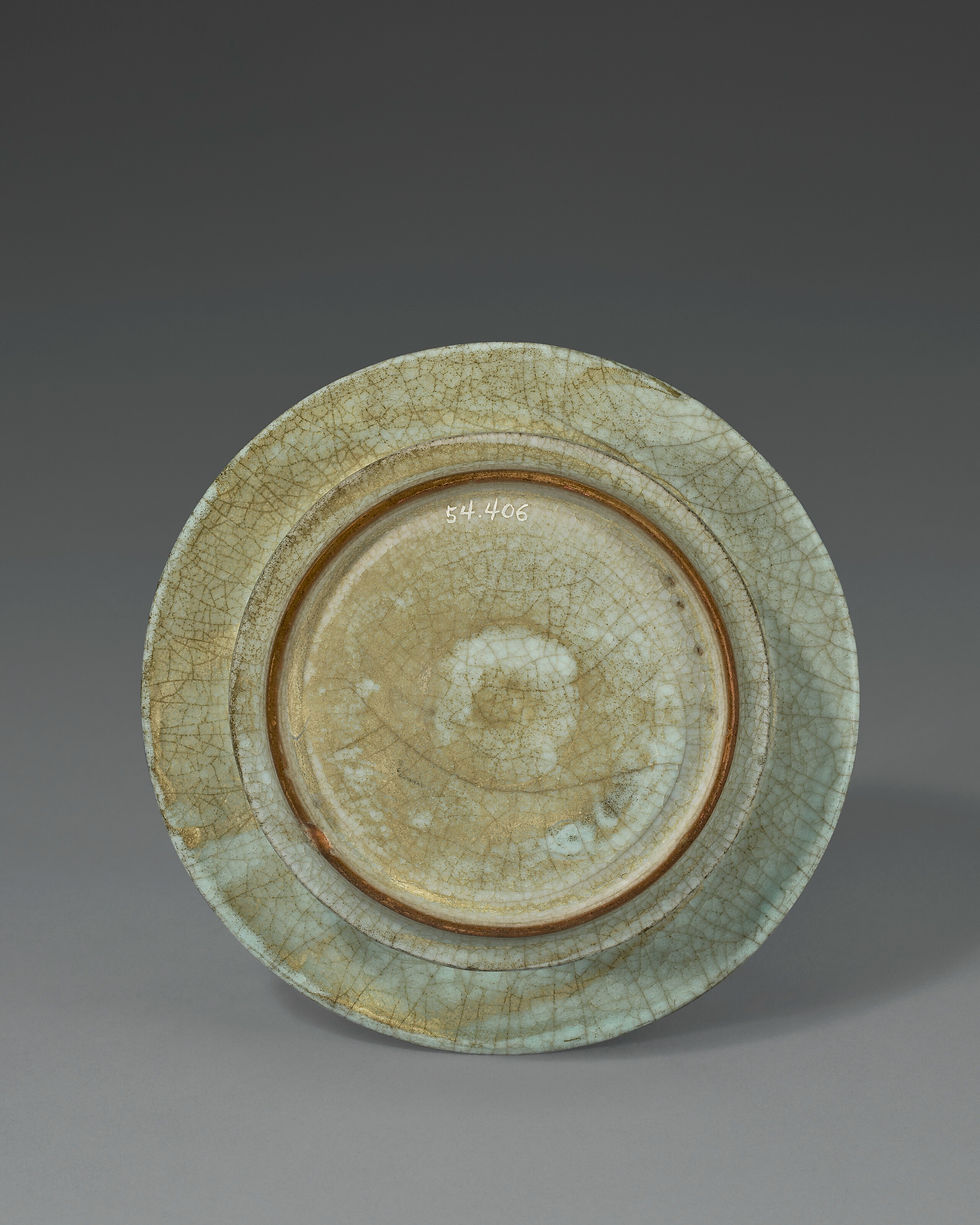
佳士得品相報告:此洗略有生燒,通體釉面見若干不規則處,內口沿釉面有開片。內口沿有一淺小磕,並經打磨。器底與器身相接處,內外壁均見數處小釉缺。器底有網狀裂紋,其中部分貫穿至內壁。圈足沿兩處磕傷。器底以白彩書博物館入藏編號 54.406。

芝加哥藝術博物館珍藏,拍賣收益用於拓展及維護亞洲藝術館藏
南宋龍泉青釉折沿洗
SOUTHERN SONG-YUAN DYNASTY (1127-1368)
估價
美元 6,000 – 美元 8,000
南宋/元 龍泉青釉洗
515⁄16 in. (15 cm.) diam.
來源
Joseph H. Winterbotham (1852-1925) 珍藏,芝加哥,後家族傳承
芝加哥藝術博物館,1954年入藏
Property from The Art Institute of Chicago, Sold to Enhance the Asian Art Collection and Care
A LONGQUAN CELADON CRACKLE-GLAZED BRUSH WASHER
SOUTHERN SONG-YUAN DYNASTY (1127-1368)
Estimate
USD 6,000 – USD 8,000
Condition Report
The washer has been misfired with some irregularities to glaze overall, including some crazing to the glaze on the inner mouth rim-A small shallow chip with associated polishing to the inner mouth rim. A few small glaze gaps along the base were it joins the body on both exterior and interior. A network of cracks to the base and part of it goes through the interior. Two chips to the foot rim-Museum acquisition no. 54.406 inscribed in white on the base.
SACA Observation
This form is exceedingly rare—and one that Longquan collectors pursue for a lifetime. Its shape derives from ritual bronzes. The washer has an unusually wide folded rim, known colloquially among collectors as a “ban-yan xi” (board-rim washer). Widening the folded rim made collapse in the kiln far more likely, which is why so few examples survive. In use, it was probably a homage to bronze vessels, and may have served as a ritual basin for purifying water.
A closely related example of the same type—entirely without craquelure—was shown in Mayuyama & Co.’s Song ceramics exhibition; market opinion on it has been mixed. Collecting Chinese works of art, especially the great Song kilns, is seldom straightforward. Longquan wares vary enormously in quality; the gap between the finest pieces and ordinary ones is wide. Layer onto that questions of heirloom status, surface patina, and other intersecting factors, and consensus is often hard to reach.
When buying, a collector should put themselves in the seller’s position and examine every detail that might later be attacked. In the case of the present piece: is there consensus on authenticity? Is there thermoluminescence testing to support it? Is the glaze luster sufficiently fine? Is the aesthetic of the craquelure accepted? The piece’s greatest vulnerability is that its glaze luster may be found wanting; authenticity, by contrast, is difficult to challenge. It ought to have comfortably exceeded HK$2 million, but condition will weigh on the result.
Christie’s and the Chicago museum have dated comparable examples Song to Yuan. In fact this type was not produced in the Yuan dynasty; the date can be locked to the Southern Song.
(SACA Observation, 13 September 2026)
PROVENANCE
Joseph H. Winterbotham (1852-1925) Collection, Chicago, and thence by descent within the family.
The Art Institute of Chicago, accessioned in 1954.


Comments