
拍賣筆記 vol.413 蘇富比香港2026:21.76萬港元售出,唐三彩綠釉藍彩梅花紋萬年罐,壺中居,岡田博物館 - Sotheby’s 2026, Okada Sales Part 2, A Sancai Wannian Jar, Tang Dynasty

Updated: Sep 4

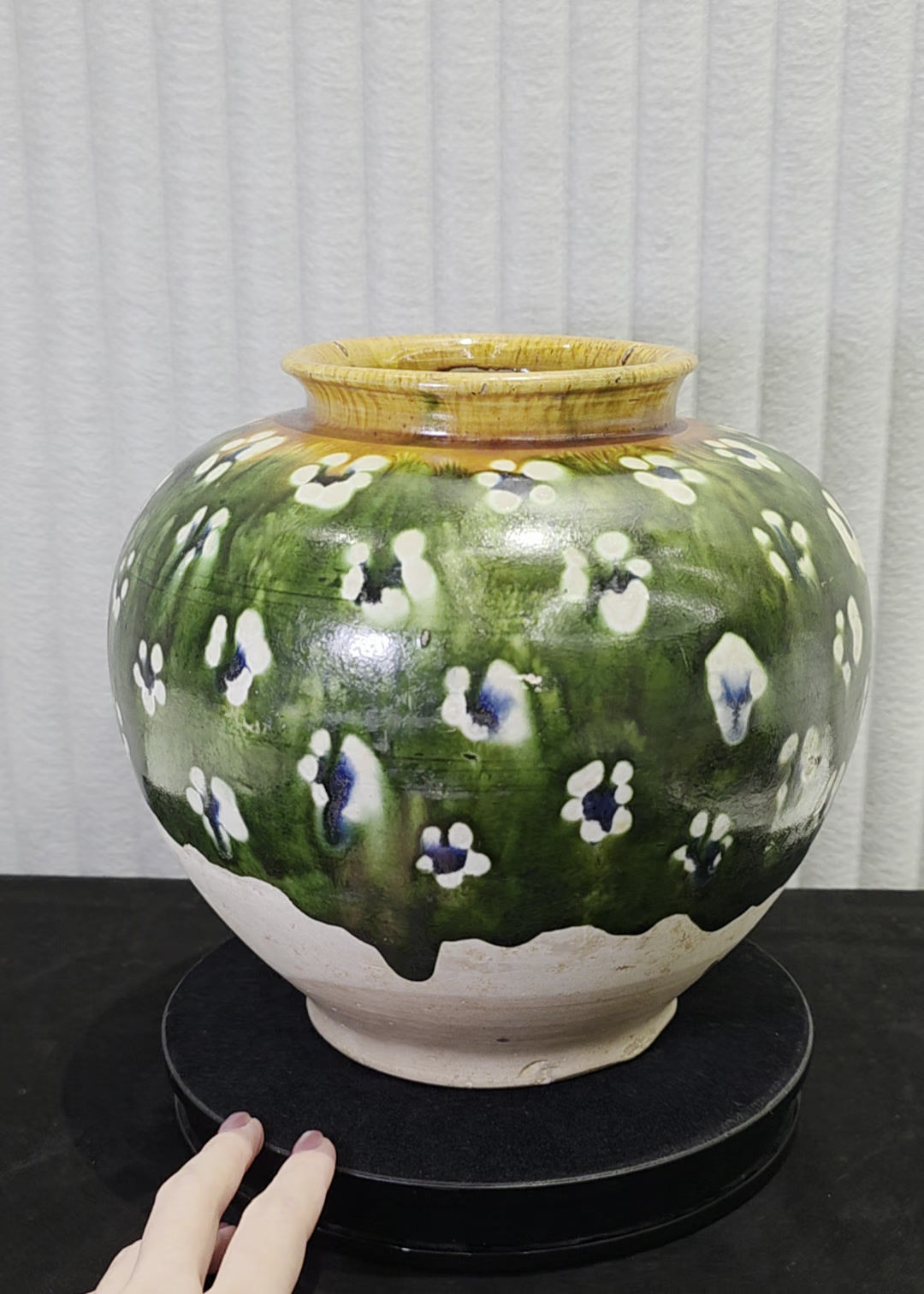
SACA拍場(2026.09.04),上午部分的倒數第二件,從早上十點到這件時間已經到了下午2點半左右,拍賣進展速度極其慢。買家幾乎都是變成網絡的了。17萬rubie電話落槌,6653。
綠釉是三彩諸色中最先被穩定攻克的釉色。銅作為呈色劑在鉛釉中的可控應用,至遲在北齊時期已達成熟。北齊晚期的白胎鉛釉器——尤其以綠釉單彩及白地綠彩、黃彩(二、三彩)為代表——已展現出釉面清亮、流動自然的高度水準,出土於太原娄叡墓、徐顯秀墓、濮陽李雲墓等重要墓葬,成為隋唐鉛釉技術直接繼承的源頭。綠釉因此不僅是三彩的基礎色,更是整個低溫多彩釉陶傳統中最具經典意義的色調。口沿配琥珀黃釉,形成高度比的三色搭配。
在此基礎上,綠地之上點染或勾勒藍彩,並以梅花為母題呈現,致敬古典之餘則是唐三彩的進一步創新。唐代藍釉依賴絲路輸入的鈷料,價格昂貴,使用極為節制;能在綠釉底色上精準控制藍彩的流動與暈散,形成梅花瓣式的點綴或團花,既保留了鉛釉自然交融的趣味,又融入了對花卉形態的刻意經營。這種表現在萬年罐、粉盒等器類上偶見,是盛唐工匠將技術精準度與審美意識結合的典範。
長安在唐代被譽為「花之都」,並非虛譽。曲江芙蓉園、慈恩寺牡丹、城中遍植的街樹與私家園林,使花卉之美深刻滲透日常生活。宮廷仕女的羅裙與披帛上,常見折枝、團花、寶相花等紋飾,這些時尚同樣反映在三彩女俑的衣紋表現之中。綠地藍梅的構圖,正是這一時代花事興盛、審美高度精緻的縮影。


唐三彩綠釉藍彩梅花紋萬年罐
A sancai jar, Tang dynasty
Estimate
60,000 - 120,000 HKD
拍賣時間:2026年9月4日
Description
Japanese wood box
h. 19.5 cm
來源
壺中居,東京
Condition Report
Good overall condition, with only a few minor retouching to the glaze, largest approx. 2x1.5cm.
整體品相良好。釉面見數處稍經潤飾,最大約2x1.5公分。
Provenance
Kochukyo Co., Ltd, Tokyo.


Green was the first glaze colour to be mastered with consistent control within the sancai palette. The reliable use of copper as a colourant in lead glazes had already reached a high level of sophistication by the Northern Qi period. Late Northern Qi white-bodied lead-glazed wares—particularly monochrome green and the bi-colour combinations of white and green—display a clarity and fluid quality that directly prefigure Sui and Tang practice. Important examples from tombs such as those of Lou Rui and Xu Xianxiu in Taiyuan, and Li Yun in Puyang, establish Northern Qi as the technical and aesthetic foundation upon which Tang sancai was built. Green thus stands not merely as one colour among others, but as the classic, foundational tone of the entire low-fired polychrome tradition.
Building upon this foundation, the application of cobalt blue accents on a green ground, rendered in plum-blossom motifs, represents a distinct Tang innovation. Cobalt, imported via the Silk Road, was costly and used with great restraint. To place blue deliberately upon green—whether as controlled dots forming petals or as carefully managed floral clusters—required both technical precision and aesthetic intention. The potter retained the natural running quality of lead glaze while imposing a floral design of measured elegance. Such decoration, occasionally seen on wannian jars and powder boxes, exemplifies the high level of craftsmanship achieved in the High Tang.
Chang’an in the Tang dynasty earned its reputation as a “city of flowers.” Imperial parks such as the Furong Garden at Qujiang, the celebrated peonies of Ci’en Temple, the systematically planted street trees, and the private gardens of the elite made floral beauty an inescapable part of daily life. The same aesthetic appears in the patterned silks of court ladies—sprays, roundels, and floral medallions—which are faithfully echoed in the costume details of sancai female figures. The green-ground blue plum motif is a quiet yet eloquent reflection of this culture: a technical refinement that simultaneously captures the refined floral sensibility of Tang Chang’an.


Comments