
拍賣筆記 vol.383 蘇富比香港2026在線:唐至遼鐵包銀錯金銀麒麟紋帶扣一對,繼遠美術傳承,博古五千專場 - Sotheby’s HK, K.Y. Fine Arts, A Pair Of Parcel Gilt Gold And Silver-Inlaid Iron Belt Buckles, Tang to Liao Dynasty
- SACA

- May 4
- 5 min read

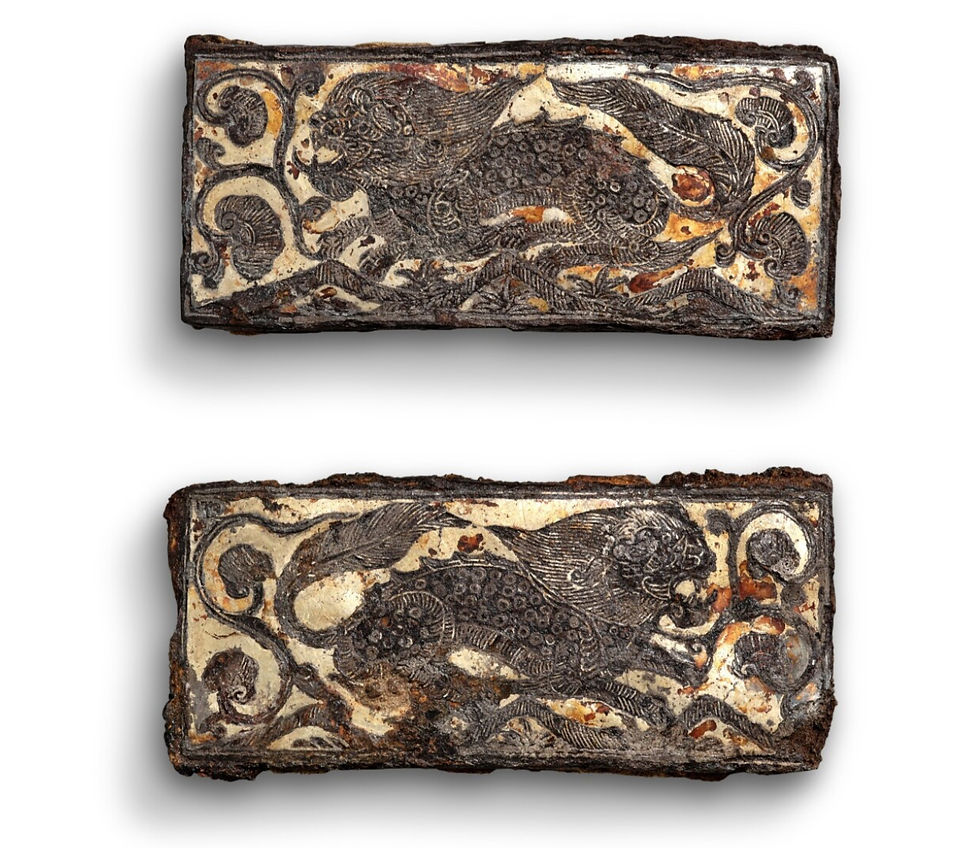
此對帶扣以鐵為芯,外包銀片並錯嵌金銀絲,製成精美麒麟紋飾,局部鎏金,兼具實用強度與華麗裝飾。帶扣成對保存,工藝精湛,體現唐代金銀細工與遼代遊牧實用美學的融合,為唐至遼時期北方貴族腰帶之典型器物。
A Pair of Parcel-Gilt Silver and Gold-Inlaid Iron Belt Buckles, Tang – Liao Dynasty
This rare pair features an iron core wrapped in silver sheets, finely inlaid with gold and silver wires forming dynamic qilin (kylin) motifs, with partial gilding. Combining durability for practical use and luxurious ornamentation, the buckles exemplify the fusion of Tang gold and silver craftsmanship with Liao nomadic aesthetics, representing high-status belt fittings from the Tang to Liao period.
參考:

唐至遼 鐵包銀錯金銀麒麟紋帶扣
A pair of Parcel Gilt Gold and silver-inlaid iron belt buckles, Tang - Liao dynasty
Estimate
42,000 - 60,000 HKD
6 May 2026|11:00 HKT|Hong Kong
這種鐵包銀(或銀裹鐵/鐵芯銀包)錯金銀帶扣的技法,在唐代至遼代(尤其是遼代)都有出現,但更可能是遼代(或唐末至遼)較為特色的實用工藝,結合了中原金銀細工與北方遊牧民族的實用需求。
技法概述
鐵包銀(背扣/鐵芯)+ 錯金銀(正面麒麟/獅子紋):核心是鐵質基體(提供強度與耐用性,適合腰帶扣具的實用功能),表面包裹或鑲嵌銀片/銀絲,再在銀面上錯嵌金銀絲形成圖案(如麒麟紋),部分鎏金(parcel gilt)增添華麗效果。正面(扣頭)多飾動物紋(如麒麟或獅子),背面或扣身用鐵或銀包鐵結構。
這屬於複合金屬工藝:鐵提供結構強度(北方民族腰帶需承受佩刀、蹀躞等重物),銀/金提供裝飾與防鏽。類似漢代以降的錯金銀銅/鐵器,但以鐵為主體較特別,強調實用與奢華結合。
製作步驟大致包括:鑄/鍛鐵芯 → 銀片包裹或鑲嵌 → 刻槽錯金銀絲 → 打磨、鎏金 → 組裝成帶扣對(常成對使用)。
唐代 vs 遼代盛行程度
唐代(618–907):金銀器達到高峰,以純金銀或鎏金銀器為主(如何家村窖藏),錯金銀工藝存在但多用於銅/青銅器或裝飾。鐵質基體的複合帶扣較少見,唐代腰帶(如蹀躞帶)更偏好純金銀或玉飾,強調華麗與外來(粟特/波斯)影響。高檔帶具多純銀或金,鐵包銀形式較少,可能出現在實用或邊疆器物中。錯金銀在唐代中後期有一定延續,但整體金銀器更注重純貴金屬。
遼代(907–1125):更盛行此類複合工藝。遼(契丹)作為北方遊牧王朝,承襲唐代金銀工藝(大量模仿唐式),但因遊牧生活需求,腰帶/馬具需更堅固耐用,因此鐵芯銀包+錯金銀的形式更實用。遼金銀器出土豐富(如陳國公主墓),帶飾(帶扣、帶銙、蹀躞帶)常見金銀或複合材質,紋飾包括動物(麒麟、鹿、獅等)、狩獵、植物等。錯金銀在遼代雖非主流,但有實例,且與鎏金、錘鍱、鏨刻結合,形成自身特色(光影層次、世俗性)。鐵包銀類似技法適合契丹貴族腰帶,既奢華又堅韌。
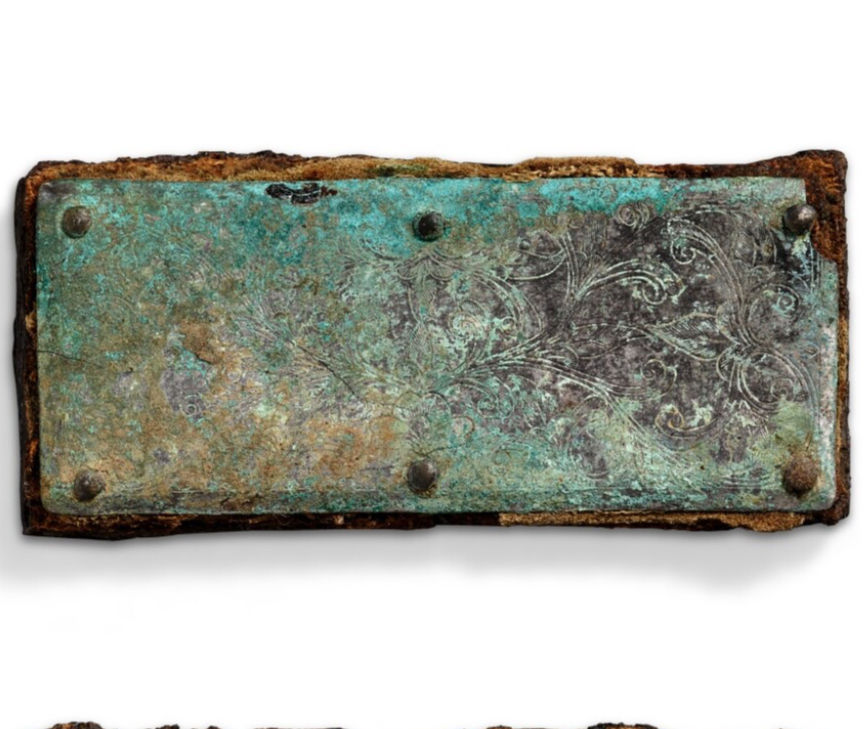
蘇富比此對帶扣定為「唐至遼」,反映其跨時代風格:唐式麒麟紋+遼式實用鐵芯結構。類似器物在遼墓(如公主墓的帶飾)或相關窖藏中更易見到。
為何遼代更典型?
文化融合:遼承唐制但融入契丹元素,腰帶是身份象徵(常懸挂工具/武器),鐵基體更適合草原生活。
考古證據:遼金銀器數量多,帶具工藝精湛(錘鍱、鏨刻、鎏金、錯金銀)。唐代更純金銀,遼代複合材質更常見。
後續影響:宋/金/元帶飾也有延續,但遼是此類鐵銀複合帶扣的典型過渡期。
總結:此做法唐代有基礎(錯金銀傳統),但遼代更盛行與成熟,因實用需求與工藝融合。蘇富比估價反映其稀有性與跨代價值。若需更精確,可參考陳國公主墓等遼墓報告或金銀器專著。
Technique and Historical Context
The technique of silver-wrapped iron (or iron core with silver sheathing) combined with gold and silver inlay for belt buckles appears in both the Tang and Liao dynasties, but is more characteristic of the Liao period (or the late Tang to Liao transition). It represents a practical synthesis of Central Plain gold and silver metalworking traditions with the functional demands of northern nomadic societies.
Technical Description
These buckles typically feature an iron core for structural strength and durability—essential for belt fittings that needed to support suspended items such as weapons or accessories—wrapped or sheathed in silver sheets. The visible surfaces are inlaid with gold and silver wires to create motifs (commonly qilin or lions on the front plate), often with partial mercury gilding (parcel gilt) for enhanced visual richness. The front (buckle plate) displays the primary decorative animal motif, while the reverse or body retains more of the iron or silver-over-iron construction.
This is a sophisticated composite metalwork process: the iron provides mechanical robustness, while the silver and gold layers offer both aesthetic appeal and corrosion resistance. It continues the long Chinese tradition of cuojin yin (gold and silver inlay) seen since the Han dynasty on bronze and iron objects, but is distinctive here for its prominent use of iron as the primary substrate, striking a balance between utility and luxury.
Approximate manufacturing sequence: forging or casting the iron core → application of silver sheeting or inlays → chiseling channels for gold and silver wire inlay → polishing and selective gilding → final assembly into matching pairs.
Prevalence in Tang vs. Liao
Tang Dynasty (618–907): Gold and silver working reached its zenith, dominated by high-purity gold and silver vessels and ornaments (e.g., Hejiacun hoard). While cuojin yin inlay existed, it was more commonly applied to bronze or as surface decoration. Composite iron-core silver-wrapped buckles are relatively rare. Tang elite belts (diexie dai) generally favored pure gold, silver, or jade fittings, reflecting a taste for opulence and strong Central Asian (Sogdian/Persian) influences. Iron-based examples, when present, likely served more utilitarian or frontier contexts.
Liao Dynasty (907–1125): This composite technique became more prominent. As a Khitan nomadic dynasty, the Liao inherited and adapted Tang gold and silver craftsmanship but modified it to suit steppe life. Belts and horse harnesses required greater durability, making iron-core silver-inlaid pieces highly practical. Substantial archaeological finds (notably the Changuo Princess tomb) reveal abundant belt ornaments (daikou, daikua, and diexie components) in gold, silver, or composite materials, featuring animal, hunting, and floral motifs. Although cuojin yin was not the dominant Liao technique, it appears alongside repoussé (chui tie), chasing, engraving, and gilding, creating distinctive effects of light and shadow with a more secular character.
Sotheby’s attribution “Tang to Liao” aptly captures the transitional style: Tang-inspired qilin iconography executed with Liao-period practical iron-core construction. Comparable examples are more frequently associated with Liao tombs and hoards.
Why More Typical of the Liao
The Liao’s cultural fusion—adopting Tang forms while incorporating Khitan practicality—made the waist belt a key status symbol often loaded with practical items. Iron provided the necessary strength for grassland use. Archaeologically, Liao metalwork shows greater diversity in composite materials compared to the Tang preference for pure precious metals. This technique represents a mature adaptation that influenced subsequent Song, Jin, and Yuan belt fittings, positioning the Liao as a pivotal transitional phase.
In summary, while the method builds on Tang inlay traditions, it achieved fuller expression and prevalence in the Liao due to specific socio-cultural and functional needs. Its rarity enhances the scholarly and market value of such pieces. For further study, reference excavation reports such as the Changuo Princess tomb and specialized monographs on Liao gold and silverware.


Comments