
拍賣筆記 vol.224 蘇富比伊勢彥信專場:唐三彩藍釉梅花萬年蓋罐- Sotheby’s Ise Collection, A Sancai-Glazed Jar And Cover, Tang Dynasty


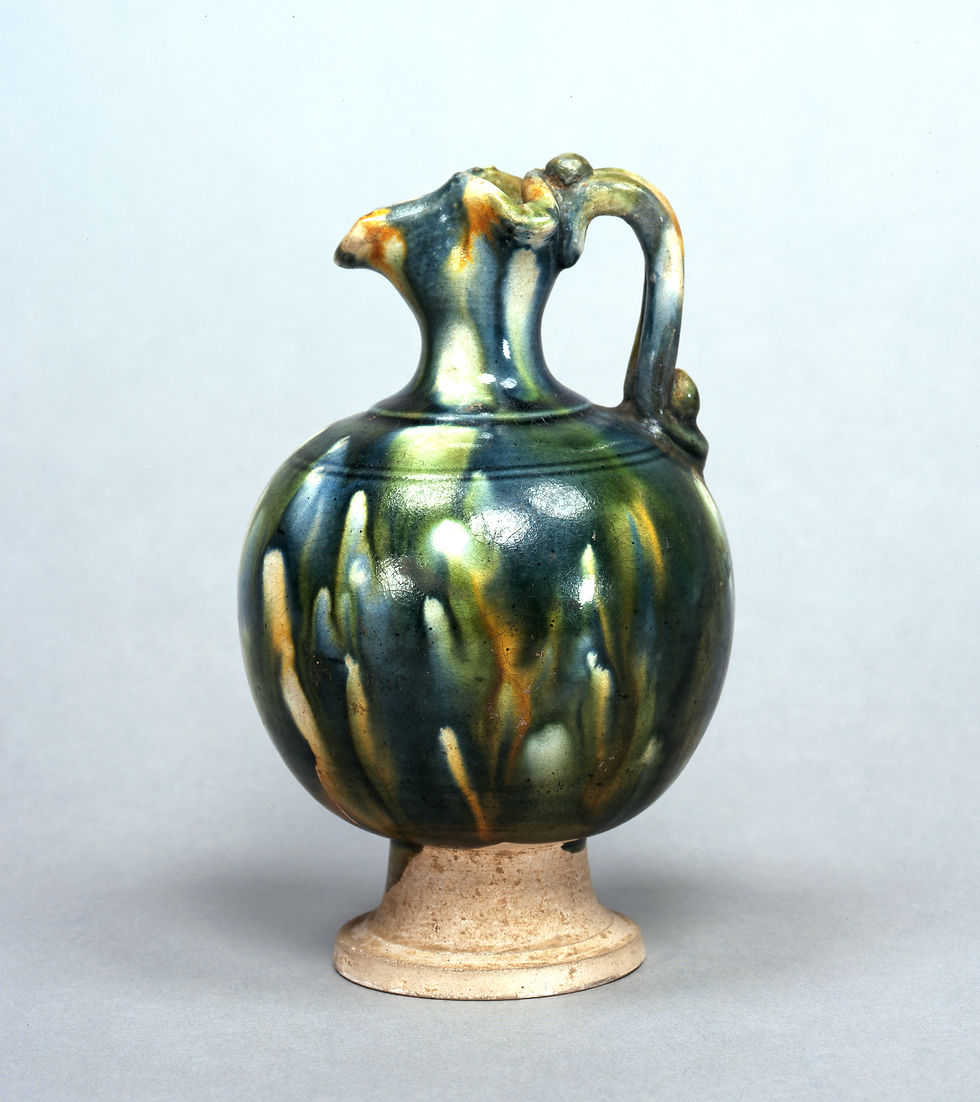
存世量並不多,藍釉梅花的母題可以在唐三彩的蓋盒中看到,但數量也是極少。唐三彩中帶藍釉的品種一直是藏家們競相收藏的品種,共識明確,歷史價值、意義重大。藍釉在武則天時期開始有使用,武則天之子李弘及李弘妻哀皇后的墓葬中均出土了藍釉的三彩。以鈷藍燒製而成,其當時的價格超黃金價格。
The number of surviving examples is very limited. The plum-blossom motif in blue glaze can be traced back to Tang sancai covered boxes, though these too are extremely rare. Within the canon of Tang sancai, wares incorporating blue glaze have always been among the most highly sought-after by collectors, enjoying clear consensus on their importance and carrying profound historical significance. The use of blue glaze began during the reign of Empress Wu Zetian, with notable examples unearthed from the tombs of her son Li Hong and his consort, Empress Ai, both containing sancai with blue glaze. Produced with cobalt pigment, the cost of this blue glaze in the Tang period was said to exceed even that of gold.

唐三彩藍釉梅花蓋罐
A sancai-glazed jar and cover, Tang dynasty
Guaranteed Property
Session begins in
September 9, 02:00 PM HKT
Estimate
300,000 - 600,000 HKD
來源
平野古陶軒
展覽
《中国陶磁名品展―イセコレクションの至宝》,石川縣立美術館,石川,2012年,編號21
出版
《中国陶磁―イセコレクション》,東京,2012年,頁19

Description
of ovoid form with a flat base, the rounded sides tapering to a short splayed foot, surmounted by an everted lipped rim glazed in green, the neck glazed in white, and the body painted in blue, green, and amber with triangular and diamond-shaped panels, reserved white florets, and dots, the domed cover similarly decorated and surmounted with an amber-glazed floral bud finial, Japanese wood box
overall h. 27.2 cm
The dating of this lot is consistent with the results of Oxford Authentication Ltd, thermoluminescence test C199d58.
此拍品經熱釋光測定,結果與斷代吻合(牛津大學,測試編號:C199d58)。
Provenance
Hirano Kotoken.
Literature
Chugoku Toji. Ise Korekushon / Chinese Ceramics. The Ise Collection, Tokyo, 2012, p. 19.
Exhibited
Chugoku Toji Meihin Ten Ise Korekushon no Shiho / Masterpieces of Chinese Ceramic Art Exhibition, Ishikawa Prefectural Museum of Art, Ishikawa, 2012, cat. no. 21.



Comments