
拍賣筆記 vol.463 佳士得紐約2026:9.6萬美元售出,唐三彩加藍釉仕女俑兩件,Max N. Berry - Christie’s New York, A Pair Of Blue And Sancai-Glazed Painted Pottery Figures Of Equestrians, Tang Dynasty, Sold for US$96,000

Updated: 4 hours ago

高質量藍釉騎馬俑,論其級別和規格,可視為來自相當於永泰公主、懿德太子級別以上的墓葬。Berward的選品在唐代器物,尤其是人俑、馬俑等雕塑類器物上尤為出色,其傳承可列入加分項。Max N. Berry品味極佳,上一次拍賣已經有不俗表現,帶領一件唐三彩馬球俑價格回歸200萬港元區間,成功使得香港岡田拍賣專場第二場時的同款三彩馬球俑拍出高價。這類器物正在價值回歸,目前仍是藏家積極購入階段,價格仍相對低廉。(SACA觀察,2026.09.18)
拍賣結果:96000美元售出,約合75萬港元一對,此類存世量與傳承兼優秀的高級別騎馬俑,未來升值空間明顯。這個價格依然是20-30年前的價格,相信低於Max N. Berry購藏價格。審美和級別的論證路漫漫,共識的編織還在進行中。(2026.09.19更新)


博古精鑑:Max N. Berry珍藏
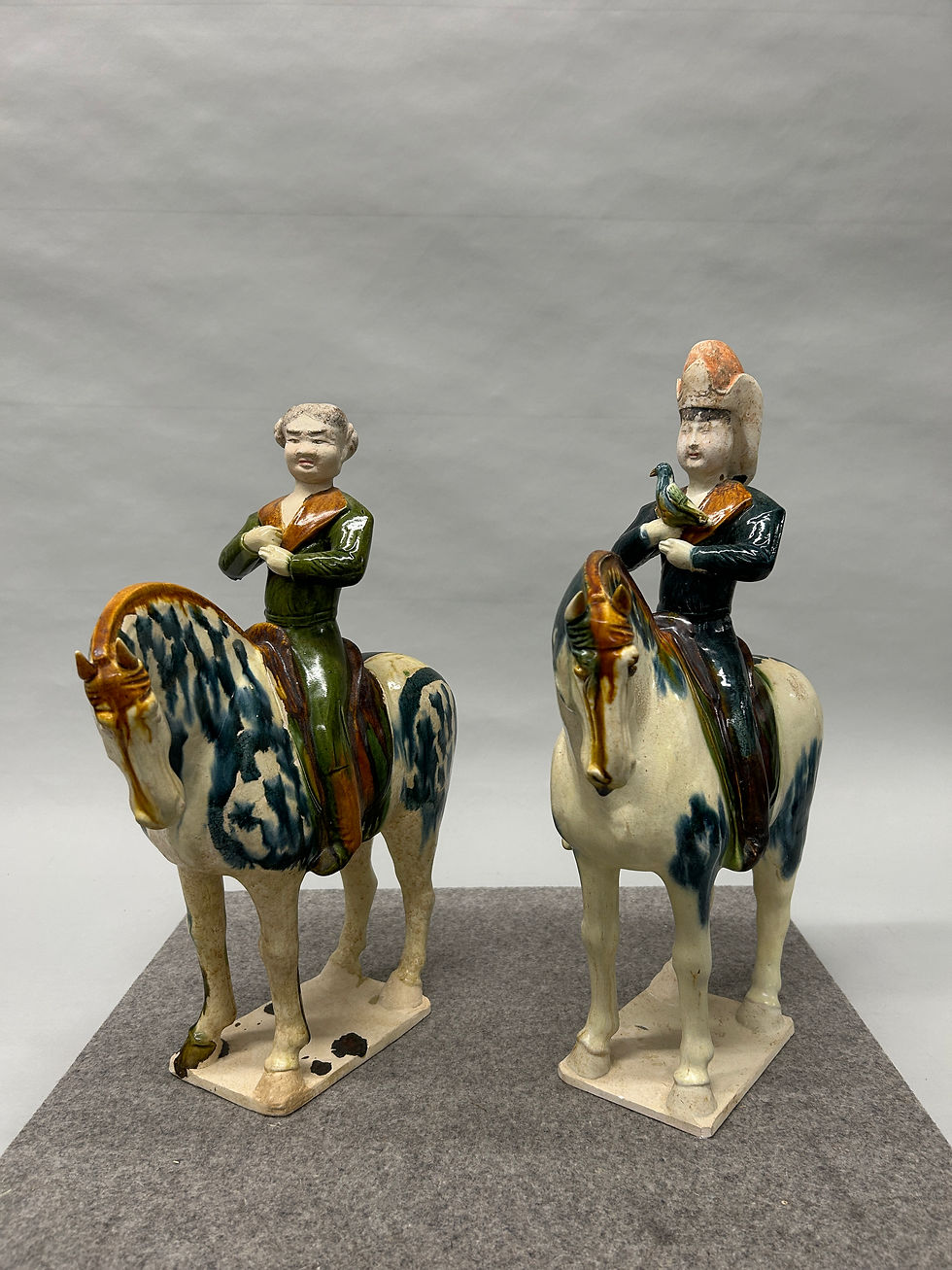
唐三彩加藍騎馬俑一對
TANG DYNASTY (AD 618-907)
估價
美元 80,000 – 美元 120,000
The taller: 17 ¼ in. (43.8 cm.) high
來源
Berwald Oriental Art,紐約,2006年4月5日
出版
Berwald Oriental Art,《Blue Glaze of the Tang》, 紐約,2006年,頁12-15,編號2
展覽
紐約,Berwald Oriental Art,「Blue Glaze of the Tang」,2006年3月28日至4月15日
牛津熱釋光測試報告編號 C205j18 及 C205j19 結果與本拍品所斷年代相符


Collector/Connoisseur: The Max N. Berry Collections
A PAIR OF BLUE AND SANCAI-GLAZED PAINTED POTTERY FIGURES OF EQUESTRIANS
TANG DYNASTY (AD 618-907)
Estimate
USD 80,000 – USD 120,000
The taller: 17 ¼ in. (43.8 cm.) high
PROVENANCE
Berwald Oriental Art, New York, 5 April 2006.
LITERATURE
Berwald Oriental Art, Blue Glaze of the Tang, New York, 2006, pp. 12-15, no. 2.
EXHIBITED
New York, Berwald Oriental Art, Blue Glaze of the Tang, 28 March-15 April 2006.
Condition:
-Both with scattered nicks to extremities and expected minor flakes to the glaze.Green rider:-Horse with repaired breaks including to the neck, as well as to all four legs, the tip of the tail, both ears and the muzzle, all with associated overpainting-The base broken and repaired, possibly a replacement-The rider with repaired break across the waist, thigh and at chest, all with associated overpainting-Three TL test holes, one located under hair of rider at back, on the horse one under chin and one on stomach rimBlue rider:-Restored breaks to the chest of the horse extending around the saddle to the waist of rider and down right side of horse, with associated overpainting-Horse with repairs to all four legs, tip of the tail, ears, all with associated overpainting-The base likely a replacement-The rider with touch up to proper left hand, the bird restuck to the proper right hand-Three TL test holes, one located at bottom of hat of rider, on the horse one under chin and one on stomach rim
Hunting on horseback or on camelback with birds of prey that had been tamed by their owners was a common pursuit for peoples living along the Eurasian Steppes, and a vital part of their food procurement. In China, descriptions of hunting with raptors (falconry) first appeared in Chinese texts during the Eastern Han dynasty (25-220 CE), though it was certainly practiced earlier than that. By the Tang dynasty, it had become the sport of rulers and nobles, an elite activity. Proficiency in falconry and other hunting skills became advantageous for officials, attendants or even commoners seeking to gain an intimate relationship with the ruling classes. Falconry was described in literature and there were many poems describing the pastime, such as “Hawking” by the famous Tang poet Bai Juyi (772-846).
Realistically and powerfully rendered, the two equestrian figures sit astride their mounts; one is richly dressed with deep cobalt blue-glazed robes, and wearing an elaborate hat, his proper right hand supporting a falcon. The other figure likely represents his attendant who dutifully follows, dressed in vibrant green-glazed robes and thick heavy boots. A superb and very rare painted and sancai-glazed pottery figure of an equestrian hunter, formerly in the Max N. Berry collection, was sold at Christie’s New York, 27 March 2026, lot 697.
The use of blue was a considerable extravagance in Tang times, because the cobalt necessary to produce this color had to be imported from outside China's borders, and was thus extremely expensive. The lead-fluxed glazes gave brilliant colors to the whole sancai palette, but the blue was especially successful. The use of blue on these figures is, however, rare, simply because its inclusion would have greatly increased the cost of the figures.
The results of Oxford Authentication Ltd. thermoluminescence test nos. C205j18 and C205j19 are consistent with the dating of this lot.


Comments