
拍賣筆記 vol.449 蘇富比香港2026:89.6萬港元售出,元代龍泉青釉花鳥紋出戟尊,岡田博物館 - Sotheby’s Hong Kong 2026, An Heirloom Longquan Celadon 'Bird And Flower' Zun-Form Vase, Yuan dynasty, Okada Museum Part II


「傳世」(Heirloom),英語讀作 air-loom,h不發音。近年在宋瓷研究與收藏中,這一品質被重新置於極為核心的位置:指未經入土、始終在世間流轉的古代器物。它與出土器的根本差異在釉面——俗稱「包漿」的使用痕跡,以及未曾遭受土壤酸化腐蝕的高質量釉層。
宋代諸窯中,龍泉、吉州、建窯一類尤為典型。器物出窯之後,釉面在長期把玩與使用中繼續演化,逐漸形成溫潤、晶瑩而近乎內斂的潤澤。部分傳世器更會出現一層均勻覆於釉表的霓虹彩光。日本學者稱之為「構造色」:其物理本質是釉面附著的一層透明干涉薄膜,原理近於鐳射光碟,光線在膜層間折射、干涉,遂見彩光。此類傳世彩光迄今極難仿製,因而成為判斷傳世茶碗真偽的重要依據之一。
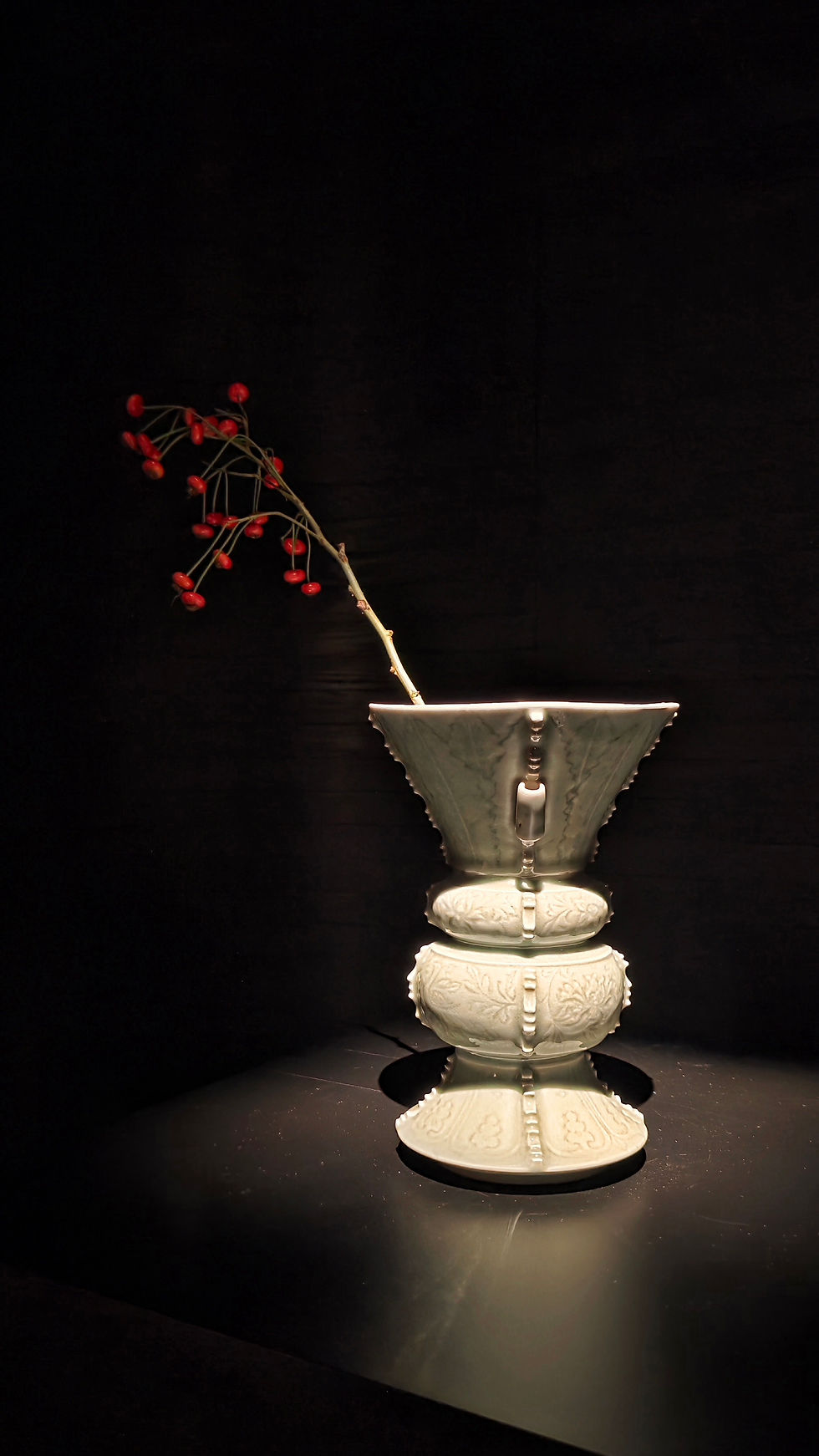
龍泉青瓷釉面同樣可以形成彩光,只是更不易察見。通常需在自然光下,以白底襯托,並調整觀察角度,方能捕捉。沒有彩光,並不必然否定傳世;釉質本身的細密、釉色的潤澤與層次,仍是更根本的判準。
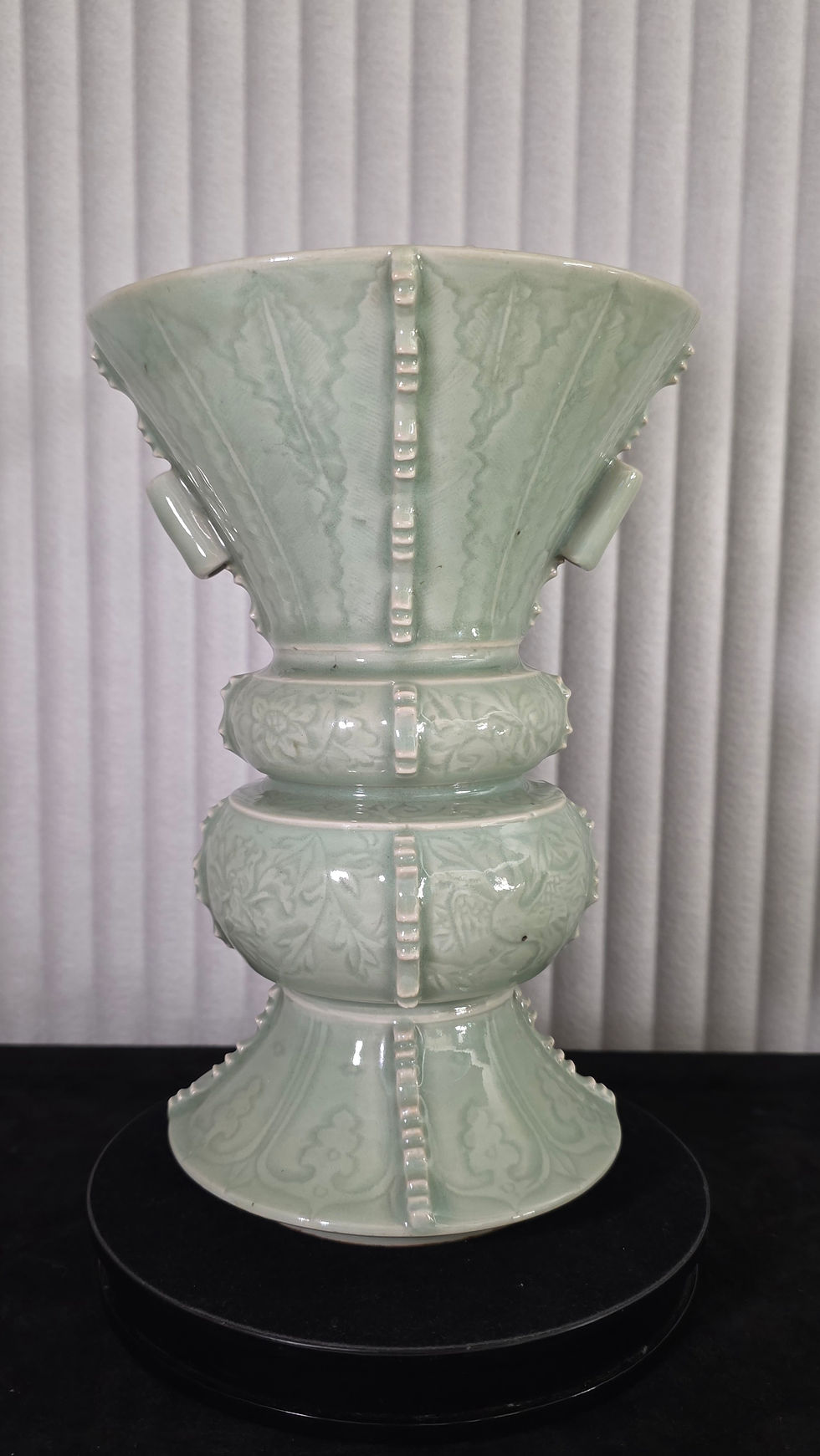
本件為元代龍泉窯的標準器。刻劃極為細膩,出戟尤為罕見。以瓷器追慕商周青銅觚形尊,本是宋徽宗朝興起的一股復古熱潮;南宋時,宋高宗趙構又在官窯體系中將這一趣味發揚光大。龍泉技術直接取法南宋官窯,此類器物因此也可視為南宋之後、元代中原文人對前朝審美的延續。
同一套器用與陳設的法度,後來為日本所繼承,並由歷代將軍持續傳遞。德川美術館在大名茶之湯的陳列中,即以書院方式安置此類器物。拍前曾有傳言,謂本件與德川美術館藏品原為一對,事實並非如此。傳言本身卻很說明問題:藏家對德川將軍一系傳承的仰望,已強烈到近乎產生幻覺。無論真偽,這都映照出當下收藏界的一種精神狀態。(SACA觀察:2026.09.05)

德川美術館陳列,素地龍泉窯出戟尊,與本拍品造型有較大差別。
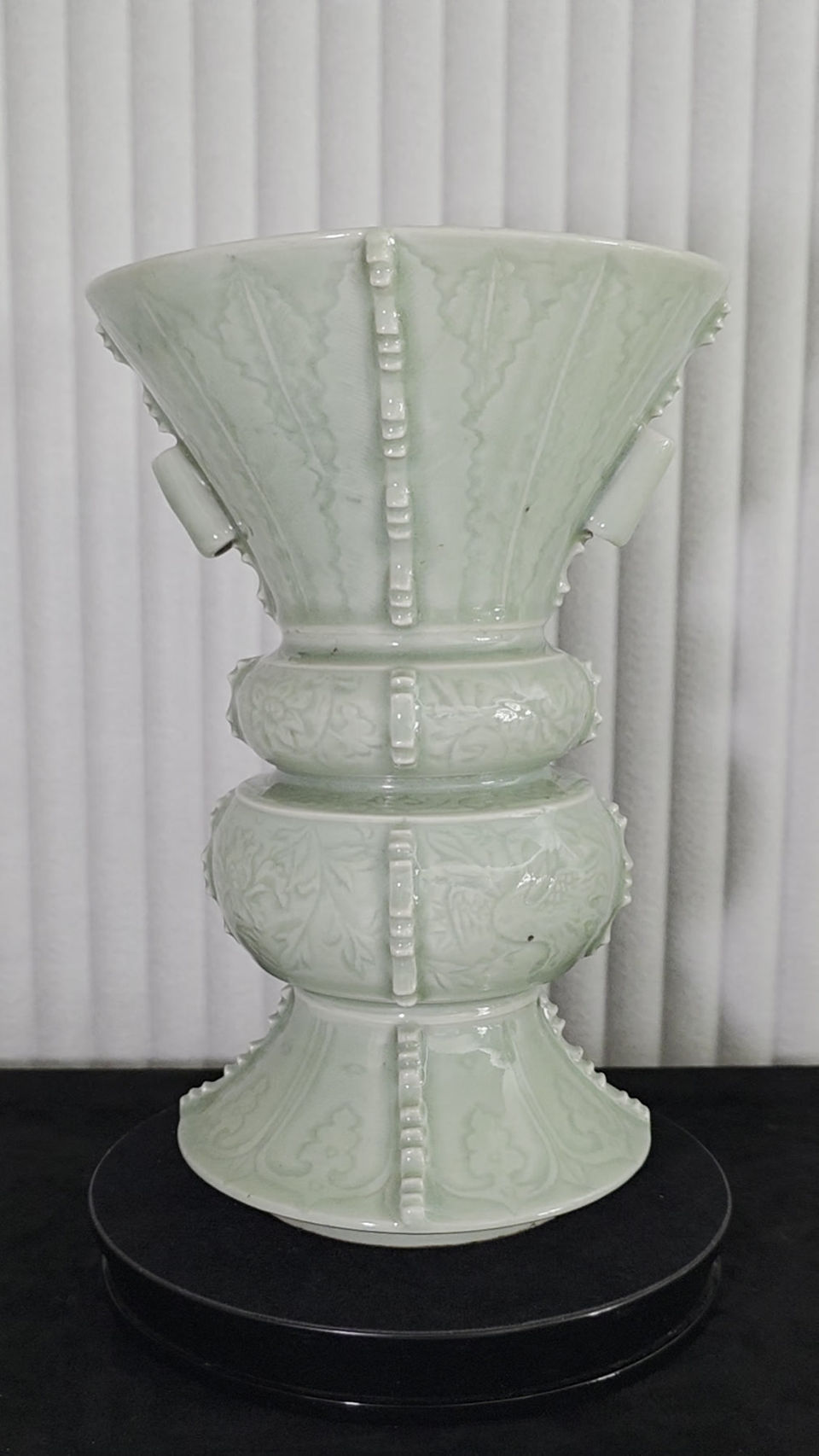
元 龍泉青釉花鳥紋出戟尊
An heirloom Longquan celadon 'bird and flower' zun-form vase, Yuan dynasty
Auction Closed
2026 September 4, 07:42 PM HKT
Estimate
300,000 - 600,000 HKD
Lot Sold
896,000 HKD
Description
Japanese wood box
26.3 cm
Condition Report
A small restored flake (approx. 1.5cm) on the outer mouth rim with associated overspray. Otherwise, in good overall condition, with minor typical firing imperfections, including some glaze crackles at the base, one extending up to the flared foot.
來源
壺中居,東京
東京國立博物館藏一類例,定代元十四世紀,為廣田松繁舊藏,館藏編號TG-2718。


Provenance
Kochukyo Co., Ltd, Tokyo.
See a comparable vase, attributed to the Yuan dynasty, 14th century, from the Hirota Matsushige Collection in the Tokyo National Museum, acc. no. TG-2718.
Heirloom
“Heirloom” (air-loom; the h is silent) has, in recent years, become a quality that collectors and scholars of Song ceramics weigh with particular care. It denotes an ancient work that never entered the ground and has remained in circulation in the world. The distinction from excavated wares lies less in form or decoration than in the glaze: the so-called patina of long handling, and a glaze surface that has never been etched by the acids of burial soil.
Among Song kilns this is especially visible in Longquan, Jizhou, and Jian. After firing, prolonged use continues to work on the glaze, yielding a warm, crystalline luster that seems to glow from within. On some heirloom pieces a further phenomenon appears: an even, iridescent film across the glaze, like a faint rainbow. Japanese specialists call this structural color. Physically it is a transparent interference layer on the surface—analogous to the coating on a compact disc—that refracts and interferes with light. Such heirloom iridescence remains extremely difficult to reproduce, and has therefore become one of the more reliable tests of authenticity for heirloom tea bowls.
Longquan celadon can show the same iridescence, though it is harder to see. It usually reveals itself only in natural light, against a white ground, and at a precise angle. Absence of color play does not by itself prove that a piece is not heirloom; the density of the glaze, the depth and wetness of its color, remain the more fundamental criteria.
The present vessel is a classic Yuan Longquan piece. The carving is exceptionally fine; the applied flanges (chuji) are rare. To recast a Shang–Zhou bronze gu-form zun in porcelain was a taste first promoted under Emperor Huizong; Emperor Gaozong (Zhao Gou) later gave it institutional form in the Southern Song official kilns. Longquan technique drew directly on that Guan tradition. Works of this kind are, in that sense, a Yuan-period continuation—among literati of the Central Plains—of a Southern Song antiquarian ideal.
Japan inherited the same grammar of use and display, transmitted through successive shogunal houses. In the Tokugawa Art Museum, such objects are shown in the shoin manner within the section devoted to daimyo tea. Before the sale a rumor circulated that this piece and an object in the Tokugawa collection had once formed a pair. They did not. The rumor itself is revealing: the longing for a Tokugawa lineage of transmission has grown intense enough to generate its own hallucinations. True or not, it reflects the present state of the collector’s mind.



Comments