
拍賣筆記 vol.418 蘇富比香港2026:金代磁州窰系黑釉剔牡丹魚紋玉壺春瓶,山中商會、壺中居,岡田博物館 - Sotheby’s 2026, Okada Sales Part 2, A Cizhou-Type Black-Glazed Sgraffiato 'Fish' Bottle Vase, Jin Dynasty
- SACA

- 23 hours ago
- 3 min read

山中商會舊圖錄中,最早可追溯至一九二七年之記載,可見玉壺春造型器物實為經典審美之典範,二十世紀初歐美及日本藏家均極為推崇。日本大阪市立東洋陶瓷美術館所藏一件龍泉窯飛青瓷玉壺春瓶,已定為國寶。本件雖被歸屬磁州窯,然磁州窯實為區域概念而非單一窯口;觀其紋飾,當出自當陽峪窯,該窯所產可與定窯媲美。近年白地剔黑牡丹紋梅瓶及萬年罐造型之器,已連續突破千萬港元大關。此類器物因認知差異,目前仍處於低估階段。
玉壺春瓶之名,實與酒有深切淵源。「春」在唐代以來即為酒之雅稱,古人冬釀春熟,遂以「春」代酒,李肇《唐國史補》所載富水春、若下春、土窟春、石凍春、燒春等,皆其實例。晚唐司空圖《二十四詩品·典雅》有「玉壺買春,賞雨茆屋」之句,意謂以玉壺(或釉色如玉之瓷壺)購酒,「買春」即買酒之謂。至宋元之際,「玉壺春」已成具體酒名,《水滸傳》明言「酒保取過兩樽玉壺春酒,此是江州有名的上色好酒」,可見其當時聲譽。
玉壺春瓶造型定型於宋代,由唐代寺院淨水瓶演進而來,撇口、細頸、垂腹、圈足,曲線柔和,正適於斟酒之用。當時此類酒瓶因盛裝「玉壺春」名酒而廣為流傳,器形遂與酒名漸趨合一,久之便以「玉壺春」專稱此式。後人雖有「玉壺先春」託名蘇軾之說,然查無實據,不足採信。要之,玉壺春瓶之得名,乃因酒而名器,既見唐人「以春名酒」之風雅,亦反映宋代實用酒具向陳設美器轉化之軌跡。

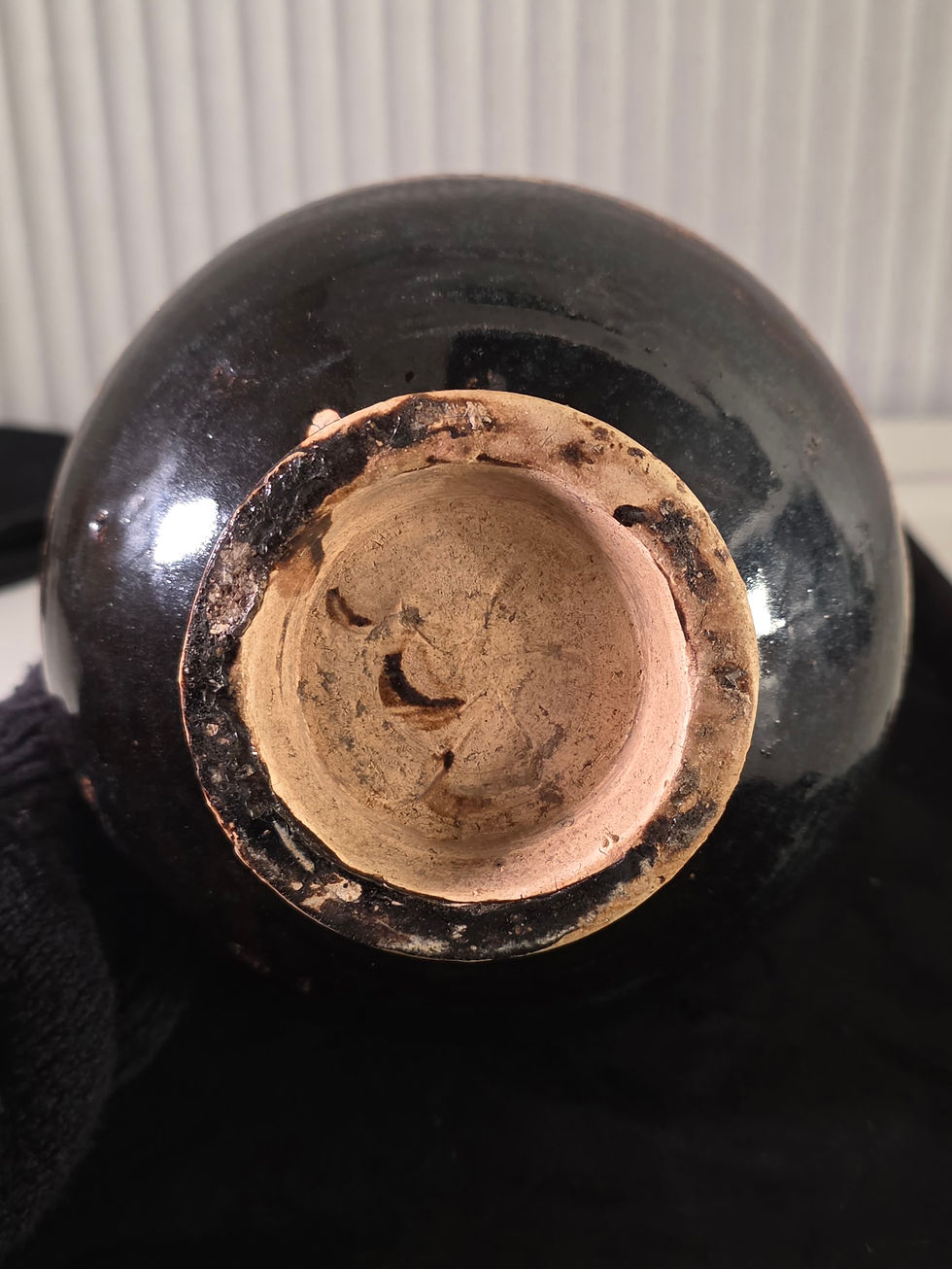
金代磁州窰系黑釉剔牡丹魚紋玉壺春瓶
A Cizhou-type black-glazed sgraffiato 'fish' bottle vase, Jin dynasty
Estimate
300,000 - 600,000 HKD
拍賣時間:2026年9月4日
Description
Japanese double wood box
28.2 cm
山中商會,倫敦
壺中居,東京
展覽
《中國早期陶瓷及雕塑等展覽圖錄》,山中商會,倫敦,1927年,編號115
《中国美術展シリーズ:宋元の美術》,卷4,大阪市立美術館,大阪,1978年,編號1–166
出版
三上次男,《世界陶磁全集》,卷13:遼.金.元,東京,1981年,圖版25
小林忠編,《岡田美術館名品撰》,卷1,東京,2013年,編號10


Provenance
Yamanaka & Co., Ltd, London.
Kochukyo Co., Ltd, Tokyo.
Exhibited
Exhibition of Early Chinese Ceramic Art and Sculpture, Yamanaka & Co., Ltd, London, 1927, cat. no. 115.
Chugoku Bijutsu-Ten Series. So Gen no Bijutsu [Chinese Art Exhibition Series: The Art of Song and Yuan Dynasties], vol. 4, Osaka Municipal Art Museum, Osaka, 1978, cat. no. 1–166.
Literature
Tsugio Mikami, Sekai Toji Zenshu / Ceramic Art of the World, vol. 13: Liao, Chin and Yuan Dynasties, Tokyo, 1981, pl. 25.
Kobayashi Tadashi, ed., Masterpieces of the Okada Museum of Art, vol. 1, Tokyo, 2013, no. 10.
The earliest catalog of Yamanaka & Co. that can be traced back to 1927 shows that the yuhuchun form represents a classic aesthetic highly prized by European, American, and Japanese collectors in the early twentieth century. The Museum of Oriental Ceramics, Osaka, holds a Longquan kiln “flying celadon” (tobi-seiji) yuhuchun vase designated as a National Treasure. Although this piece is attributed to the Cizhou kilns, Cizhou is a regional concept rather than a single kiln site; judging from its decorative style, it should originate from the Dangyangyu kiln, whose products can rival those of the Ding kilns. In recent years, white-ground carved-black peony-pattern meiping vases and wannian jars have successively surpassed the HKD 10 million mark. Owing to differences in recognition, such wares remain undervalued at present.
See a related vase in the collection of the Saint Louis Art Museum, Missouri, illustrated in Robert D. Mowry, Hare’s Fur, Tortoiseshell, and Partridge Feathers: Chinese Brown- and Black-Glazed Ceramics, 400–1400, Cambridge, Mass., 1996, cat. no. 68; a vase from the Charles Bain Hoyt Collection in the Museum of Fine Arts, Boston, acc. no. 50.2115; a third example from the Meiyintang Collection, illustrated in Regina Krahl, Chinese Ceramics from the Meiyintang Collection, vol. 3 (II), London, 2006, no. 1526; another in the Linyushanren Collection, sold at Christie’s New York, 13th September 2018, lot 824; and finally another from the Mineo Hata Collection, sold in these rooms, 7th May 2025, lot 3708.


Comments