
拍賣筆記 vol.398 蘇富比香港2026:524.8萬港元售出,唐三彩狗王,岡田博物館,細川家傳來、浦上蒼穹堂、壺中居 - Sotheby’s HK 2026, Okada Sale Part 2, Amber Glaze Sancai Dog, Tang Dynasty

Updated: Sep 4

SACA拍場(2026.09.04):競爭激烈,sonya電話拍下,6629。524.8萬港元售出。
這件唐褐釉犬,當之無愧是目前海內外公開收藏中的「唐三彩狗王」。
姿態靈動自然、尺寸巨大(25.4 cm)、傳承顯赫,三者共同構成完美的黃金三角。尤其值得一提的是,除了後來經浦上蒼穹堂浦上滿之手外,此犬早在1928年或之前,就已是日本戰國大名家族後裔——細川護立侯爵的舊藏。細川家的永青文庫至今仍保存著一批極為重要的唐三彩收藏,這件狗王究竟如何從細川家流出、再被浦上滿購得、最終轉入岡田和生之手,其間故事必然精彩曲折,值得後人細細追尋。
當一件器物在藝術完成度、稀有度與歷史厚度上都接近滿分時,它其實已經進入了「無價」的狀態。最終成交價,將完全取決於現場競價藏家的決心,以及當下整體經濟環境的微妙變化。從以往岡田專場與同類頂級唐三彩的成交經驗來看,蘇富比此番僅估15–30萬港元,明顯偏低。考慮到這件狗王的稀缺性與獨特性,最終完全有可能以數十倍以上的價格成交。(2026年8月5日更新)
視頻和上手圖片較為接近實物,實際上,任何雕塑都是實物更精緻、更立體震撼,這件碩大的唐三彩「狗王」也不例外。另外,其箱子是傳統的老壺中居盒子,這類盒子都可以追溯到20世紀初期的傳承,特別是指向創始人廣田松繁(不孤齋)。當然這件是細川護立的收藏,本身已經是無懈可擊。(8月15日更新)
參見:王秋生財新專欄文章《唐三彩褐釉波斯犬|品瓷》


早前,蘇富比公布岡田博物館拍賣,定期9月4日。預告推出唐三彩犬和愛蓮堂同款罐。定價一如既往地便宜,犬估價15-30萬港元;愛蓮堂同款磁州窯罐估價60-120萬港元。僅僅是國內杭州拍賣定價的1/10,國內拍賣今年火熱,光杭州就有20幾家拍賣公司如雨後春筍,均拍賣高古瓷均為天價估價,香港對比則較為理性。作為具有全球流通性的香港,品質、價格目前均更有參考性。
唐 褐釉犬
高 25.4 公分
估价: 150,000 - 300,000 港元
来源
细川护立侯爵(1883至1970年)收藏,东京,1928年或之前
壶中居,东京
浦上苍穹堂,东京
展览
《特别展—中国の陶磁》,东京国立博物馆,东京,1994年,编号123
《第15回东美特别展》,东京美术俱乐部,东京,2001年,页55至56
出版
中尾万三,《唐三彩图谱》,东京,1928年,页44
《艺术新潮》,1卷12号,1950年12月,页141
《浦上苍穹堂30周年纪念》,浦上苍穹堂,东京,2009年,页134
浦上満,《古美术商にまなぶ中国.朝鲜古陶磁の见かた、选びかた》,浦上苍穹堂,东京,2011年,页42
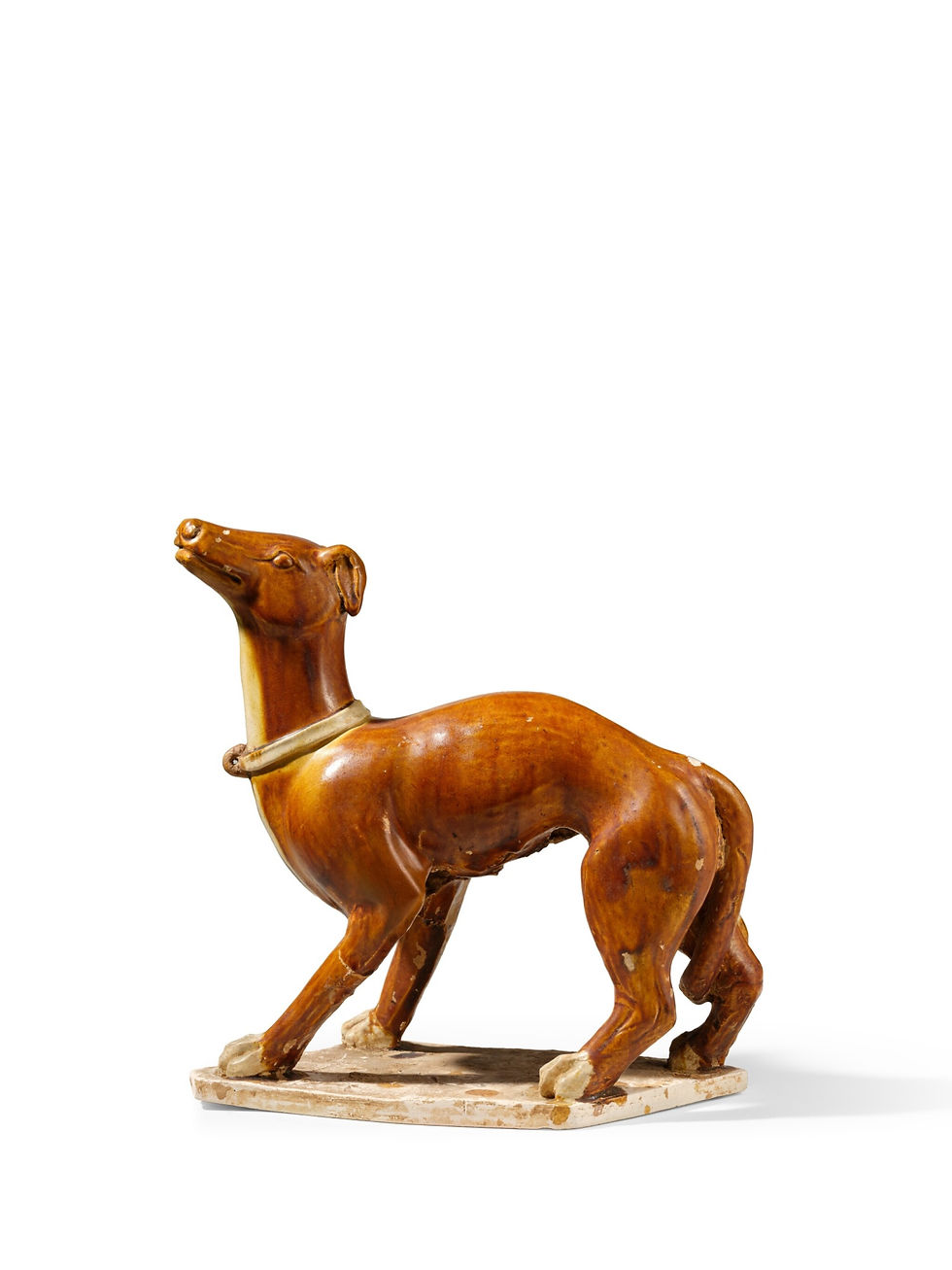
This Tang amber-glazed dog deservedly stands as the “King of Tang Sancai Dogs” among publicly known collections both in China and abroad.
Its lively and naturalistic pose, great size (25.4 cm), and distinguished provenance form a perfect golden triangle. Of particular note is that, long before it passed through the hands of Uragami Mitsuru of Uragami Sokyu-do, the piece was already in the collection of Marquis Hosokawa Moritatsu (1883–1970) by 1928. The Hosokawa family, descendants of a prominent Sengoku-period daimyo lineage, still preserves an important group of Tang sancai pieces in the Eisei Bunko. How this dog left the Hosokawa collection, was acquired by Uragami Mitsuru, and eventually entered the collection of Okada Kazuo is surely a fascinating story waiting to be fully told.
When a work approaches perfection in artistic quality, rarity, and historical depth, it enters a realm that can only be described as “priceless.” The final price will depend entirely on the determination of the bidders present and the broader economic climate at the moment of sale. Based on previous results from Okada sales and other top-tier Tang sancai pieces, Sotheby’s estimate of HK$150,000–300,000 appears conservative. Given the exceptional rarity and uniqueness of this dog, a result of several dozen times the estimate is entirely possible.
Sotheby’s has announced the Okada Museum sale, scheduled for September 4. The preview features a Tang sancai dog figure and a Cizhou ware jar of the same type as the well-known example from the Ailantang (Love Lotus Hall) collection.
As usual, the estimates are attractively conservative: the dog is estimated at HKD 150,000–300,000, while the Cizhou jar carries an estimate of HKD 600,000–1,200,000. These figures represent merely one-tenth of the reserves seen in recent Hangzhou auctions on the mainland. The domestic market has been exceptionally hot this year, with more than twenty new auction houses sprouting up in Hangzhou alone, all specializing in archaic ceramics and achieving astronomical prices. In contrast, the Hong Kong market remains notably more rational. As an international trading hub with global liquidity, Hong Kong provides far more reliable reference points for both quality and pricing.
Tang Dynasty Brown-Glazed (Amber-Glazed) Dog
Height 25.4 cm
Estimate: HKD 150,000 – 300,000
Provenance
Marquis Hosokawa Moritatsu (1883–1970) collection, Tokyo, acquired before or in 1928
Kochūkyo, Tokyo
Uragami Shōkyūdō, Tokyo
Exhibitions
Special Exhibition: Chinese Ceramics, Tokyo National Museum, Tokyo, 1994, no. 123
15th Tobai Special Exhibition, Tokyo Bijutsu Club, Tokyo, 2001, pp. 55–56
Literature
Nakao Manzō, Tōsansai Zufu (Illustrated Catalogue of Tang Sancai), Tokyo, 1928, p. 44
Bijutsu Shinchō, vol. 1, no. 12, December 1950, p. 141
Uragami Shōkyūdō 30th Anniversary, Uragami Shōkyūdō, Tokyo, 2009, p. 134
Uragami Mitsuru, Kobijutsushō ni manabu Chūgoku·Chōsen kotōji no mikata, erabikata (Learning from Antiquities Dealers: How to Look at and Select Ancient Chinese and Korean Ceramics), Uragami Shōkyūdō, Tokyo, 2011, p. 42


Comments